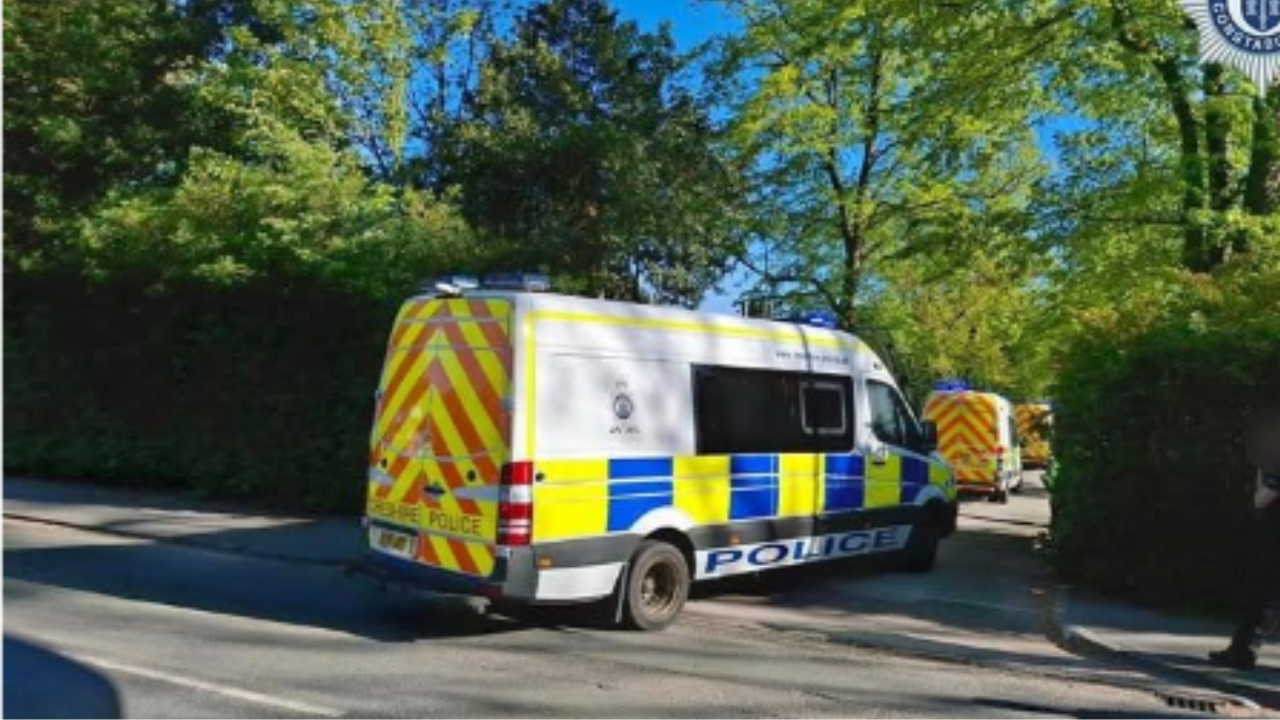
The headlines are predictable. They are safe. Nine people arrested in Crewe. Allegations of modern slavery. Whispers of rape. A community under siege by the very authorities meant to protect the vulnerable. The media loves a story where a marginalized religious group—in this case, the Ahmadiyya—is framed through the lens of a "cult" or a shadowy organization operating outside the law. It fits the template. It feeds the clicks.
But the media is missing the structural rot.
The rush to judgment in the Crewe raids reveals a staggering lack of nuance regarding how faith-based communal living interacts with a failing British social safety net. We are seeing a collision between traditional communal structures and a rigid, often culturally illiterate, legal framework. The "lazy consensus" here is that these arrests prove a systemic criminal enterprise. The reality is likely far more uncomfortable: the state is pathologizing communal interdependence because it no longer understands how to support people without a government-issued voucher.
The Modern Slavery Label is a Catch-All for Institutional Failure
When the police throw around the term "modern slavery," they often do so because it provides a broad umbrella for complex labor and living arrangements that don't look like a 9-to-5 desk job. I have seen this play out in dozens of minority communities across the UK.
In many tight-knit religious organizations, the line between "voluntary service" and "employment" is blurred. This isn't inherently sinister; it’s historical. The Ahmadiyya community, long persecuted in Pakistan and elsewhere, has survived for a century through fierce internal self-reliance. When the state sees five men living in a house and working for a communal cause without a traditional paycheck, they see exploitation. They don't see the safety net that the state failed to provide.
The logic used by the Home Office is often circular. They argue that because an individual lacks "financial independence," they must be a victim. This ignores the fact that in many immigrant and minority structures, independence is viewed as a liability, not a virtue. Interdependence is the goal. By categorizing communal support as "slavery," the police are effectively criminalizing a lifestyle that exists because the UK’s actual economy is increasingly hostile to the working poor.
The Rape Allegations and the Danger of Guilt by Association
The inclusion of rape allegations in the same breath as modern slavery is a classic tactical move to ensure the public loses all empathy for the accused before a single piece of evidence is presented in court.
Let's be clear: sexual violence is an individual crime. Yet, when it happens within a religious context, it is treated as a communal pathology. We don't hold the entire Church of England accountable for every transgression of a rogue vicar anymore—we’ve learned that lesson. Why, then, is the Ahmadiyya community in Crewe being subjected to a narrative that suggests their very structure is a breeding ground for such horrors?
The danger here is the "contagion of suspicion." By arresting nine people simultaneously, the authorities create a spectacle. They signal that the group is the problem. This is a shortcut for investigators who struggle to penetrate closed communities. Instead of doing the hard work of building trust to find individual bad actors, they kick in doors and let the headlines do the rest of the work.
The Surveillance State’s Blind Spot
The UK has some of the most aggressive anti-slavery legislation in the world. On paper, this is noble. In practice, it has become a tool for over-policing.
I’ve watched the "Modern Slavery Act 2015" be used as a Trojan horse to enter private residences where no other probable cause exists. It’s a legal master key. If you want to investigate a group but don't have enough for a standard warrant, you claim "suspicion of exploitation." It’s a low bar that yields high-profile arrests, even if those arrests never result in a conviction.
The Crewe raids follow this pattern. The police were eager to announce the arrests, but they are notoriously silent when these cases collapse eighteen months later because the "victims" refuse to testify—not because they are scared, but because they don't view themselves as victims.
Imagine a scenario where a group of people pools their resources to buy a property. They share meals. They work in a family business. They give their earnings to a central pot to pay off the mortgage. To a bureaucrat in Whitehall, this looks like a sweatshop. To the people in the house, it’s the only way to own a home in a country where the average house price is nine times the average salary.
The Ahmadiyya Context Matters
You cannot understand the Crewe raids without acknowledging who the Ahmadiyya are. They are a group defined by their status as outsiders. They are rejected by mainstream Islam and frequently targeted by extremists. Their entire identity is built on being a "state within a state" for the sake of survival.
When the British police raid such a group, they aren't just investigating a crime; they are destabilizing a fragile ecosystem. The fallout of these raids will be felt for decades. It pushes these communities further underground. It reinforces the belief that the outside world—even the "liberal" West—is fundamentally hostile to their existence.
The authorities think they are "liberating" workers. What they are actually doing is dismantling the only support structures these people have, leaving them at the mercy of a welfare system that is broken and a housing market that is predatory.
Stop Asking if They Are Guilty and Start Asking Who Benefits
The media asks: "Are these people criminals?"
The better question is: "Why is the state so obsessed with policing communal living?"
The answer is control. The state needs everyone to be a legible, individual unit of consumption. You need your own bank account. Your own lease. Your own utility bills. When you opt out of that individualism, you become a "threat." You become a "slavery" statistic.
This isn't to say that abuse never happens. It does. Power imbalances exist in every hierarchy, religious or otherwise. But the scale of these raids suggests a performance of justice rather than a pursuit of it. We are watching a live demonstration of how the law is used to flatten cultural complexity into a manageable, albeit terrifying, soundbite.
If the UK were serious about ending exploitation, it would look at the gig economy, the seasonal farm workers, and the hospitality industry. But those aren't "exotic." They don't involve "secretive religious groups." They don't make for good morning news.
The Crewe raids are a mirror. They don't show us the truth about the Ahmadiyya; they show us the prejudices of a society that can no longer distinguish between a community and a conspiracy.
The arrests have been made. The headlines have been written. The damage is done. Now, we wait for the inevitable quiet dismissal of charges that won't make the front page.
Get your house in order before you start kicking in the doors of others.