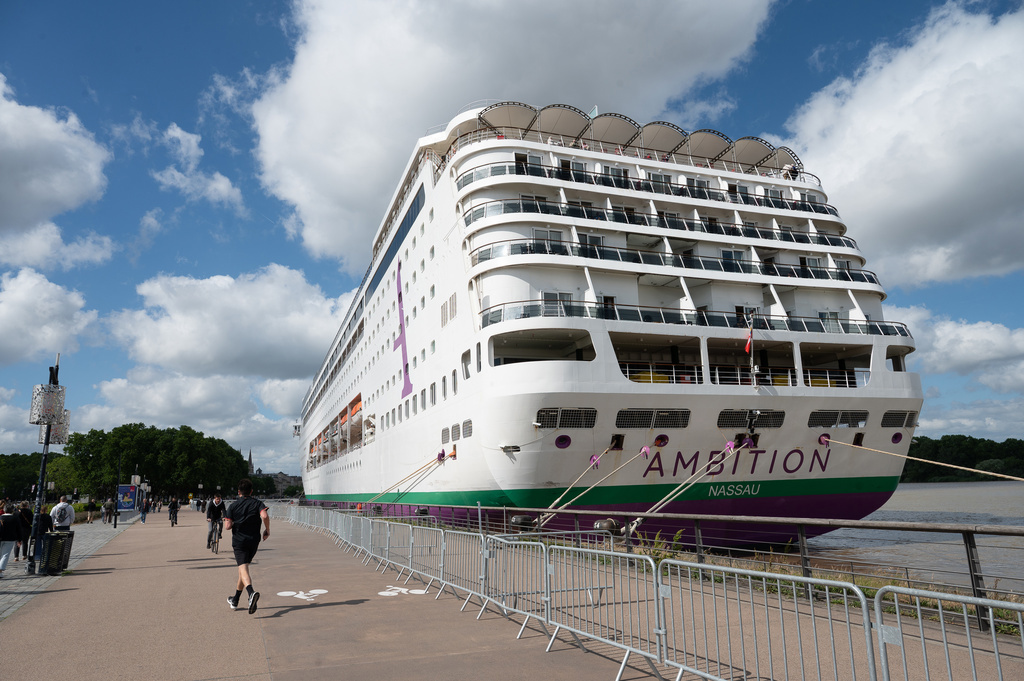
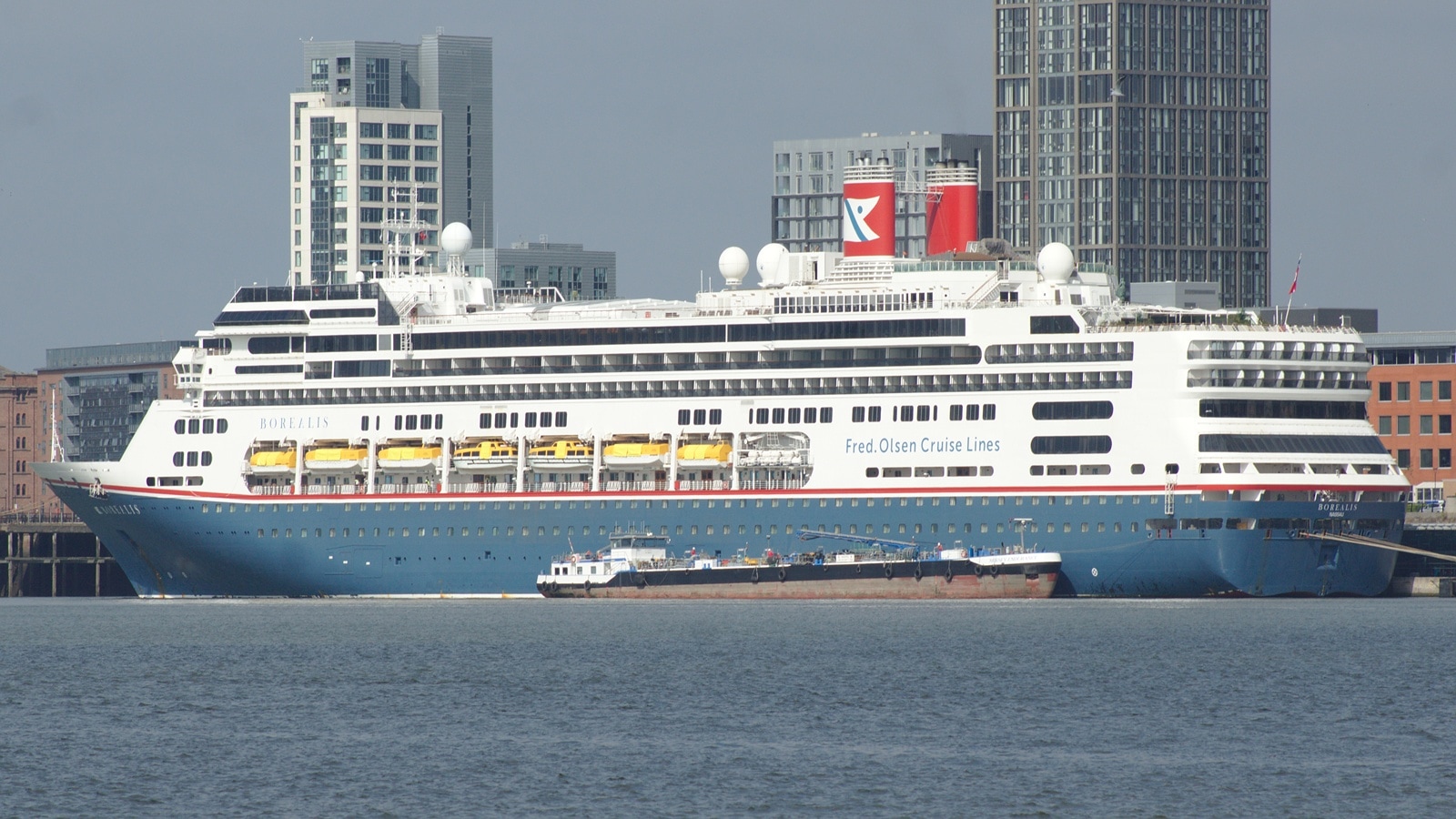
The headlines are always the same. "Stranded." "Confined." "Trapped."
France recently locked down over 1,700 people on a British cruise ship in Bordeaux. The culprit? Norovirus. A stomach bug. The media paints this as a humanitarian crisis, a logistical nightmare, and a failure of maritime health protocols. They are wrong on every count.
This wasn't a tragedy. It was the predictable outcome of a broken travel model that prioritizes floating buffets over basic biological common sense. We treat these outbreaks like freak accidents. They aren't. They are the mathematical certainty of cramming thousands of people from different global biomes into a closed-loop HVAC system and telling them to help themselves to the shrimp cocktail.
The Myth of the "Clean" Ship
The "lazy consensus" suggests that if the cruise line just scrubbed the railings harder or checked temperatures at the gangway, this wouldn't happen. That is a fantasy.
I have spent years analyzing transit logistics and the intersection of public health and high-density tourism. Here is the reality: a cruise ship is a petri dish with a gift shop. When you board a vessel with 1,700 strangers, you aren't just traveling with them; you are sharing their entire microbiome, their recent history of airport bathroom stops, and their children’s school-yard germs.
Norovirus is famously hardy. It survives on surfaces for weeks. It resists standard hand sanitizers. It requires a microscopic viral load to trigger an infection—as few as 18 viral particles. For context, a single gram of infected stool can contain 100 billion particles.
When the French authorities "confined" those passengers in Bordeaux, they weren't being cruel. They were performing a necessary, albeit late, amputation. The mistake wasn't the quarantine; the mistake was the assumption that these ships are safe environments to begin with.
The Economics of Mass Contagion
The cruise industry is built on "turnaround day." The ship comes in, the sick people get off, the crew does a "deep clean" (which usually means a frantic wipe-down with diluted bleach), and a new batch of hosts boards four hours later.
If we actually cared about health, a ship with a Norovirus outbreak would be dry-docked for ten days. But the industry can't afford that. The margins are in the volume. So, they keep the cycle moving, gambling that the next "outbreak" will be mild enough to manage with a few extra bottles of Pepto-Bismol and a localized cabin floor quarantine.
We see the Bordeaux incident as a failure of the French port authorities to be "welcoming." In reality, the French were the only ones acting with any shred of intellectual honesty. They recognized that a ship in the middle of a Norovirus spike is a biological hazard. Why should a city like Bordeaux risk its local population to accommodate a private corporation's floating viral incubator?
Stop Asking "How Did This Happen?"
People ask that question as if the answer is a mystery.
- The Premise: "How could a modern ship have an outbreak?"
- The Brutal Truth: Because you put 1,700 people in a metal box.
We’ve seen this movie before. We saw it during the early days of 2020, and we see it every single year with seasonal norovirus. The public persists in believing that a "luxury" price tag buys immunity from biology. It doesn't.
If you want to avoid being "confined" in a foreign port, stop booking passage on vessels that operate as closed-loop ecosystems. The moment a virus enters that loop, the ship's internal logic dictates that it must spread. The ventilation, the communal dining, the narrow corridors—every design choice made to maximize "synergy" between passengers also maximizes the transmission of pathogens.
The Counter-Intuitive Solution: Radical Personal Accountability
The industry wants you to believe they have it under control. They don't. They have a PR department that manages the fallout when things go south.
If you are one of the 1,700 people stuck in Bordeaux, your anger shouldn't be directed at the French government. It should be directed at the mirror. You bought into the "seamless" travel dream that ignores the reality of high-density viral transmission.
True "luxury" travel is the ability to control your environment. Cruise ships are the opposite of that. They are the ultimate surrender of control. You eat when they say, move where they allow, and breathe the air they provide. When that air—or that buffet—becomes toxic, you have no recourse.
We need to stop bailouts and stop the "rescue" narrative. If a ship becomes a health risk, the passengers should stay on the ship until the incubation period has passed. Period. The "freedom" of the traveler does not override the safety of the port city.
The Battle Scars of Experience
I have watched companies burn through millions in litigation and "reputation management" after events like the Bordeaux quarantine. They hire consultants to "foster" a sense of safety. They update their "protocols."
It’s all theater.
Until the cruise industry moves away from the high-density, mass-market model, these stories will continue to populate the news cycle every few months. The "fresh perspective" isn't about better cleaning chemicals. It’s about admitting that the current cruise model is fundamentally incompatible with modern public health expectations.
The Risk You Accept
The downside to this stance is obvious: it kills the industry. If we hold cruise lines to the same standards we hold stationary hotels or hospitals, they would go bankrupt. A hotel in Bordeaux that had 10% of its guests violently ill would be shuttered by the health department instantly. Why do we give ships a pass just because they have an engine and an anchor?
We accept the "risk" of the sea, but we refuse to accept the risk of the crowd.
Stop looking for "next steps" from the cruise lines. They won't change because their profit depends on you not thinking about the 18 viral particles.
If you board the ship, you accept the quarantine. Don't complain when the bill for your "all-inclusive" vacation includes a week of staring at the Bordeaux docks through a porthole. That was always part of the itinerary; you just didn't read the fine print of the human condition.
Stay off the ship or stay in your cabin. There is no middle ground.