Rain smears the windshield of a 2014 Honda Civic idling outside a closed Chipotle at 11:15 PM. Inside, the heater hums, struggling against the damp chill of a Tuesday night in the suburbs. Marcus checks his phone. No orders. The "Hot Zone" on his map has cooled to a dull gray. Usually, this is the part of the night where the silence starts to feel heavy—the dead air between a $6.00 delivery and the hope of a late-night taco run.
But tonight, Marcus isn't just waiting. He is teaching.
He isn't tutoring a student or lecturing a class. He is scrolling through a series of images and text strings on his screen, flagging errors, identifying objects, and correcting the syntax of a machine. DoorDash, the company that usually dictates his turns via GPS, has opened a new door. They call it "Dashers AI Labs." For Marcus, it is a way to squeeze blood from the stone of a slow shift. For the rest of us, it is a quiet, tectonic shift in how the digital world learns to understand the physical one.
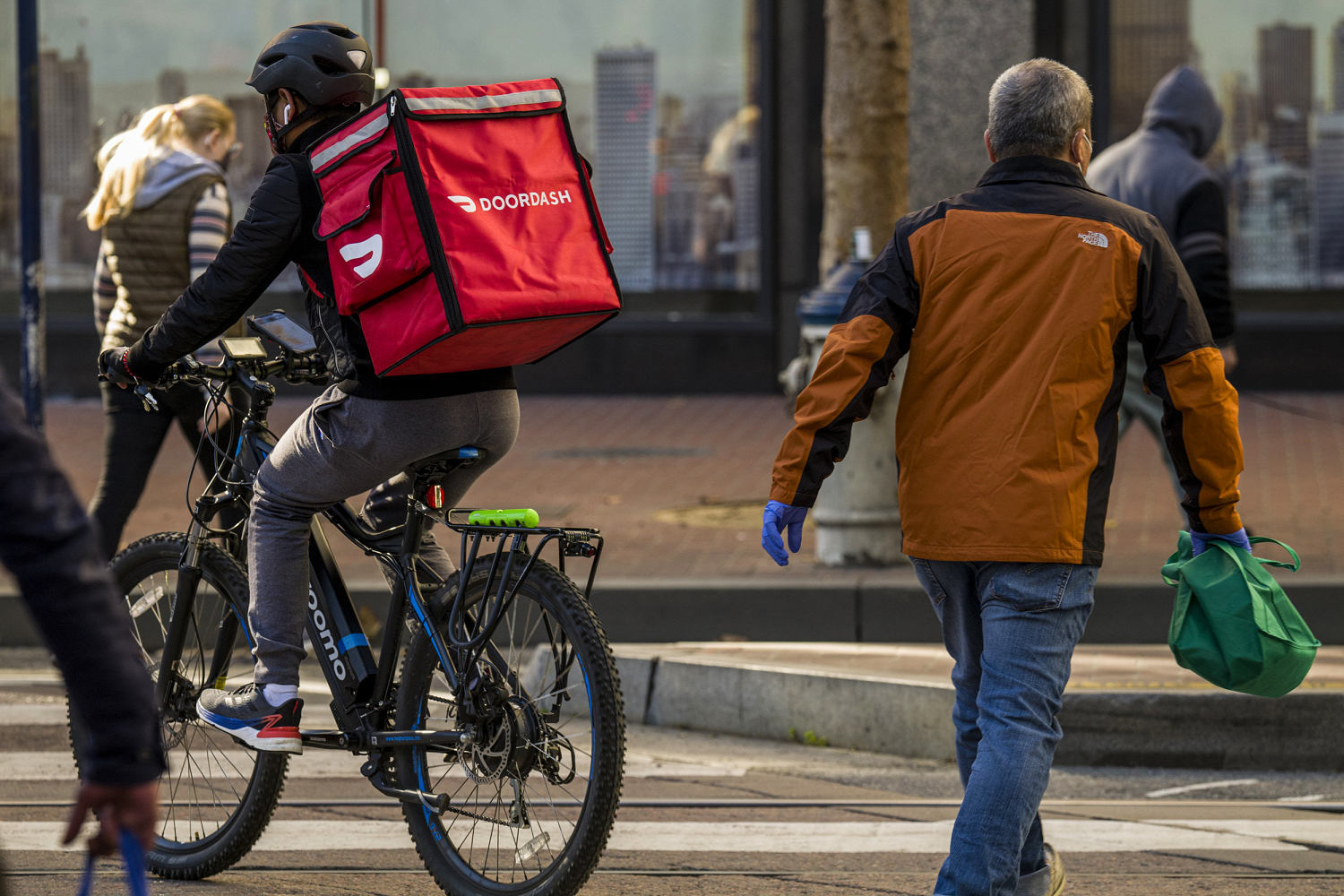
The gig economy has always been about the trade of time for autonomy. You give up the 40-hour salary for the freedom to drive when you want. Now, that trade is evolving. The person delivering your pad thai is the same person training the algorithm to recognize what a front porch looks like in a blizzard.
The Invisible Labor of Logic
We often talk about Artificial Intelligence as if it were a subterranean god, rising fully formed from a sea of silicon. We use words like "neural networks" to make it sound biological, or "black box" to make it sound magical. The reality is far more manual. It is gritty. It is tedious.
AI is a toddler with an infinite memory but zero common sense. It can process a billion images in a second, yet it might struggle to distinguish a chihuahua from a blueberry muffin if the lighting is slightly off. To bridge that gap, it needs a human to sit in the passenger seat and point at the world.
Traditionally, this "data labeling" or "RLHF" (Reinforcement Learning from Human Feedback) happened in massive digital sweatshops overseas. Thousands of workers in lower-cost economies would click on traffic lights and crosswalks for pennies. But DoorDash realized they already had an army. They have millions of "Dashers" who are already experts in the very things their AI needs to master: navigation, gate codes, restaurant layouts, and the chaotic unpredictability of a Saturday night rush.
Consider the complexity of a "simple" delivery. An AI needs to know that a "leave at door" instruction on a third-floor apartment with a broken call box requires a different set of logic than a suburban drop-off. By letting drivers perform these training tasks during their "downtime"—those agonizing gaps between orders—DoorDash is turning idle minutes into a laboratory.
The Geometry of the Gap
For the driver, the math is brutal.
When you drive for a living, you are constantly calculating the "deadhead" time. That is the time spent driving back from a remote drop-off or sitting in a parking lot waiting for the phone to chirp. During those gaps, you earn zero. You are burning gas or, at the very least, burning your life's currency: time.
By integrating AI training into the Dasher app, the company is attempting to fill those gaps. Marcus can now sit in that Chipotle parking lot and earn a predictable, hourly-adjacent rate by answering questions.
- "Is this a picture of a menu?"
- "Does this text accurately describe the storefront?"
- "Is the entrance to this apartment complex on the north or south side?"
It is a strange, symbiotic loop. The driver uses their human intuition to sharpen the machine's intelligence, which in turn makes the app more efficient, which theoretically leads to better routes and higher earnings later. But there is a haunting irony tucked inside this efficiency.
We are teaching the machine to eventually need us less.
Every time Marcus correctly identifies a shortcut or clarifies a confusing GPS glitch, he is helping build a map so perfect that it might one day guide a robot that doesn't need a heater, a phone, or a Civic. We are the architects of our own obsolescence, one clicked checkbox at a time.
The Human Advantage in a Digital Maze
Why would a tech giant want a driver in Ohio to train their AI instead of a professional data scientist in a lab? Because the lab is sterile. The lab doesn't know what it’s like when a customer writes "The doorbell is broken, please knock like a secret agent" in the notes.
Human language is messy. It is full of sarcasm, typos, and hyper-local slang. A machine sees a "closed" sign and assumes the business is dead. A driver sees the "closed" sign, notices the lights are on and the staff is prepping for tomorrow, and understands the nuance.
This program represents a move toward "edge" intelligence. By tapping into the lived experience of people on the ground, the data becomes more "high-fidelity." It isn't just data; it’s context.
Imagine a scenario where the AI is trying to parse a complex menu. A computer might see "Street Tacos (3)" and "Al Pastor" and get confused by the formatting. Marcus, who has picked up four thousand tacos in his life, looks at it and knows exactly how that translates into a kitchen order. He is the bridge between the digital request and the physical reality.
The Emotional Weight of the Click
There is a specific kind of fatigue that comes with gig work. It isn't just physical; it's the mental load of being managed by an algorithm. You are told where to go, how fast to get there, and how much you are worth, all via a push notification.
There is something subtly different about the AI training tasks. For a moment, the power dynamic shifts. The machine is the one asking the questions. The human is the one with the answers.
In the quiet of his car, Marcus feels a strange sense of authority. For the last six hours, he has been a servant to the map. Now, he is the map's editor. He is the one correcting the record. It is a small, quiet dignity, but in the world of the gig economy, dignity is a rare commodity.
Yet, we must ask: what is the true cost of this "on-the-side" hustle?
By blurring the lines between physical labor and cognitive labor, companies are colonizing every spare second of a worker's day. The "break" is gone. The moment of reflection between tasks is now an opportunity for more "productivity." We are moving toward a world where there is no such thing as "off the clock," only "switching tasks."
The Ghost in the Machine
The tech industry loves to talk about "seamless" experiences. They want the food to appear at your door as if by magic. They want the AI to answer your questions as if it were a sentient being. But programs like this pull back the curtain. They show us the ghost in the machine.
That ghost is Marcus. It’s the millions of people whose micro-judgments and split-second decisions are being harvested to create the illusion of machine brilliance. AI isn't replacing human intelligence; it is consuming it. It is an aggregate of us.
As the rain continues to pelt the roof of the Civic, Marcus finishes a set of twenty tasks. He’s made a few extra dollars. It’s not a fortune, but it’s enough for a coffee or a gallon of gas. He closes the AI Lab interface just as a new delivery ping vibrates against his thigh.
$8.50. Two miles. Taco Bell.
He puts the car in gear and pulls out of the lot. He is back to being the hands and feet of the system. But somewhere in the cloud, a small part of the algorithm is now slightly smarter because of him. It knows that the entrance to the Taco Bell is actually around the back, near the dumpster, because Marcus told it so.
The machine is learning. The human is driving. And for now, the two are locked in a dance where it is increasingly hard to tell who is leading.
The windshield wipers swipe across the glass, clearing the blur for a split second before the world turns gray again. Marcus turns onto the main road, his headlights cutting through the dark, a teacher heading back to the grind, leaving a trail of data points in his wake.