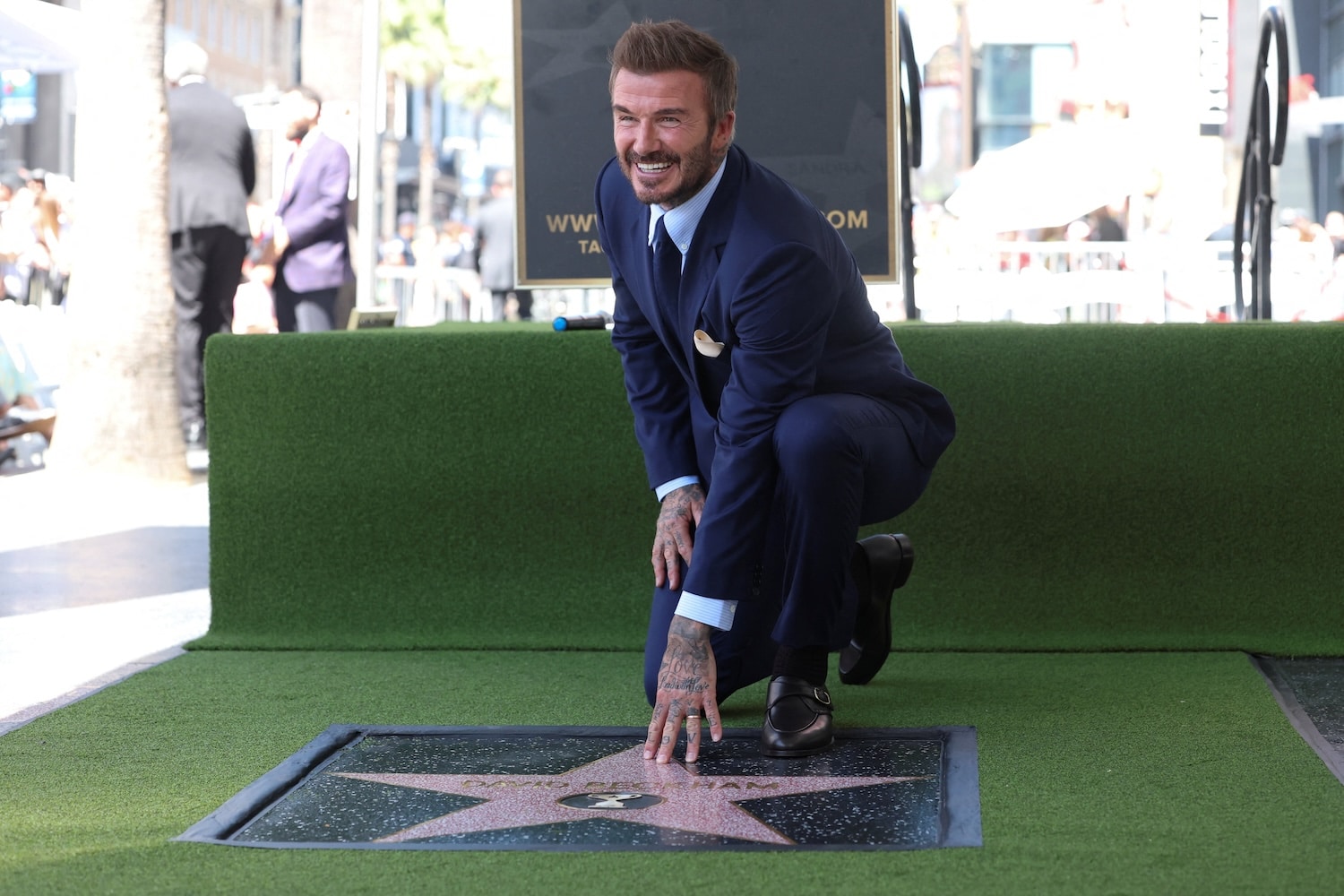
The media is swooning over David Beckham receiving a star on the Hollywood Walk of Fame. They are framing it as the ultimate crossover triumph. The narrative is neat, predictable, and entirely wrong. They want you to believe this is the moment a British football icon finally conquered the entertainment capital of the world.
It is not.
This star is not a reward for artistic merit, nor is it a sign of Hollywood’s global reach. It is a transactional monument to the commodification of fame. It marks the exact moment where the entertainment industry admitted it can no longer manufacture genuine, monocultural movie stars, opting instead to lease the pre-packaged equity of a global billboard.
We need to stop pretending the Walk of Fame is an objective hall of fame. It is a marketing optimization tool. For decades, the Hollywood Chamber of Commerce maintained a veneer of cinematic prestige. You made movies, you changed the culture, you got a piece of terrazzo. By granting a star to a retired athlete whose primary cultural output for the last fifteen years has been selling underwear, luxury watches, and tourism campaigns, Hollywood is not elevating Beckham. It is lowering its own bar to catch a ride on his digital reach.
The Myth of the Crossover Genius
The standard coverage of this event reads like a PR handout. The lazy consensus argues that Beckham’s journey from Manchester United to the sidewalks of Hollywood Boulevard is a testament to his multifaceted talent.
Let’s dismantle that premise immediately.
Beckham was a phenomenal football player. His right foot was a precision instrument. But his transition into the American consciousness was never about his performance on the pitch for the LA Galaxy, nor was it about his contribution to American cinema. He did not break into Hollywood through the front door of acting, directing, or producing. He entered through the side door of commercial endorsement.
When a traditional actor receives a star, it is theoretically tied to a body of work that exists on a screen. It represents a collective cultural experience. When you look at Beckham’s American footprint, his most visible "performances" are advertisements.
I have watched entertainment brands spend hundreds of millions of dollars trying to manufacture crossover appeal for athletes. Most fail because they try to force the athlete to become an actor. The Beckham machine succeeded because it understood a brutal truth: in the modern media economy, you do not need to create art if you can become a flawlessly curated, living aesthetic.
The Walk of Fame committee requires a $75,000 nomination fee, usually paid by a studio or a sponsor, alongside a promise that the recipient will actually show up to the ceremony. This is not an honor; it is a live-action press release. Beckham getting a star is a corporate sponsorship activation disguised as a lifetime achievement award.
Dismantling the Fan Expectations
The general public frequently asks variations of the same question online: How do sports figures qualify for a Hollywood star?
The official guidelines state that nominees must show longevity in the entertainment field, contributions to the community, and civic participation. The category used to justify athletic stars is usually "Live Performance."
This is a flawed premise that needs to be exposed.
- The Athletic Illusion: Treating a professional sports match as a Hollywood "live performance" opens a door that fundamentally changes the meaning of the space. If winning a match qualifies you, the sidewalk should be paved with Olympic gold medalists and Super Bowl MVPs.
- The Real Criteria: The committee looks at international press value. Beckham does not have a star because he played sport or because he made a cameo in a Guy Ritchie film. He has a star because his presence guarantees a global media footprint that a mid-tier Emmy winner could never generate.
Hollywood’s Structural Desperation
To understand why this is happening now, you have to look at the macroeconomic reality of the entertainment business. Hollywood is suffering from an acute star shortage. The traditional pipeline that created household names—the studio system, mid-budget star vehicles, monocultural television networks—is completely broken.
The current crop of young actors cannot open a movie on their name alone. Audiences go to see the intellectual property, not the performer. They go to see Spider-Man, not the actor playing him.
Because Hollywood can no longer create stars that command global, multi-demographic loyalty, it is forced to import them from other industries. David Beckham is a legacy brand. He represents a time before media fragmentation, an era where everyone knew exactly who he was regardless of whether they followed football.
[Traditional Star Model] -> Talent -> Iconic Role -> Global Fame
[Modern Brand Import Model] -> Global Fame (Sponsors/Socials) -> Hollywood Validation
By cementing Beckham into the pavement, Hollywood is attempting to retroactively claim his global audience. It is an act of cultural arbitrage. The industry is trading a piece of its historical prestige in exchange for a temporary injection of relevance from a man who has 80 million Instagram followers.
The Cost of Commercial Devaluation
Every contrarian stance has a counter-argument, and it is worth acknowledging the defense here. Proponents of the move will argue that entertainment has evolved. They will say that fashion, lifestyle curation, and sports entertainment are the new cinema. They will argue that Beckham’s Netflix documentary series was a major television event, thereby justifying his inclusion under modern criteria.
That argument is short-sighted.
When you broaden the definition of an entertainment icon to include anyone who is exceptionally famous for being famous, you accelerate the devaluation of the platform. If a documentary about your own life qualifies you as a Hollywood legend, then the definition of Hollywood has shrunk to mean nothing more than a mirror reflecting a celebrity's own public relations apparatus.
The downside to this approach is obvious to anyone who manages long-term brand equity. When everything is an advertisement, nothing is an honor.
If you walk down Hollywood Boulevard today, you see a graveyard of forgotten names mixed with corporate cartoon characters and commercial entities. Adding an international lifestyle brand to that mix does not save the Walk of Fame from becoming a relic of tourist trap commercialism; it confirms it.
Stop Celebrating the Plaque
The lesson for anyone observing the business of celebrity is clear: stop looking at traditional markers of validation as signs of achievement. They are trailing indicators. They are lagging metrics used by legacy institutions to validate their own existence.
David Beckham did not need a piece of stone in California to prove he conquered global media. He did that decades ago by transforming himself from a sports star into a sovereign corporate entity. The fact that Hollywood is just now getting around to putting his name on the floor tells you everything you need to know about how slow, desperate, and reactive the entertainment industry has become.
Do not look at the photos of the ceremony and see a man reaching the pinnacle of stardom. Look at those photos and see an aging industry clinging to the coat-tils of a master class in personal branding because it has forgotten how to build its own heroes.