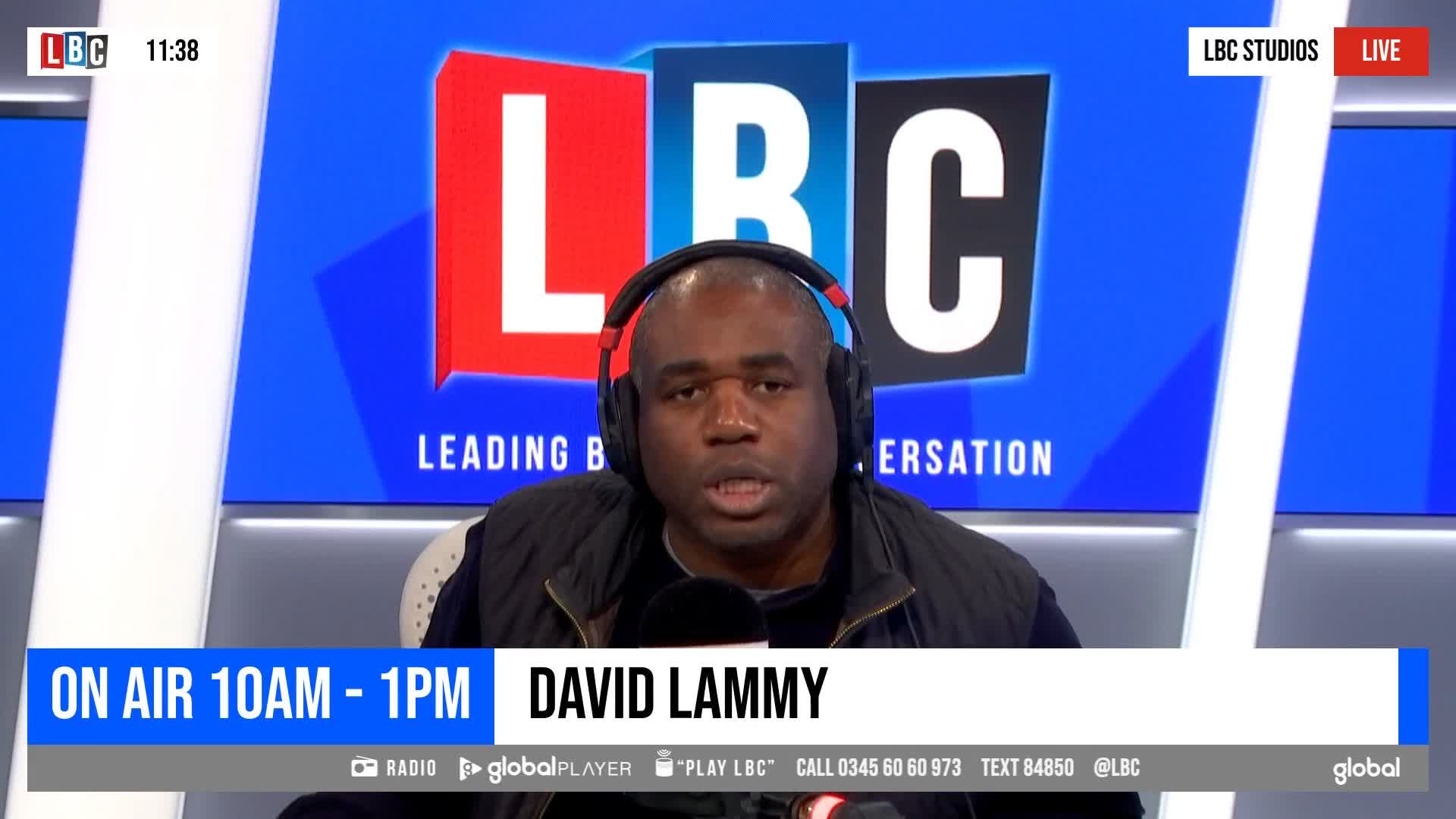
David Lammy is sounding the alarm, but he’s ringing a bell that no longer has a clapper. The Foreign Secretary’s latest warning—that internal Labour bickering over Brexit will hand the keys of Number 10 to Nigel Farage—is a masterclass in mid-tier political gaslighting. It’s a convenient fiction designed to stifle internal dissent and keep the cabinet in a state of perpetual, terrified cohesion.
The premise is simple, seductive, and fundamentally flawed: "Shut up about the Single Market, or the populist boogeyman gets it."
It’s time to stop falling for the ghost stories. Farage doesn't win because Labour argues. Farage wins because Labour refuses to lead on the very issue that defined the last decade of British decline.
The Fallacy of the Fragile Front
The mainstream consensus suggests that the British public is exhausted by Brexit and that any attempt to reopen the "settled" relationship with Europe will trigger a populist backlash. This is the "lazy consensus" Lammy is banking on.
But look at the data. The British Social Attitudes survey and recent polling from YouGov consistently show a significant shift in public sentiment. We aren't in 2016 anymore. The "Bregret" isn't a whisper; it's a roar. When Lammy suggests that talking about closer ties—or God forbid, the Single Market—invites Farage back into the fold, he’s ignoring the fact that Farage thrives on stagnation, not evolution.
Farage’s Reform UK party doesn't eat into Labour’s base because of "infighting." It eats into it because of a perceived lack of authenticity and a failure to deliver tangible economic improvements. By maintaining a "make Brexit work" stance that is mathematically impossible under current red lines, Labour is creating the very vacuum of competence that populists inhabit.
The Economic Ghost Town
Let’s talk about the friction. You can’t have a "growth mission" while simultaneously strangling your largest trading partner with red tape. It is an economic oxymoron.
The Office for Budget Responsibility (OBR) has been clear: Brexit has reduced the UK’s potential GDP by about 4%. That isn't a one-time hit; it’s a permanent weight around the neck of the British economy.
$$\text{Economic Stagnation} = (\text{Trade Barriers} \times \text{Reduced Investment}) + \text{Labor Shortages}$$
Lammy knows this. The Cabinet knows this. Yet, they use the threat of the "Right" to justify a policy of "Economic Masochism." They claim they are protecting the Red Wall. In reality, they are ensuring the Red Wall stays poor by denying them the benefits of a frictionless European market.
I’ve spent years watching policy-makers dance around the obvious. You cannot "fix" a broken trade deal by tweaking the edges of veterinary standards. You fix it by addressing the structural deficit of being outside the customs union. Claiming that discussing this reality leads to Farage is a tactical distraction. It’s a way to avoid admitting that the current "Tory-lite" Brexit policy is failing.
Farage is a Symptom, Not the Cause
The mistake Lammy makes—and it’s a professional-grade mistake—is treating Nigel Farage as an external force of nature that appears whenever Labour members disagree.
Farage is a parasite that feeds on the host of political indecision.
If Labour were to present a bold, evidence-based plan for a new European partnership that actually restored growth, Farage would have nothing to complain about except "sovereignty"—a concept that loses its luster when people can't pay their mortgages. Populism wins when the establishment looks scared. And right now, David Lammy looks terrified.
The Myth of the "Settled" Voter
"People just want us to get on with it."
This is the favorite phrase of the politically cowardly. It assumes the voter is a static object. It ignores the reality that "getting on with it" currently looks like a slow-motion car crash for the UK's manufacturing and service sectors.
Imagine a scenario where a CEO tells their board, "Our main supplier is charging us 20% more and our logistics are failing, but we shouldn't discuss changing the contract because the former CEO—who we fired—might shout at us." That CEO would be removed by lunchtime. Yet, this is exactly the logic Lammy is applying to the British state.
The "infighting" Lammy fears is actually the sound of a party finally waking up to the reality that you cannot build a powerhouse economy on the foundations of 20th-century isolationism. Stifling that debate doesn't project strength; it projects a vacuum of ideas.
The High Cost of Silence
The downside to my contrarian view? It’s risky. It requires a level of political courage that hasn't been seen in the UK since the early 90s. It requires telling the "Leave" voters in key constituencies that the version of Brexit they were sold is incompatible with the public services they demand.
But the alternative—the Lammy approach—is a guaranteed slow death. If you don't talk about the Single Market, you don't get growth. If you don't get growth, you can't fund the NHS. If you can't fund the NHS, the voters will find someone who promises to burn the whole system down.
By trying to "starve" Farage of oxygen by staying silent on Europe, Labour is actually providing him with the ultimate fuel: evidence that the political class is too scared to tell the truth.
Stop Asking the Wrong Question
The question isn't "Will talking about Brexit help Farage?"
The question is "Will failing to fix the economy help Farage?"
The answer to the second question is a resounding yes. Lammy is hyper-focused on the optics of party unity while the structural integrity of the nation’s finances is crumbling. It is the height of vanity to think that a few headlines about cabinet disagreements are more dangerous than the reality of a shrinking economy.
The "Right" doesn't win because of Labour's "civil war." The "Right" wins when the "Left" forgets how to be radical and instead becomes the curator of their predecessor's failures.
Stop being afraid of the man in the flat cap and start being afraid of the spreadsheet. The numbers don't lie, and they aren't voting for your "quiet management" of a national decline.
Pick a side. Lead. Or get out of the way for someone who isn't afraid of a debate.