The newsroom of a major metropolitan daily does not hum; it rattles. It is a machine fueled by bad coffee, the low-frequency static of police scanners, and the collective anxiety of people who are paid to worry about things before they happen.
But on a particular spring afternoon, the tension in the room condensed around a single, highly pixelated photograph. Learn more on a connected topic: this related article.
Mitch McConnell, the master strategist of the Senate, had vanished. Not literally, of course, but in the way politicians vanish when the body betrays them. A nasty fall at a Washington hotel had left the then-eighty-one-year-old senator with a concussion and a fractured rib. For weeks, the capital had been operating in a vacuum of information. In Washington, silence is never just silence. It is a canvas for conspiracy. Rumors mutated hourly. Was he in a coma? Was he fit to lead? Was he even alive?
Then came the photograph. More reporting by Al Jazeera highlights related perspectives on this issue.
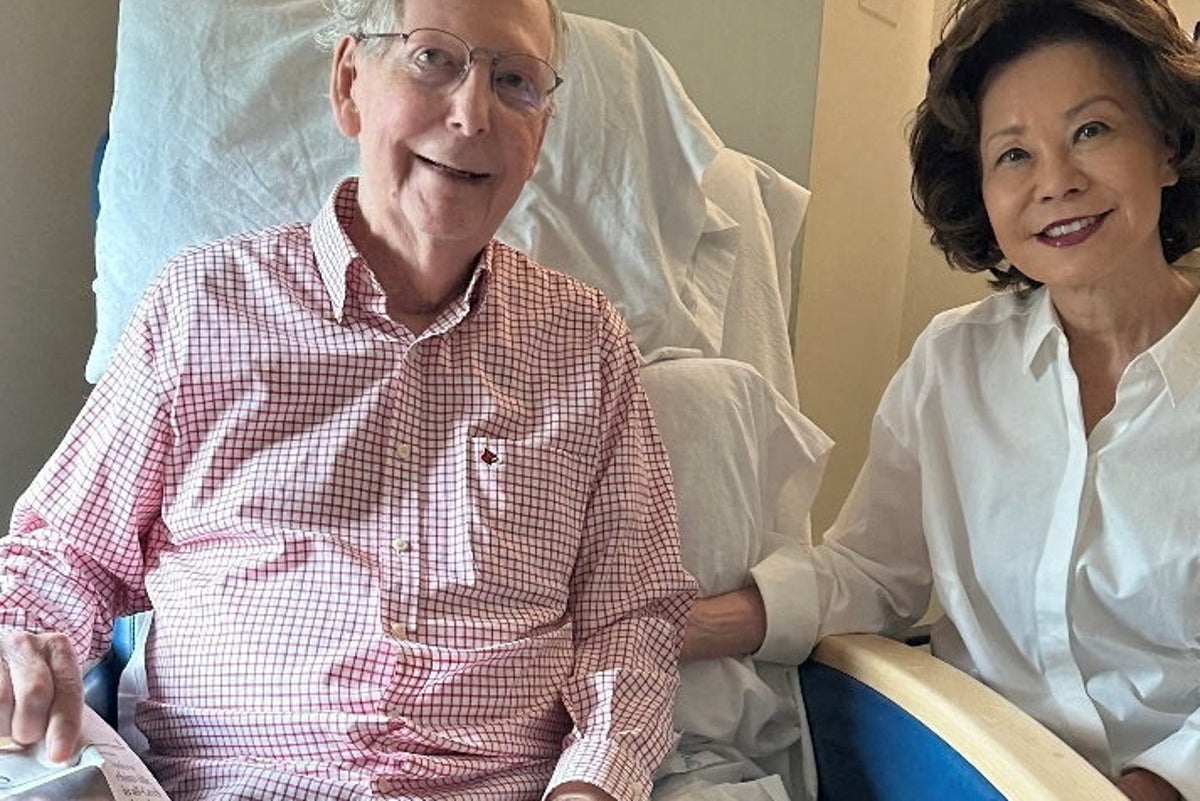
It was a classic "proof of life" image, a trope borrowed from international kidnapping negotiations and adapted for modern political spin. The picture showed a smiling McConnell sitting at a table inside a rehabilitation facility, flanked by his allies. In his hands, held forward like a shield against the doubters, was the sports section of The Washington Post.
The message was clear: I am here. I am reading. It is today.
But in the age of digital manipulation and deep skepticism, a photo is no longer an answer. It is a prompt for further questions. In the hierarchy of journalism, the task of answering those questions rarely falls to the veteran investigative reporter with a Pulitzer on their shelf. It falls to the lowest rung of the ladder.
It falls to the intern.
The Weight of the Microscopic
Every journalist remembers the first assignment that made them feel ridiculous.
For the intern tasked with dissecting the McConnell photo, the assignment must have felt like a prank. While colleagues chased leads on national security or tax policy, this young reporter was instructed to stare at a digital image of a sports page until it gave up its secrets.
The stakes, however, were deceptively high. If the newspaper in the photograph was an old issue, or if the photo had been doctored, it would spark a political firestorm. If it was genuine, it would quiet a nervous market and settle a frantic Capitol Hill.
This is where the romance of journalism meets the grueling reality of microscopic observation.
Consider the anatomy of a modern newspaper. To the casual reader, it is a jumble of ink and cheap paper. To an investigator, it is a fingerprint. Every edition has a unique geometry—the width of the columns, the precise crop of an action shot of a basketball player, the specific wording of a sub-headline.
The intern began by zooming in.
The image was grainy, the text blurred by the limits of a smartphone camera and the compression of social media uploads. But the visual cues were there. There was a photo of a player in a red jersey. There was a block of text that seemed to match the length of a specific game recap.
The first step was logical deduction. If the photo was released on a Thursday, the paper had to be from that morning. The intern went to the archives, pulling the physical print editions of the sports section.
This is where the digital world failed and the physical world took over. To verify the truth, the intern had to compare the pixels on a screen to the actual, ink-smudged paper. They laid the pages out on a desk, measuring margins, comparing the curve of a headline to the blurry arc visible between McConnell’s fingers.
It matched. It was the Thursday sports section.
But the verification could not stop there. In Washington, a verified date on a newspaper only proves that someone had access to that newspaper on that day. It does not prove where or when the shutter clicked.
The Paper Trail of a Single Morning
To build an airtight case, you have to look beyond the subject and into the logistics of the environment.
The intern had to trace the physical journey of that specific piece of newsprint. How does a copy of The Washington Post arrive at a private rehabilitation facility in the early hours of a spring morning?
It starts at a printing plant in Springfield, Virginia, where massive rolls of paper are fed through high-speed presses at three in the morning. From there, bundle trucks depart into the pre-dawn darkness, dropping stacks of print at distribution points across the metro area. Delivery drivers, working in the quiet hours before the city wakes, carry these bundles to the doorsteps of subscribers, hotels, and care facilities.
The intern began making calls.
They contacted the facility where McConnell was recovering. They inquired about their newspaper delivery schedule. They spoke to staff, confirming not just that the paper arrived, but that it was distributed to the floor where the senator was staying.
This is the unglamorous core of truth-seeking. It is not about dramatic confrontations in dark parking garages. It is about the tedious confirmation of routine. By establishing that the paper was delivered at 6:00 AM and the photo was taken later that morning, the intern closed the loop.
The photograph was real. The timeline held.
Yet, the success of the investigation revealed a deeper, more unsettling truth about the nature of modern public life.
The Illusion of Presence
Why did the Senate Majority Leader’s team feel compelled to stage a photo holding a sports section in the first place?
We live in an era of unprecedented connectivity, yet we have never been more disconnected from the people who govern us. Our leaders exist as avatars, curated through press releases, heavily edited videos, and social media feeds managed by twenty-something staffers.
When that avatar suddenly stops updating, the illusion of stability cracks.
The "proof of life" photo is a desperate attempt to bridge that gap. It is an acknowledgment that a simple statement from a spokesperson is no longer enough to satisfy a cynical public. We demand visual evidence. We demand a physical artifact—like a newspaper—to anchor the image in a specific moment in time.
But there is a profound irony here.
The newspaper, an industry that has spent the last two decades fighting for survival against the digital onslaught, was suddenly called upon to serve as the ultimate Arbiter of Truth. In his hour of political vulnerability, McConnell did not hold up an iPad showing a live website or a television screen displaying a cable news crawl. Those things can be easily faked, edited, or green-screened.
He held up newsprint.
The heavy, ink-stained relic of a bygone era was the only thing trusted enough to verify his existence. The very medium that many political strategists write off as obsolete became the most valuable piece of real estate in Washington for a single morning.
The Silent Witness
The intern’s work was eventually published—a brief, precise piece of reporting that laid out the evidence and confirmed the photo’s authenticity. The conspiracy theories faded. McConnell eventually returned to the Senate floor, his grip on power intact for a little while longer, before the inevitable march of time led to his eventual step back from leadership.
But the image of that sports section remains.
It sits in the digital archives, a testament to a moment when the machinery of power had to pause and prove its own heart was still beating. And behind that verification was a young journalist, sitting at a messy desk, squinting at a screen, doing the quiet work that keeps the world honest.
They did not do it for glory or for a front-page byline that would be remembered for decades. They did it because in a town built on whispers and mirrors, the truth is the only currency that actually holds its value when the lights go down.