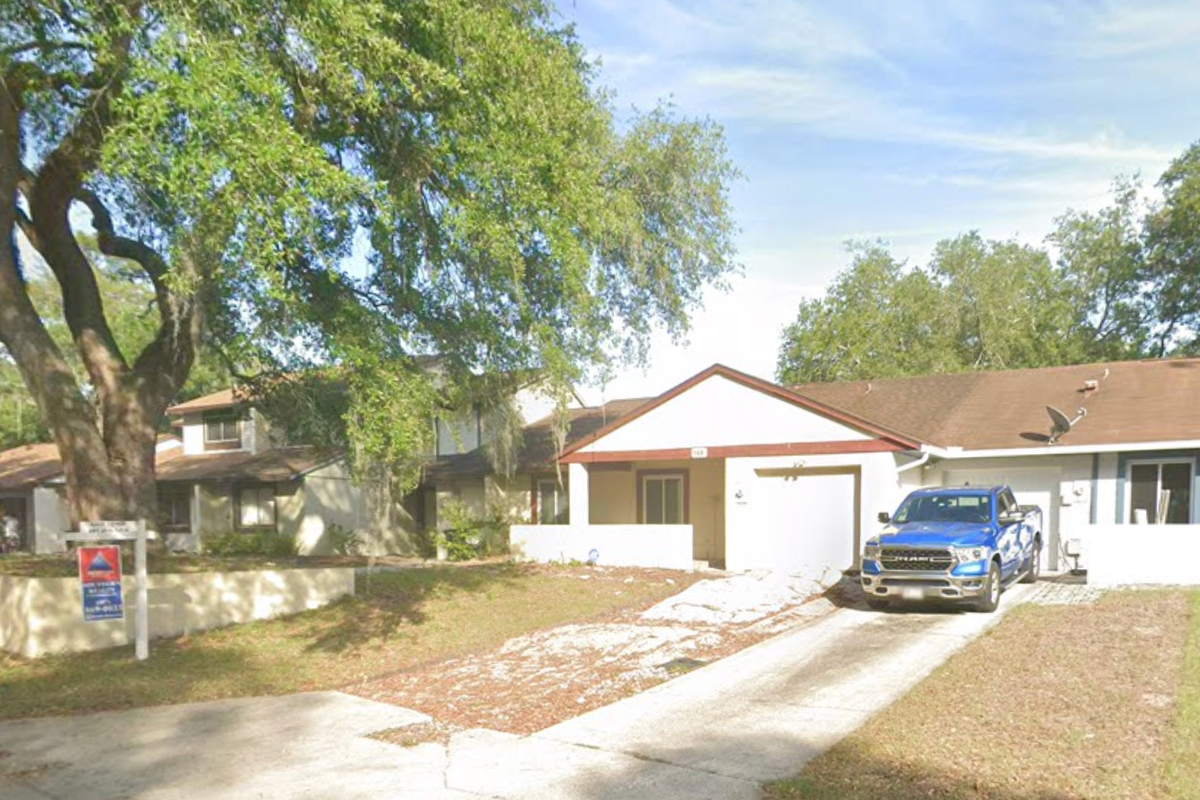
Amanda Jenkins stood at her front door, blinking into the harsh Florida sun. She looked down. Then she looked down again, rubbing her eyes as if to clear a hallucination.
Where yesterday there had been a solid, gray ribbon of concrete connecting her garage to the quiet suburban street, there was now only dirt. Raw, brown, excavated earth. A gaping trench. Her driveway was gone. Completely gone.
It sounds like a punchline. A surreal, dark comedy sketch played out in a manicured neighborhood where the homeowners' association rules usually govern the exact shade of beige you can paint your shutters. But for Amanda, it was the beginning of a bureaucratic and financial nightmare. She was standing on the precipice of a modern crisis, a victim of an invisible, hyper-evolved predatory machine.
We tend to think of scams as digital phantoms. We picture a suspicious link in a spam email, a poorly worded text about a missed package, or a robotic voice claiming to be from the IRS. We assume our physical world is safe. We believe that the heavy, tangible things we own—our walls, our roofs, our land—cannot be coded away.
We are wrong.
The Perfect Mirage
To understand how someone steals a driveway, you have to understand the terrifying simplicity of the modern property scam. It does not start with a bulldozer. It starts with a listing.
Consider a hypothetical buyer named Marcus. He is twenty-four, working hard, and desperate to buy his first piece of land. He spends his evenings scrolling through real estate apps, watching prices climb further out of reach. One night, a listing pops up. A parcel of land in a quiet Florida county, priced beautifully below market value. The seller, communicating entirely through a messaging app, explains they inherited the land but live overseas. They need a quick cash sale. They send deeds, tax records, and official-looking identification.
Marcus feels a surge of adrenaline. This is his shot. He wires the money to an escrow account provided by the seller's agent. He signs the digital documents.
Except the person on the other end of that chat is not a property owner. They are sitting thousands of miles away, perhaps in an internet cafe in Lagos, operating within a highly organized syndicate. The deeds are sophisticated forgeries. The escrow account belongs to a money mule.
The scammer has just sold Amanda Jenkins’s property right out from under her feet.
But the thief doesn’t stop there. To make the scam complete, to make the "vacant lot" look ready for development, the fake seller commissions a local contractor to clear the land. A legitimate, local business receives a digital work order: Go to this address. Rip up the existing structures. Prep the site for new construction.
The contractor arrives with heavy machinery. They do their job. They leave.
Vanished.
The Illusion of Ownership
When Amanda called the police, the responding officers were bewildered. There is no standard protocol for a stolen driveway. It doesn’t fit into the neat boxes of grand theft auto or residential burglary.
"Who did this?" she asked, her voice shaking.
The short answer was a contractor who thought they were working a legal job. The real answer was a ghost. A digital spectert that vanished the moment the wire transfer cleared.
This is where the true horror of modern identity and property theft sets in. The vulnerability is not a glitch in our technology; it is a feature of our reliance on convenience. We have optimized our world for speed. We buy cars online. We sign mortgages on our phones while sitting in traffic. We have traded security for friction-free living, and the predators have noticed.
They leverage our trust in the system. They use the public nature of property records—designed for transparency—to find their targets. They look for homes with out-of-state owners, elderly residents, or properties without liens. Then they build a digital duplicate of that life, sell it, and leave the real-world owner to pick up the pieces.
Imagine waking up to find that your home is no longer legally yours because a county clerk accepted a digital signature from an imposter. It happens every day. The crime is called deed fraud, and it is growing exponentially. The driveway is just the most visceral, absurd manifestation of a system cracking under the weight of digital deception.
The Cost of Raw Dirt
The emotional toll of this crime is immediate, but the financial aftermath is a slow, grinding gears of bureaucracy.
Amanda’s insurance company initially balked. Property insurance is designed for fires, hurricanes, and falling trees. It is not designed for a criminal ordering a construction crew to dismantle your home piece by piece. The contractor, realizing they were used as an instrument of a crime, faced their own financial ruin, caught between an angry homeowner and a ghost contract.
The victim is left standing on the edge of the dirt trench, realizing that the laws designed to protect them are agonizingly slow to adapt to the speed of the internet.
The world shifted when the internet allowed us to touch the physical world through a screen. A few keystrokes in Nigeria can deploy a bulldozer in Florida. That is the terrifying reality of our interconnected lives. The distance between a digital lie and physical destruction has been reduced to zero.
Amanda eventually had to replace the concrete out of her own pocket, paying thousands of dollars just to be able to park her car in her own garage again. The dirt is gone now, covered by fresh, gray concrete. But the illusion of absolute safety is gone forever.
The next time you walk up your driveway, look down. Feel the solid weight of the concrete beneath your shoes. It feels permanent. It feels unmovable. But in a world where everything can be digitized, even the ground beneath your feet can be wiped away by a stranger in the dark.