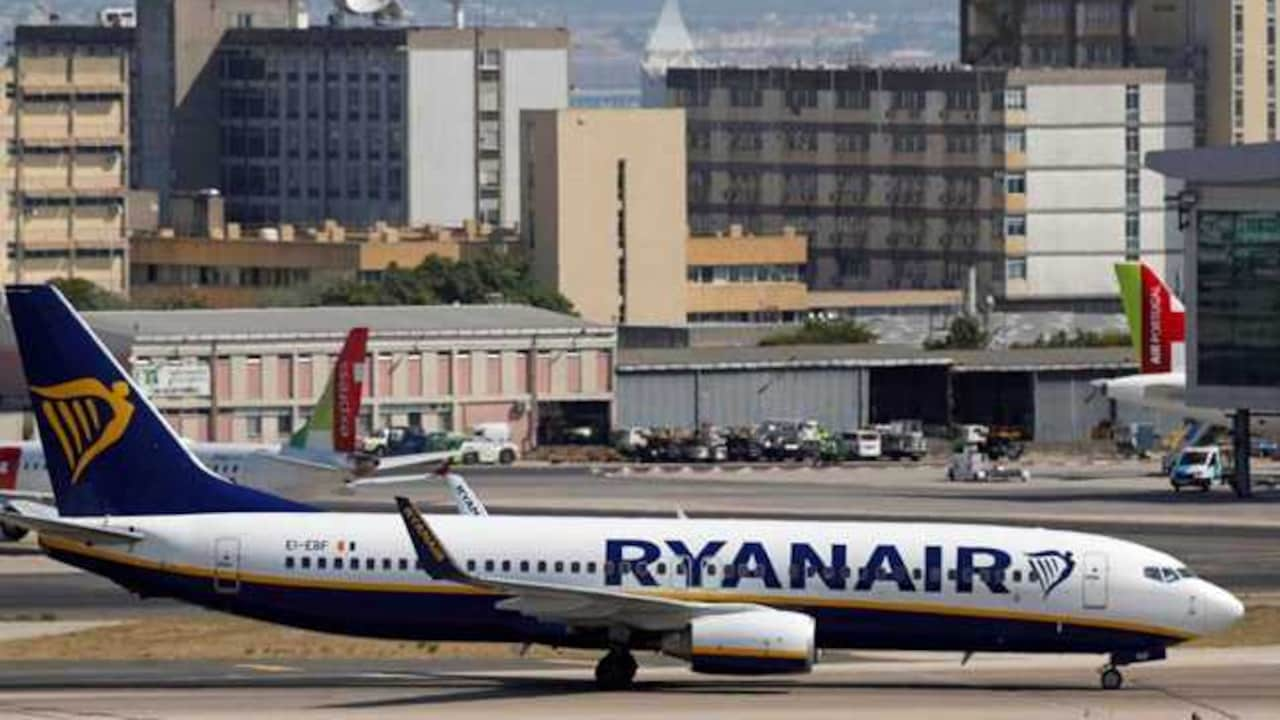
The modern low-cost carrier operates under an uncompromising structural mandate: extract maximum seat utilization while compressing unit costs to the absolute technical floor. When executive leadership resorts to extreme rhetorical comparisons to attack competitor pricing strategies, it exposes more than a momentary lapse in judgment. It reveals structural anxiety regarding yield management thresholds, cost inflation, and the limits of market expansion. Understanding the recent controversy surrounding Ryanair executive commentary requires moving past the superficial media outrage to examine the underlying economic mechanics of European aviation, the true cost functions of legacy versus point-to-point carriers, and the quantifiable fallout of reputational volatility.
The Structural Mechanics of Low-Cost Carrier Cost Functions
To understand why budget carriers obsess over competitor pricing, one must first deconstruct the cost-per-available-seat-kilometer model. Legacy network carriers operate hub-and-spoke architectures that carry inherent structural inefficiencies. These include complex fleet maintenance scheduling, multi-class cabin configurations that reduce total seat density, global distribution system booking fees, and extensive ground-handling overhead at primary international airports.
By contrast, ultra-low-cost carriers enforce a radically simplified operational matrix:
- Single-type fleet standardization reduces pilot training costs, inventory holding requirements for spare parts, and maintenance turnaround times.
- Point-to-point routing eliminates expensive transfer-passenger baggage tracking and missed-connection rebooking liabilities.
- Utilization maximization ensures aircraft spend minimum time on tarmac ground stops, driving down fixed-cost amortization per flight hour.
These mechanics produce a structural cost advantage that routinely undercuts legacy airline unit costs by thirty to fifty percent. Yet, this exact operational setup creates a permanent vulnerability. Because low-cost carriers rely on absolute volume to achieve profitability, any compression in passenger yield or stagnation in booking velocity immediately threatens operating margins. When competitor airlines maintain high baseline fares on overlapping routes, low-cost executives perceive an artificial barrier to total market capture.
Yield Management and the Elasticity of Air Travel Demand
Airlines do not sell seats; they sell perishable inventory across dynamic time horizons. The economics of airline seat management rely on price discrimination. Legacy carriers utilize sophisticated algorithms to segment business travelers—who exhibit low price elasticity and demand schedule flexibility—from leisure travelers, who exhibit high price elasticity and book far in advance.
When budget carriers enter a market, they compress the entire yield curve downward, forcing legacy carriers to defend their high-yield business segments while matching low-end fares to prevent load factor erosion. The conflict arises from the divergence in underlying asset utilization. A legacy carrier flying an empty business-class seat absorbs the loss through high corporate ticket premiums elsewhere in the network. A low-cost carrier flying an empty seat destroys its high-density economic model.
Executive outbursts regarding competitor pricing structures reflect frustration with this pricing asymmetry. When full-service carriers maintain elevated fares despite falling fuel surcharges or macroeconomic headwinds, they preserve profit pools that budget airlines cannot easily access without compromising their own volume-driven value proposition. However, framing this commercial friction through inappropriate and inflammatory rhetoric introduces an entirely different category of risk: reputational depreciation.
Quantifying Reputational Damage and Stakeholder Friction
Corporate leadership acts as a primary vector for brand equity. In publicly traded aviation markets, institutional investors and consumer bases monitor executive conduct for signals of operational stability and governance maturity. When high-profile executives cross the line from aggressive commercial positioning into severe verbal misconduct, the immediate consequence is stakeholder friction rather than direct revenue loss.
The transmission mechanism of reputational harm operates across three distinct channels:
- Consumer Defection: While price remains the primary determinant for budget airline patronage, extreme social friction alienates demographic segments that value corporate social responsibility or harbor trauma related to the targeted terminology.
- Regulatory Scrutiny: Aviation authorities and consumer protection agencies monitor aggressive market participants closely. Inflammatory public statements invite heightened regulatory audits regarding ancillary fee transparency, passenger rights compliance, and slot allocations.
- Talent Acquisition and Retention: High-performing operational personnel and commercial strategists increasingly factor corporate culture and executive stability into employment decisions. Reputational volatility depresses employer brand equity, increasing recruitment friction and turnover costs.
The subsequent public apology issued by airline leadership represents a necessary damage-mitigation step, but it underscores a systemic governance failure. Effective risk management requires internal controls that prevent erratic public declarations from contaminating enterprise valuation.
Market Concentration and the Limits of Point-to-Point Expansion
Beyond rhetoric and cost structures, the European aviation sector faces structural bottlenecks that constrain further low-cost expansion. Primary airport slot allocations are heavily concentrated among legacy flag carriers. Budget airlines are frequently forced to operate out of secondary or tertiary airports located significant distances from major metropolitan centers.
This spatial constraint alters the true door-to-door cost equation for passengers. While the base ticket price may be remarkably low, ground transportation costs, parking fees, and travel time introduce friction that limits the addressable market. As primary airports remain capacity-constrained, low-cost carriers must either accept lower growth rates or engage in aggressive lobbying and legal challenges against slot hoarding by legacy competitors.
This structural frustration explains why executive rhetoric frequently boils over into public spats. The avenues for organic market capture are physically restricted by infrastructure limitations, leaving pricing comparisons and public posturing as alternative instruments of competitive pressure.
Ancillary Revenue Optimization as a Hedge Against Yield Compression
To offset the inherent volatility of base fare pricing, low-cost carriers pioneered the unbundling of air travel products. Ancillary revenue streams—including priority boarding, seat selection fees, onboard catering, baggage charges, and third-party hotel or car rental commissions—now constitute a critical percentage of total top-line revenue.
When competitor pricing remains artificially high or demand fluctuates due to macroeconomic pressures, ancillary yield management provides a vital buffer. However, aggressive ancillary monetization strategy carries its own operational risks. Consumer pushback regarding hidden fees and strict baggage dimensional limits frequently generates negative public relations cycles. When executive leadership compounds this underlying consumer friction with inflammatory public rhetoric, it exacerbates brand vulnerability across all touchpoints.
Strategic Realignment in European Aviation
The structural realities of the airline industry dictate that aggressive competition will persist independently of executive rhetoric. As fuel price volatility, environmental compliance mandates, and labor negotiations squeeze margins across the board, the margin for operational error narrows.
Long-term survival and market dominance will not be achieved through provocative public statements or sensationalist comparisons. Instead, carriers that successfully optimize aircraft turnaround times, secure fuel-efficient fleet upgrades, and navigate secondary airport constraints will capture enduring market share. The competitive battleground remains anchored in rigorous cost discipline, digital distribution efficiency, and unwavering operational execution. Executive focus must remain strictly aligned with these quantifiable metrics rather than inflammatory public discourse.