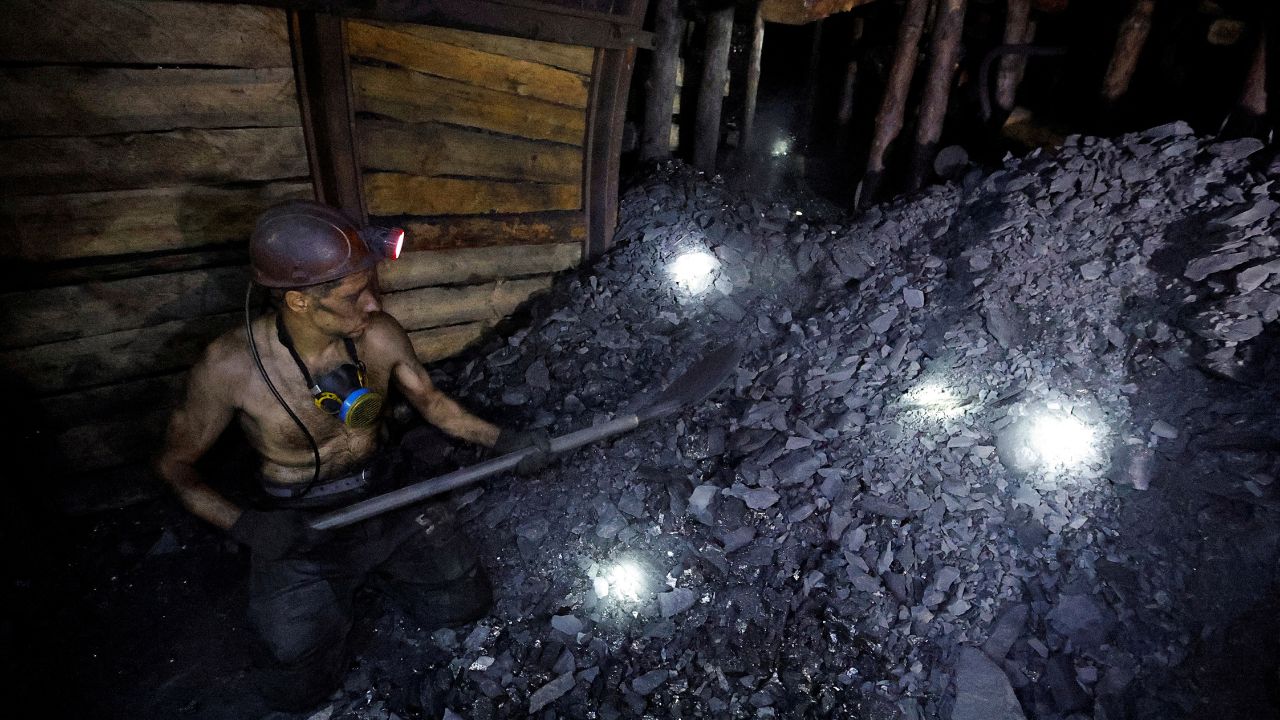
The air in a coal mine doesn’t just sit there. It has a weight, a texture, a specific scent of damp earth and ancient carbon that clings to the back of the throat. For the men working the seams in the Luhansk region, this thick atmosphere is the only world that exists for eight hours at a time. Above them, the sun might be shining or the rain might be turning the Donbas soil into a thick, black slurry, but deep underground, the only reality is the hum of the ventilation fans and the rhythmic bite of machinery against the rock.
Then comes the pressure. You might also find this related coverage interesting: Operational Attrition in Maritime SAR Operations The Logistics of Suspension.
It isn’t always a sound. Sometimes, it’s a physical shove against the eardrums, a sudden displacement of air that signals something has changed in the world above. On a recent Tuesday, that pressure arrived with the force of a Ukrainian strike. High above the labyrinthine tunnels, the infrastructure of the mine—the veins and arteries that keep the underground world alive—shattered. Power failed. The fans died. The elevators, the only umbilical cord connecting forty-one men to the surface of the earth, froze in their tracks.
Forty-one. As extensively documented in recent coverage by NBC News, the effects are notable.
It’s a number that looks small on a digital news ticker. It fits neatly into a headline. But forty-one is forty-one distinct heartbeats. It is forty-one sets of lungs beginning to calculate exactly how much oxygen remains in a confined space. It is forty-one families in the Russian-controlled territory of eastern Ukraine, looking at the clock and realizing the shift change has passed without a word.
The Anatomy of a Trap
When a mine loses power in a war zone, the clock starts ticking in three different directions at once.
First, there is the air. Without the massive ventilation systems pumping fresh oxygen down and drawing methane out, the atmosphere turns predatory. Methane is the ghost of the coal mine; it is colorless, odorless, and highly flammable. Without circulation, it pools in the pockets of the ceiling, waiting for a spark. Second, there is the water. Many mines in this region require constant pumping to prevent the lower levels from flooding. When the grid goes dark, the water begins its slow, patient rise.
Third, and perhaps most taxing, is the psychological weight.
Imagine a hypothetical worker named Alexei. He has spent twenty years in these tunnels. He knows the sounds of the earth shifting, the way the timber supports groan under the weight of the mountain. He knows that when the lights flicker and die, and the heavy silence of the dead fans takes over, the earth is no longer his workplace. It is a tomb. He sits in the dark, the beam of his headlamp cutting a lonely circle through the dust, and he thinks about his daughter's graduation. He thinks about the tea cooling on a kitchen table miles away.
Alexei isn't a political figure. He isn't a strategist. He is a man who trades his daylight for a paycheck, caught in the literal and figurative crossfire of a conflict that has turned his backyard into a chessboard.
The Invisible Infrastructure
The strike on the Luhansk mine wasn't a random act of violence. In the brutal logic of modern attrition, coal is energy, and energy is the lifeblood of an occupation. By targeting the industrial heart of the Russian-controlled sectors, Ukraine aims to sever the economic nerves that keep the machinery of the front lines moving.
But the logistics of war often ignore the biology of the civilian.
The Donbas region is built on coal. The towns here exist because the seams run deep and rich. When a mine is struck, it isn't just a blow to the "enemy's" resources; it is a puncture wound in the local community. The forty-one miners trapped in the darkness are likely local men, individuals who have navigated the changing flags and shifting front lines for over a decade. They are the collateral of a strategy that views a mine as a target rather than a workplace.
The rescue operations in these circumstances are fraught with a tension that standard mining accidents never face. Usually, a mine rescue is a race against nature. You fight the rock, the gas, and the water. Here, the rescuers must also fight the clock of a simmering war. Will there be a second strike? Is the road to the mine clear of debris? Can the specialized equipment needed to restore power be moved through a landscape under constant surveillance?
The Weight of the Wait
Above ground, the scene is a different kind of suffocating.
The families of the trapped miners gather near the gates. There is a specific kind of silence in a mining town when the sirens go off—a collective holding of breath. They know that every minute the power stays off is a minute the air gets thinner. They know that the rescuers are working with hand tools and portable generators, trying to bypass scorched electrical grids to reach the cage.
Consider the reality of those forty-one men as the first hour turns into the fifth, and the fifth into the tenth.
They would likely cluster together. There is comfort in the heat of another human body when the temperature begins to drop or the humidity spikes. They would speak in low voices to conserve breath. They would share the remains of their water. In the dark, the distinctions of the world above—politics, borders, the "why" of the strike—fade away. There is only the immediate, desperate "how" of survival.
This is the human cost that a dry report on "infrastructure damage" fails to capture. We talk about megawatts and supply lines, but we rarely talk about the vibration of a phone in a miner's pocket—a text from a wife asking if he's okay, a message he cannot see and cannot answer.
A Landscape of Scars
The Luhansk region is a map of such scars. Every shuttered factory and flooded mine represents a decade of lost potential, but more importantly, a generation of people living in a state of suspended animation.
The strike on this particular mine is a microcosm of the larger struggle. It highlights the impossible position of the civilian population in contested territories. If they work, they are supporting an economy that fuels the war. If they don't, they starve. And even when they do work, the very ground beneath them can become a weapon used against the powers that claim to govern them.
The extraction of coal is a violent process by nature. You blast, you drill, you tear. But that violence is supposed to be controlled, a calculated bargain between man and the earth. War removes the control. It turns the bargain into a gamble.
As the rescue crews worked through the night, the world moved on to other headlines. But for the people of Luhansk, the story didn't end with a news cycle. It won't end when the power is eventually restored or when the forty-one men are finally brought to the surface, blinking against the harsh light of a world that tried to bury them.
The trauma of the dark stays in the lungs. It stays in the way a man looks at the ceiling when he finally lies down in his own bed. It stays in the way a daughter holds her father's hand a little tighter the next time he gets ready for the morning shift.
The earth is heavy. It doesn't care about the color of a uniform or the trajectory of a missile. It only knows how to press down, waiting for a moment of weakness to reclaim the space we’ve carved out of it. Above the tunnels, the war continues its loud, chaotic path across the surface. Below, in the damp and the quiet, forty-one men wait for the sound of a mechanical hum—the sound of life being pumped back into a world of shadows.
They are still down there, or they were, or they will be again tomorrow. The mine remains. The war remains. And the air, thick with the scent of coal and fear, continues to weigh exactly what it always has.
The silence is the loudest thing of all.