The Public Sobriety Myth
Banning open containers across railway platforms sounds like standard-issue civic hygiene. It plays well in press releases. It gives municipal leaders a clean photo op with police chiefs. It lets transport executives pretend they are actively engineering a safer travel environment.
It is also an utter failure of operational logic.
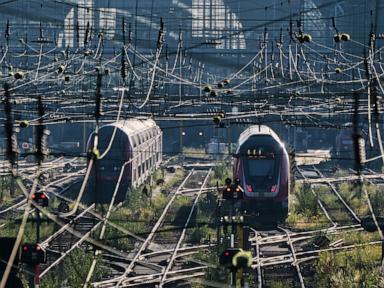
When Deutsche Bahn pushes to purge alcohol consumption from station premises—carving out neat little exemptions for paying restaurant patrons—they aren't solving a safety issue. They are shifting a visible public health problem three feet past the station gates and calling it progress.
Let's strip away the bureaucratic spin. The assumption behind banning booze on train platforms is simple: take away the beer, take away the anti-social behavior. But public safety data does not support this line of thinking. Aggressive behavior, public intoxication, and violent altercations do not vanish when you outlaw open cans near ticket kiosks. They migrate.
Pushing the Problem Past the Ticket Barriers
I have spent years analyzing transit operations and urban security strategies across major European hubs. I've watched transport authorities deploy these sweep-and-clear mandates dozens of times. The playbook never changes, and neither do the catastrophic secondary effects.
When you criminalize or fine low-level open-container drinking inside a well-lit, heavily monitored central train station, you don't magically convert habitual drinkers or rowdy weekend commuters into quiet teetotalers. You force them into the dark alleys, unmonitored side streets, and residential pockets directly bordering the station.
Inside the station, you have CCTV density, private security patrols, federal police presence, and immediate access to emergency services. Outside the station perimeter, you have none of those safeguards.
By driving vulnerable or unruly groups out of monitored zones, DB doesn't eliminate risk—they displace it into neighborhoods with zero infrastructure to handle it.
The Exemption Paradox
Look closely at how these bans are structured. You cannot sit on a platform bench with a €1.50 pilsner bought from a local kiosk. However, you can sit ten yards away at an outdoor station bistro and drink €6 draft beers until you're completely incapacitated.
This exposes the policy for what it actually is: socio-economic sorting disguised as safety enhancement.
- Class-Based Policing: Drinking is deemed a threat only when it is cheap and unattached to a commercial dining receipt.
- Selective Enforcement: Security guards spend hours harassing low-income travelers while ignoring affluent groups causing identical disruptions at station bars.
- Enforcement Burnout: Transit police waste finite resources writing administrative tickets for passive open containers instead of focusing on actual theft, sexual harassment, and violent crime.
The Real Numbers Security Chiefs Ignore
Ask any veteran transit officer off the record, and they will tell you the same thing: enforcing alcohol bans creates more active conflict than it prevents.
The moment a guard approaches an intoxicated person to confiscate a bottle or issue a fine, the interaction instantly escalates. What was a passive, quiet violation becomes an active confrontation. You convert a static situation into a dynamic security threat.
Imagine a scenario where a group of football fans arrives at Frankfurt Central Station. Under standard protocol, they stand on the platform, finish their drinks, and board their train. Under a strict alcohol ban, security officers intercept them on arrival. The confrontation escalates. Arrests are made. Delays ripple across the entire regional line. A routine transit flow turns into a two-hour operational bottleneck.
This isn't theoretical. It is the predictable result of turning minor civil infractions into security flashpoints.
How Modern Transit Systems Should Actually Manage Safety
If European rail operators actually wanted to reduce anti-social behavior instead of running PR campaigns, they would dump the prohibition playbook entirely.
1. Hard Target Actual Violence, Ignore Passive Consumption
Zero-tolerance policies are lazy. They allow management to treat a calm commuter reading a book with a beer identically to a belligerent individual threatening passengers. Transit authorities must train security personnel to intervene based on behavior, not beverages.
2. Double Down on Environmental Design
Incidents drop when stations are clean, brilliantly lit, well-staffed, and designed to move crowds efficiently. Dark corners, broken elevators, abandoned retail units, and absent staff create environments where anti-social behavior flourishes—whether alcohol is involved or not. Fix the infrastructure before blaming the beverage.
3. Establish Dedicated Public Health Partnerships
Public intoxication is predominantly a social services challenge, not a criminal justice problem. Cities like Zurich proved decades ago that integrating social workers directly into transit hubs yields far better long-term safety metrics than deploying riot police with clipboard fines.
Stop Buying into the Prohibition Fallacy
Railways aren't safer because they outlawed a can of beer on a platform. They are just better at hiding the reality from passengers who don't look past the lobby doors.
Until transit executives stop treating public safety like a PR problem to be swept under the rug, station perimeters will continue to degrade, security resources will remain stretched thin on trivial fines, and passengers will be sold the illusion of security while the underlying issues get worse.
Put the fine books away. Focus on actual violent crime. Design better stations. Stop pretending a piece of paper on a platform wall changes human behavior.