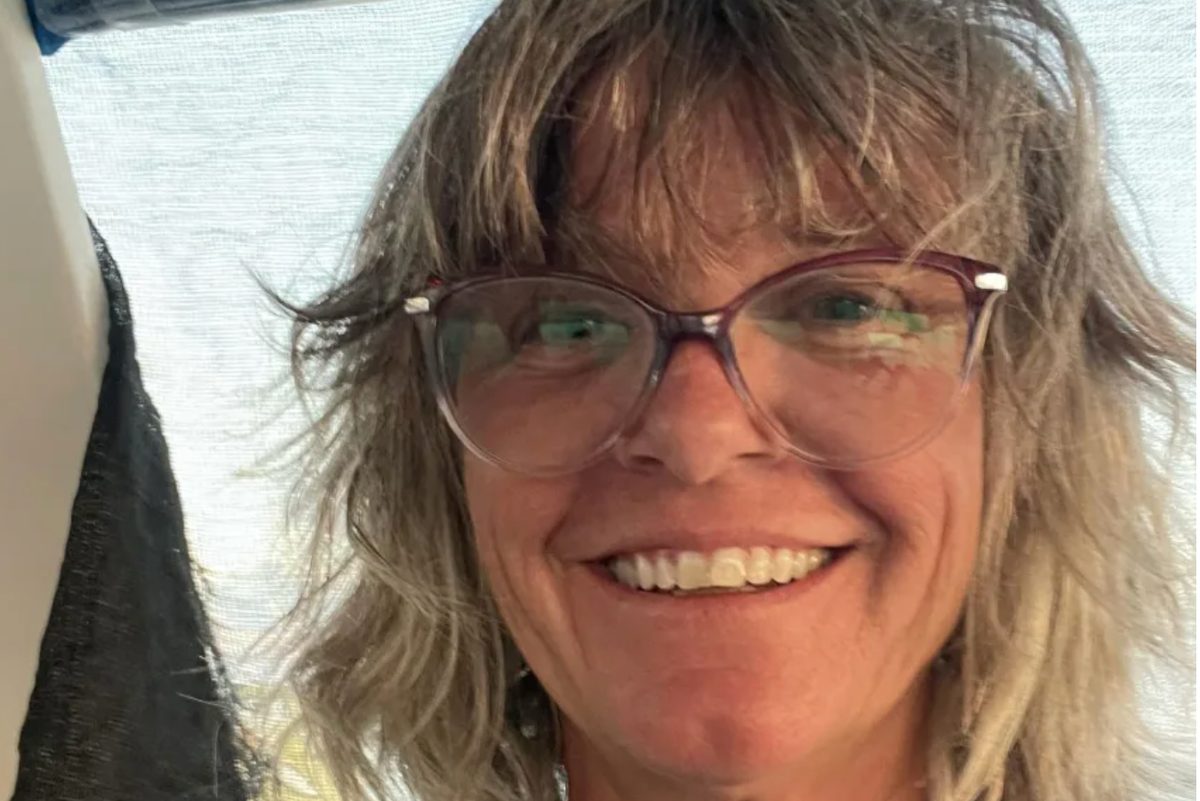
People don't just vanish into thin air, especially not in the relatively shallow waters of the Sea of Abaco. Yet, for two months, that was the narrative surrounding Michigan sailor Lynette Hooker. Her husband claimed a freak accident took her. The winds were high, the water was rough, and she simply slipped beneath the waves.
That story isn’t holding up anymore.
What looked like a tragic open-ocean accident has transformed into a high-stakes federal criminal investigation. U.S. Coast Guard divers just touched down in the Bahamas to launch a brand-new search. They aren't guessing where to look anymore. They have something far more reliable than a human story. They have GPS data.
The Night Everything Went Wrong near Elbow Cay
On April 4, Brian and Lynette Hooker were doing what they had done for over a decade. They lived the cruising life, documenting their travels on social media. They had a decent-sized yacht named Soulmate. That evening, they grabbed food and drinks at the Abaco Inn, a popular spot nestled on Elbow Cay.
According to Brian, they hopped into their eight-foot dinghy around 7:30 p.m. to head back to the yacht. Then, chaos supposedly struck. He told investigators that Lynette fell overboard into the dark, choppy water.
Here is where the story gets incredibly specific—and where family members started scratching their heads. Brian claimed that when Lynette fell, she had the dinghy’s engine safety lanyard attached to her. When she went over, the key pulled out. The motor killed instantly.
He claimed he threw her a flotation device, but the heavy winds and relentless currents pushed them apart. With a dead engine, Brian said he had no choice but to paddle for seven grueling hours through the night until he finally hit land at Marsh Harbour to report her missing.
The Red Flags That Devastated a Family
If you talk to anyone who actually spends time on the water, you quickly realize how fragile this narrative feels. Lynette’s daughter, Karli Aylesworth, wasn't buying it from the start.
Lynette wasn't a novice. She was an experienced, highly capable sailor and a strong swimmer. The idea that she would just float away without a fight didn't sit right.
Then came the logistical questions. If your spouse falls into the water at night, you don't paddle away. Why didn't he drop an anchor to stay in the immediate area? Why didn't he use more than two flares if it was a life-or-death emergency?
"Why wouldn't he drop anchor and look for her? Why did he paddle the other way?" Aylesworth asked in a media interview.
The couple's history also added layers of doubt. Text messages from early 2024 revealed that Lynette had actually left Brian at one point during their sailing journey. She moved back to Florida to stay with her mother, writing to a friend that the closeness was too much and that things had gotten "real bad."
They reconciled a month later. They went back to sea. A year later, she was gone.
How Cold Hard Tech Blew the Case Wide Open
For weeks, the investigation seemed stalled. Bahamian police arrested Brian Hooker shortly after the incident, holding him as a suspect in relation to causing harm. But without a body or definitive physical evidence, they couldn't hold him forever. He was released without charges, hopped on a plane back to the United States, and essentially dropped out of the public eye.
But federal investigators were quietly working in the background. The U.S. Coast Guard Investigative Service didn't let the case go. They tracking down the Soulmate, intercepting the yacht 40 nautical miles off the coast of Melbourne, Florida. They seized it under a federal criminal warrant.
They also went digging into the digital footprints left behind that night.
Smartphones, chart plotters, and marine electronics don't lie. They don't get confused by trauma, and they don't change their stories. Investigators extracted GPS tracking data from at least one electronic device belonging to Brian Hooker.
The digital trail didn't match the spoken one.
The forensic data showed a completely different path of movement through the Sea of Abaco. The device showed the boat traveling out into the water, stopping for a period, and then returning. It flatly contradicted the coordinates and timelines Brian had provided to authorities.
The New Target Zone in the Bahamas
This digital contradiction changed everything. It gave the U.S. Coast Guard a precise, localized target area. They didn't have to search the entire island chain anymore; they had a specific grid coordinate where the boat actually stopped.
With permission from the Royal Bahamas Police Force, a specialized U.S. Coast Guard dive team arrived on June 2. By June 3, orange Coast Guard dinghies and Bahamian defense force vessels were actively combing the waters near Hope Town.
Divers and shore teams are carefully wading through shallow waters and inspecting cays that were completely ignored during the initial search. They are looking for physical evidence. They are looking for Lynette.
The pressure is mounting from every angle. Federal agents recently requested DNA mouth swabs from Lynette's daughter and her elderly parents to assist with identification. The FBI laboratory in Quantico is currently tearing apart the electronics seized from the Soulmate, including a high-tech infrared camera system mounted on the vessel.
Brian Hooker’s attorney maintains that her client has done nothing wrong and has cooperated with the investigation, but the wall of forensic evidence is closing in fast.
The next steps in this case won't depend on who has the better story. They will depend on what the divers find at the exact coordinates where the GPS says that boat stopped in the dark.