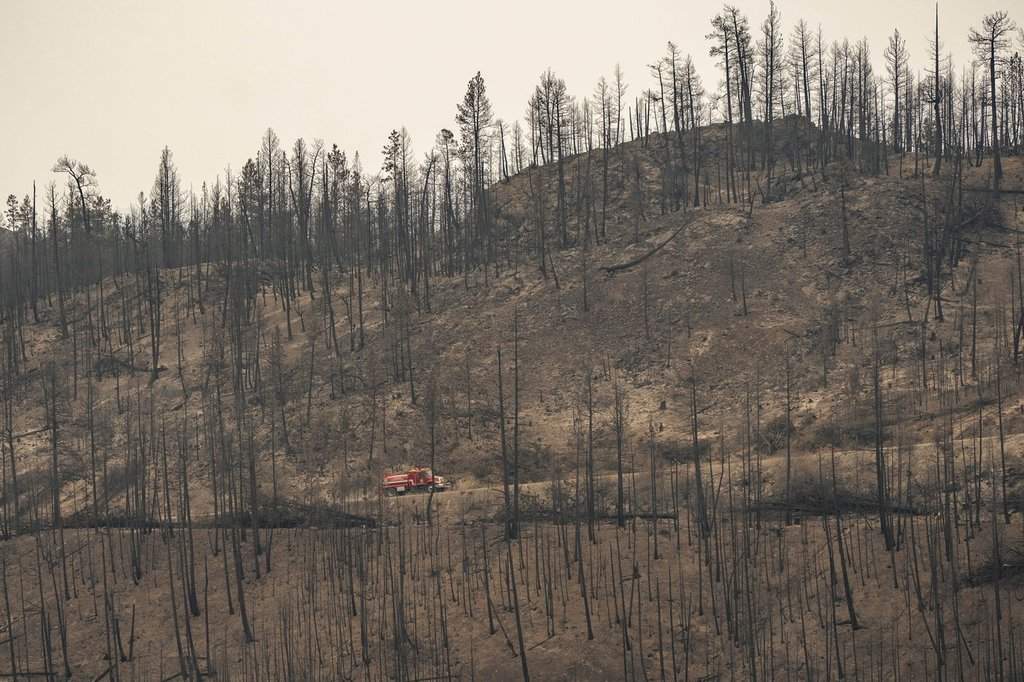
When the smoke rolls over the ridge and the sirens begin to wail, most people grab a go-bag, jump into a car, and drive away. For millions of disabled Americans, however, a wildfire evacuation is not a matter of turning a key. It is an impossible obstacle course designed by an infrastructure that completely forgets anyone who cannot run, hear an alarm, or drive a standard vehicle.
Recent wildfire seasons across the American West have laid bare a grim reality. Emergency evacuation plans routinely fail disabled residents because emergency management systems treat mobility impairments, sensory disabilities, and chronic medical needs as afterthoughts rather than core operational priorities. Disaster response frameworks continue to assume an idealized, fully-abled population. This foundational design flaw turns routine climate emergencies into lethal traps for elderly residents, wheelchair users, and the deaf or hard of hearing.
The Structural Blind Spot of Emergency Planning
Local emergency management operates on a model of mass compliance. Sirens blare, automated phone alerts ping, and evacuation orders flash on local news channels. Yet every single one of these warning mechanisms relies on assumptions about human sensory capacity and reaction time that exclude massive segments of the population.
If you are deaf, a wailing siren outside your window provides zero actionable information. If you are blind or visually impaired, reading a text alert about shifting wind directions or mandatory zone maps is impossible without specialized screen readers—devices that often fail when the local power grid collapses. Power outages frequently accompany high-wind wildfire events, knocking out Wi-Fi routers, disabling home elevators, and cutting off access to charging stations for motorized wheelchairs and life-support equipment.
County emergency operations plans often suggest a simple remedy: sign up for a registry. Residents can voluntarily put their names on a special needs list maintained by the local sheriff or county office of emergency services. But these registries are plagued by administrative friction. They require bureaucratic navigation, assume internet access, and frequently promise assistance that never materializes when the actual crisis hits.
During rapidly moving firestorms, first responders do not have the time—or often the logistical support—to cross-reference static spreadsheets while flames leap across major highways. Dispatchers become overwhelmed by the sheer volume of calls, and accessible transport vehicles sit locked in municipal yards miles away from the neighborhoods actually burning.
The Myth of Self-Reliance in Evacuation Zones
Emergency manuals love the phrase "personal emergency preparedness." It shifts the burden of survival from the state onto the individual.
In practice, this means disabled citizens are expected to maintain private caches of emergency supplies, arrange their own specialized transport, and build informal networks of neighbors who can carry them down apartment stairwells when the power cuts out. This approach ignores the reality of modern housing patterns and social isolation. Many disabled and elderly individuals live alone, on fixed incomes, in multi-story apartment buildings where elevators are the only way out.
When the power fails, an apartment building turns into a vertical prison. Elevators shut down immediately to prevent entrapment during fires. For an ambulatory person, walking down ten flights of stairs is exhausting. For a wheelchair user, it is a physical barrier that cannot be crossed without heavy, specialized evacuation chairs and trained personnel. Most apartment complexes do not own evacuation chairs. Most neighbors lack the physical training required to safely transport an adult down a narrow stairwell filled with panicked, rushing crowds.
Municipalities rarely factor these vertical constraints into their evacuation timelines. They plan for road capacity. They plan for traffic light synchronization. They do not plan for the physical bottleneck of an individual who cannot move independently and has no one coming to carry them.
Communication Breakdowns During Critical Hours
Information is currency during a wildfire. When an ember storm approaches a suburban interface, every minute counts. Yet the communication architecture used during natural disasters remains stubbornly narrow-banded.
Standard emergency alerts use the Wireless Emergency Alerts system to push text messages to cell phones. These alerts are loud, distinct, and nationwide. But they are frequently issued in English only, ignoring non-English speakers who may live in high-risk rural or semi-rural pockets. Furthermore, text-based warnings offer no tactile alternative for the deaf-blind community, and they fail to convey spatial nuance for people with cognitive or intellectual disabilities who require plain-language instructions rather than shorthand abbreviations like mandatory orders for Zone 4B.
Local television broadcasts, often cited as a primary lifeline, routinely fail to provide continuous sign language interpretation during fast-moving crisis coverage. While anchors talk rapidly over aerial maps, pointing at abstract geographic boundaries, deaf viewers are left staring at a screen with no idea whether their specific street is currently on fire or safe to leave.
Radio broadcasts share a similar flaw. While public radio stations do heroic work during disasters, they require auditory processing capabilities that leave out a significant portion of the population. When emergency information flows through a single, inflexible channel, large groups of vulnerable people are left in the dark until it is too late to act.
The Housing and Shelter Bottleneck
Surviving the initial evacuation drive does not mean safety. It often marks the beginning of a secondary crisis: finding temporary shelter that is actually accessible.
Emergency shelters set up in local high school gymnasiums or community centers are notorious for accessibility failures. Cots are placed tightly together with narrow aisles that make navigation with a mobility device impossible. Bathrooms are frequently non-compliant, featuring narrow stalls and steps that cannot be cleared without portable ramps—ramps that rarely arrive in the chaotic opening hours of a disaster response.
Medical power needs present another invisible barrier. Displaced residents who rely on oxygen concentrators, CPAP machines, or refrigerated medications find themselves stranded in shelters with limited electrical outlets. When shelters lose power or lack backup generators with sufficient capacity, individuals with chronic health conditions face rapid health declines.
Pets complicate the picture further. Federal law mandates that service animals must be permitted in emergency shelters, yet shelter staff regularly attempt to turn away handlers accompanied by miniature horses or dogs trained to assist with psychiatric or physical tasks, citing generic health department rules. This forces disabled evacuees into an agonizing choice: abandon the medical equipment in the form of a trained animal that keeps them independent, or stay outside in hazardous smoke.
Systemic Accountability and the Path Forward
Fixing this broken system requires abandoning the mindset that accessibility is an optional accommodation to be handled if time permits. It must become the structural backbone of emergency management.
Counties must move away from voluntary registries that rely on citizens to opt-in. Instead, emergency agencies should coordinate with local health departments and utility providers to map high-risk populations automatically, ensuring that transport vans and specialized response teams are dispatched proactively when a red flag warning is issued.
Building codes must also evolve. Multi-family residential complexes in high-risk wildfire zones should be required to install continuous backup power systems capable of maintaining elevator operation and emergency lighting for extended periods, or mandate specialized evacuation chairs on every floor alongside stairwells designed for assisted egress.
First responder training needs a complete overhaul. Search and rescue teams must incorporate mandatory modules on safe evacuation techniques for various types of disabilities, treating physical assistance not as an extra duty, but as a primary mission objective.
Until emergency management agencies stop treating disabled residents as an edge case, every red flag warning will remain an unexploded ordnance ticking away in the lives of the most vulnerable among us