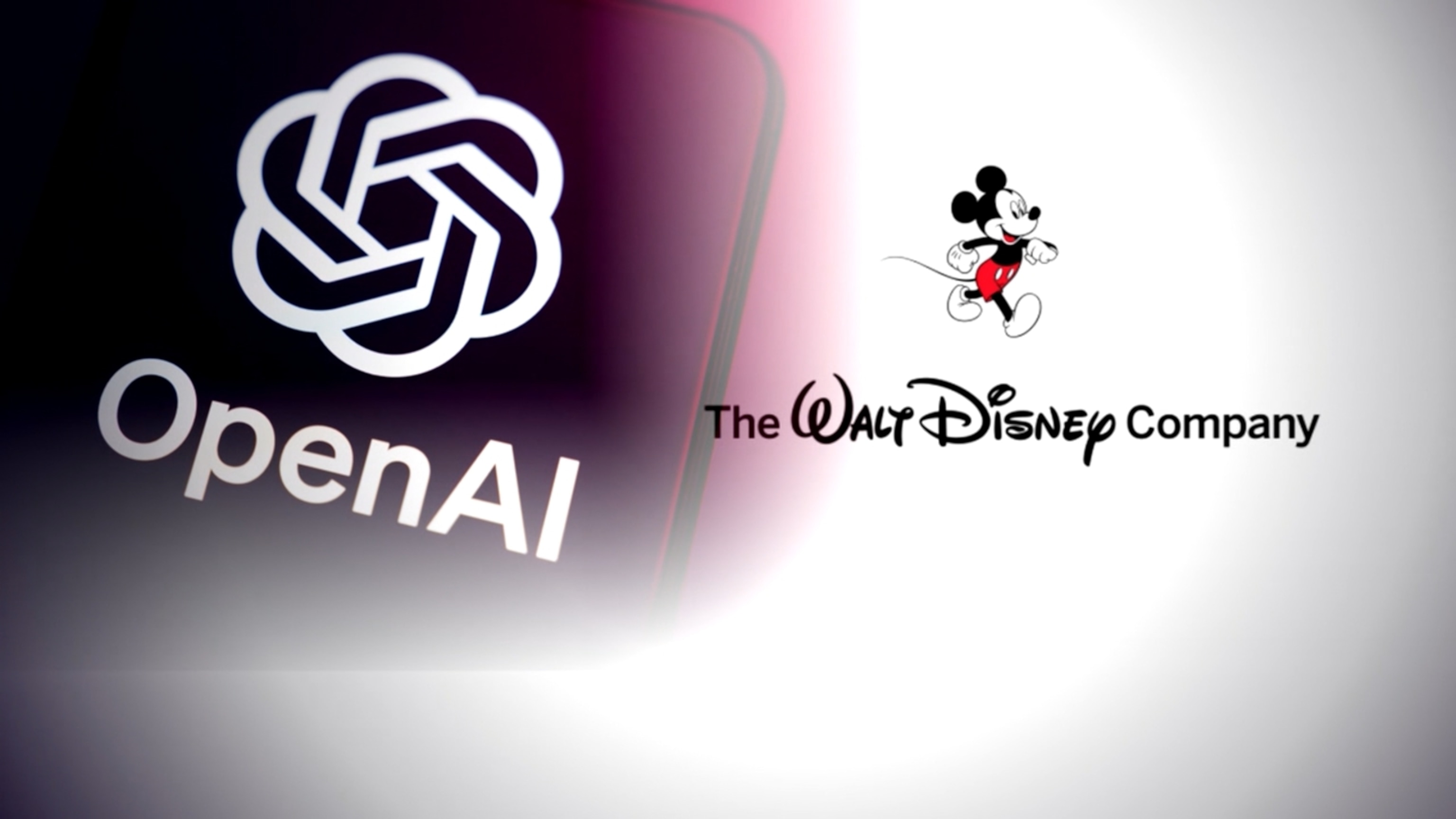
The house of mouse just dropped a billion dollars to make sure it doesn't end up like the blockbuster of the AI era. Disney’s $1 billion investment in OpenAI isn't just about cash flow or a stake in a hot startup. It’s a survival tactic. By licensing Mickey Mouse and their massive library of intellectual property to the Sora AI platform, Bob Iger is making a bet that generative video is the future of the silver screen. This isn't a pilot program. It's a full-scale integration of Disney's most guarded assets into the most powerful video engine on the planet.
Most people think this is just about making animation cheaper. That's a massive mistake. If you think Disney just wants to save money on rendering, you're missing the point. This deal is about control. By putting Mickey into the Sora model now, Disney ensures that the "definitive" AI version of their characters is the one they own, not some weird deepfake cooked up in a basement.
Why the Sora Partnership Is Disney's Biggest Gamble Since Buying Marvel
Disney doesn't just give away the keys to the castle. For decades, the legal team at Burbank has been the most feared group in copyright law. They literally changed the laws of the land to keep Mickey Mouse out of the public domain for as long as possible. So, why give OpenAI the "source code" for their characters?
Sora needs data. High-quality, consistent, cinematic data. Disney has a hundred years of it. By feeding Disney’s pristine animation and live-action archives into Sora, OpenAI gets to train its model on the best storytelling in history. In exchange, Disney gets a bespoke version of Sora that understands "Disney style" better than any other tool.
I’ve seen how studios react to new tech. Usually, they fight it until they can’t. Disney is doing the opposite. They’re jumping into the driver's seat. They aren't just a customer of OpenAI; they're becoming the architectural backbone of how AI understands motion, emotion, and character consistency.
Breaking Down the Billion Dollar Price Tag
A billion dollars is a lot of money, even for a company that owns Star Wars. But look at the math. A single high-end animated feature can cost $200 million. If Sora can cut pre-visualization, background rendering, and secondary character animation costs by even 30%, the investment pays for itself in five movies.
This isn't just about the movies you see in theaters. Think about the parks. Think about Disney+. Imagine a world where Disney can generate personalized video content for every single subscriber. You want a 10-minute short where Mickey Mouse wishes your kid a happy birthday by name while they sit in a digital version of your living room? That’s what this $1 billion buys.
The Mickey Mouse Licensing Reality
The licensing part of this deal is what's keeping IP lawyers up at night. For the first time, a third-party platform has the legal right to generate Mickey Mouse content at scale. But there’s a catch. This isn't the Sora that you or I can use.
This is a walled garden. Disney's "Mickey-enabled" Sora is a private instance. You won't be able to go to the OpenAI website and ask it to make Mickey Mouse say something offensive. The guardrails are baked into the training data itself. If the prompt doesn't align with Disney's brand safety guidelines, the model simply won't execute.
It’s a brilliant move. It basically turns Sora into a digital puppet master. The animators are still the ones pulling the strings, but the puppet is now powered by a supercomputer. This solves the "uncanny valley" problem that has haunted AI video. When you have the actual physics and movement data from Disney’s archives, the AI doesn't have to guess how Mickey moves. It knows.
What This Means for Human Animators
Let’s be real. This is scary for artists. I’ve talked to folks in the industry who feel like the floor is dropping out. But there’s another way to look at it.
Traditional animation is a grind. It’s thousands of hours of drawing the same thing over and over. If Sora handles the "grunt work"—the shadows, the backgrounds, the crowd scenes—artists can focus on the performance. The AI becomes a high-speed brush. It doesn't replace the painter; it just makes the paint dry instantly.
How Sora Changes the Disney Plus Math
Streaming is a volume game. Netflix has always had the edge because they just pump out more stuff. Disney has the quality, but they can't make The Mandalorian fast enough to keep people from canceling their subscriptions during the off-season.
Sora changes that.
With this investment, Disney can realistically produce mid-tier content—short films, spin-offs, interactive stories—at a fraction of the current time. We're looking at a shift from "release cycles" to "content streams."
The OpenAI Edge Over Competitors
Why OpenAI? Why not Google’s Veo or Meta’s Movie Gen?
OpenAI has the first-mover advantage in the public consciousness, sure. But Sora has demonstrated a specific kind of temporal consistency that others are struggling with. Objects don't just disappear when they go behind a tree in Sora. They stay there. For a company like Disney, where character integrity is everything, that consistency is the only thing that matters.
If Mickey’s ears look different in every frame, the magic is gone. Sora is the first model that seems to actually understand the 3D space of a 2D image. Disney’s $1 billion is a stamp of approval that says OpenAI is the industry standard for the next decade.
The Risks Disney Is Willing to Take
Don't think for a second this is risk-free. There’s a massive chance of brand dilution. If AI-generated Disney content starts feeling "cheap" or "soulless," the brand takes a hit that no amount of money can fix. Disney’s entire value is built on the idea that their stories have a "soul."
There's also the legal risk. By training a model on their IP, they're essentially creating a machine that can mimic them perfectly. If that model ever leaks, or if the partnership with OpenAI soured, Disney has effectively handed over the keys to their entire kingdom.
But Iger knows the alternative is worse. If Disney didn't do this, someone else would. Some startup would create a "Mickey-like" character that's just different enough to avoid a lawsuit but good enough to entertain a four-year-old on an iPad. Disney is choosing to disrupt itself rather than being disrupted by a tech company in Silicon Valley.
Getting Ahead of the AI Shift
If you’re a creator, business owner, or tech enthusiast, you can’t ignore this. The biggest content creator in the world just validated AI video as a core business tool. This isn't a fad. It’s the new baseline.
Stop thinking about AI as a replacement for creativity and start thinking about it as a new medium. If Disney is willing to let Mickey Mouse—their most sacred icon—be processed by a neural network, then the old rules of content creation are officially dead.
You need to look at your own "archives." What data do you have that an AI could learn from? How can you use these tools to scale your output without losing your voice? The "Disney-Sora" model is the blueprint for the future of every brand.
If you're an animator, learn the tools. If you're a storyteller, start thinking in prompts as much as in scripts. The technology is here, and it's backed by a billion-dollar check and a mouse. Don't get left behind while the magic happens.