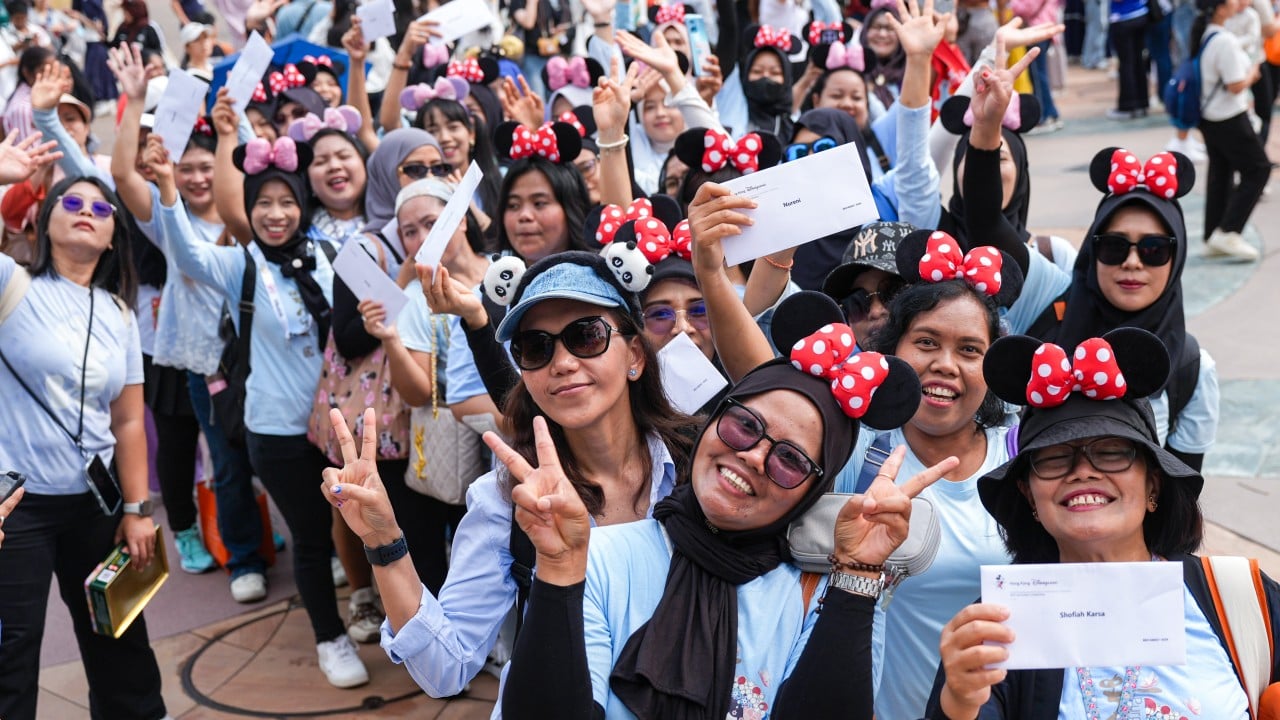
Disneyland is not a charity. It is a $200 billion engine of precision-engineered emotional manipulation. When headlines break about the park hosting a "free trip" for domestic helpers to "thank them" for their service, the collective "aww" from the public is deafening. It is also entirely misplaced.
We are conditioned to view these grand gestures as peak corporate social responsibility. In reality, they are low-cost, high-yield PR stunts designed to mask systemic labor issues with a coat of Pixie Dust. If you think a one-day pass to Space Mountain balances the scales of global wealth inequality or domestic labor exploitation, you aren't just an optimist. You are the target audience for a brand-washing campaign.
The Mathematical Insignificance of the Grand Gesture
Let's look at the "generosity" through a cold, fiscal lens. For a theme park with a capacity of tens of thousands, the marginal cost of adding a few hundred or even a thousand guests is practically $0. The staff is already there. The rides are already running. The churro stands are already hot.
By inviting domestic workers during off-peak periods, Disney fills "dead" space in the park. They then reap the rewards of millions of dollars in earned media—the kind of glowing, front-page coverage money can't buy—at the cost of a few printed tickets and some extra security.
- Cost to Disney: Near-zero marginal overhead.
- Value to Disney: Millions in positive brand sentiment.
- Result: A masterclass in high-margin virtue signaling.
I have sat in boardrooms where "giving back" is debated strictly as a customer acquisition cost (CAC) line item. When a corporation "gives," it usually calculates the ROI before the first invitation is even sent. This isn't kindness. It's a marketing expense masquerading as a soul.
The Exploitation of the Underdog Narrative
The media loves a "dreams come true" story because it reinforces a comfortable status quo. It suggests that the hardships of the working class are temporary and can be cured by a magical day in an artificial kingdom.
This narrative is dangerous. It frames basic joy as a reward for endurance rather than a human right. By focusing on the "helper" who finally gets to see Mickey, we ignore the structural reality: Why is their wage so low that a $150 ticket is an unattainable dream? Why does the system require a corporate behemoth to step in and provide a "reward" that their own salary never could?
We are treating the symptoms of a broken labor market with a band-aid made of mouse ears.
The Logistics of Performative Philanthropy
True philanthropy happens in the dark. Performative philanthropy requires a camera crew.
When you see a line of smiling workers entering the park, you are seeing a staged event. These "spontaneous" moments of gratitude are meticulously managed by PR handlers. They ensure the lighting is right, the "feel-good" quotes are captured, and the brand logo is visible in every shot.
If a company truly wanted to thank a marginalized group, they would do it quietly and sustainably.
- Option A: Give the workers cash.
- Option B: Provide long-term health benefits or educational stipends.
- Option C: Host a massive, televised event that makes the brand the hero.
Disney chooses Option C every single time. It's the most selfish way to be "selfless."
The Psychological Hook of the Magic Kingdom
Disney operates on the "Hedonic Treadmill." They give you a taste of the "magic" to ensure you remain a lifelong aspirant to the lifestyle they sell. By gifting trips to those who can't afford them, they aren't just being nice—they are seeding the brand into a demographic that will now associate the company with the one bright spot in their working year.
It is a brilliant, if cynical, way to build brand loyalty among the very people the global economy often leaves behind. It turns a one-day guest into a permanent brand ambassador.
The Economic Reality of Domestic Labor
Let's talk about the "helpers" themselves. In hubs like Hong Kong or Singapore, domestic workers are the backbone of the middle class. They enable the professional workforce to exist. Yet, they are often subjected to restrictive contracts, low minimum wages, and limited social mobility.
A trip to Disneyland does nothing to move the needle on these issues. In fact, it provides a convenient "out" for the employers and the government. "Look how well they are treated," the public says. "They even get to go to Disney!"
It’s the "Bread and Circuses" strategy updated for the 21st century. Instead of grain and gladiators, we give them Dole Whip and parades. It keeps the masses entertained just enough to forget that the fundamental power dynamic hasn't shifted an inch.
Why We Fall for the PR Trap
Humans are wired for stories, not statistics. We see a photo of a crying, happy worker and our brains release oxytocin. We want to believe the world is kind. Disney knows this better than anyone. They sell "Once Upon a Time" because "Systemic Economic Disparity" doesn't have a catchy theme song.
But if we want to actually help these communities, we need to stop applauding the corporations that use them as props. We need to demand better wages, better legal protections, and actual agency for workers—not just a supervised day of fun in a controlled environment.
The Counter-Intuitive Truth About Corporate Giving
The most ethical thing a corporation can do isn't to give away freebies. It’s to pay their own lowest-level employees a thriving wage and ensure their supply chains are free of the very exploitation they claim to be "compensating" for with these charity days.
If Disney—or any other conglomerate—actually cared about the "helpers" of the world, they would use their massive lobbying power to advocate for labor reform. Instead, they give away tickets that cost them nothing and collect the "Hero of the Year" trophy on the way out.
Stop Rewarding the Bare Minimum
Next time you see a viral video of a "deserving" group getting a free trip to a luxury destination, ask yourself three questions:
- Who is filming this?
- What does the host stand to gain in stock price?
- Would the "recipients" prefer the ticket, or the cash equivalent to send home to their families?
The answer to the third question is almost always the latter. But you can't film a worker paying off their child's school debt and make it look like a "dream come true" for a 30-second TikTok clip.
Disneyland is a business. Its job is to extract value. On "charity" days, the value it extracts is your uncritical approval.
Stop giving it to them for free.