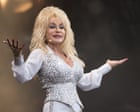
In an era where public life is a minefield of polarization, Dolly Parton has achieved something statistically improbable. A new University of Massachusetts Lowell poll reveals that the 80-year-old country icon maintains a +65 net favorability rating, a figure that effectively renders her the only universally liked figure in American public life. To understand the scale of this dominance, one must look at the wreckage of the other names on the list. Former President Barack Obama, the runner-up, sits at a distant +14. Global figures like Volodymyr Zelenskyy (+13) and domestic stars like Taylor Swift (+3) are barely in the black by comparison.
The data suggests that Parton is not just a musician but a diplomatic entity. While political leaders and tech titans struggle to keep their heads above water, Parton has built a fortress of goodwill that spans demographic and ideological divides. This is not the result of a passive "niceness" but a calculated, decades-long strategy of radical neutrality and hyper-localized philanthropy. You might also find this connected coverage interesting: The Night the Music Stopped Singing Back.
The Math of Universal Appeal
The poll numbers are brutal for almost everyone else. While 70% of respondents hold a favorable view of Parton, only 5% view her negatively. This 14-to-1 ratio is unheard of in modern polling. For context, tech leaders like Elon Musk and Mark Zuckerberg are deep in the negatives, with Musk at -16 and Zuckerberg at a staggering -40 or lower in similar favorability metrics.
Parton’s appeal is built on a specific type of brand discipline. She has spent half a century refusing to be baited into the culture wars that consume her peers. When Taylor Swift or George W. Bush (+5) speak, they inevitably alienate a percentage of the population. Parton, conversely, has mastered the art of being everywhere while remaining politically nowhere. As reported in recent reports by Reuters, the implications are significant.
| Public Figure | Net Favorability |
|---|---|
| Dolly Parton | +65 |
| Barack Obama | +14 |
| Volodymyr Zelenskyy | +13 |
| Bernie Sanders | +6 |
| George W. Bush | +5 |
| Taylor Swift | +3 |
| Elon Musk | -16 |
The Philanthropic Armor
Parton’s high standing isn't just about catchy melodies or a self-deprecating wit. It is anchored in tangible, local action that bypasses federal bureaucracy. In February 2026, she opened the Dolly Parton Children’s Hospital in East Tennessee. This follows her Imagination Library, which has mailed over 200 million books to children worldwide.
These initiatives create a "shield" against criticism. It is difficult to manufacture a narrative against a woman who provided the seed funding for a major COVID-19 vaccine or who ensures every child in her home county has a library. By focusing on literacy and healthcare—two sectors where the "why" is hard to argue with—she has secured a level of trust that no politician can buy.
The Power of Being Unapologetic
There is a gritty authenticity to Parton that resonates even with those who don't care for country music. She has never tried to "modernize" her image to fit a specific trend. By remaining a caricature of herself—the big hair, the rhinestones, the Tennessee drawl—she avoids the "uncanny valley" of celebrity reinvention.
In a world where public figures are often caught in a cycle of apology and rebranding, Parton’s consistency acts as a psychological anchor for the public. You know exactly what you are getting.
Why the Gap is Widening
The 51-point gap between Parton and the next most popular figure, Barack Obama, points to a broader crisis in leadership. In the 2020s, favorability has become a zero-sum game. To be loved by one group is almost always to be loathed by another. Parton has escaped this by choosing a path of "quiet service." She does not tweet about legislation; she builds hospitals.
Her birthday on January 19, 2026, was marked by "Dolly Parton Day" in Tennessee, but the sentiment was national. The poll shows she is the only figure capable of reaching the "unreachable" voters—those who have tuned out politics entirely but still value the concept of a community leader.
The Strategy of Silence
Many analysts mistake Parton's lack of political commentary for a lack of conviction. In reality, it is a sophisticated survival mechanism. By staying silent on the "what" of policy, she maximizes her impact on the "who" of people.
Critics might argue that she has a responsibility to use her platform for specific causes. However, the +65 rating is her defense. If she were to take a hard stance on a partisan issue, that number would likely plummet to the +10 or +15 range inhabited by her contemporaries. Her value lies in being the one bridge left that hasn't been burned.
The lesson for any modern brand or public figure is clear. Influence is not found in winning an argument, but in making the argument irrelevant through consistent, localized action. Parton has stopped trying to convince the world she is a good person and simply started doing the work that proves it.
The public is exhausted by the noise. They are looking for a signal of stability. Right now, that signal is wearing sequins and playing a banjo.
Focus on the output, ignore the outrage, and build something that lasts longer than a news cycle.


