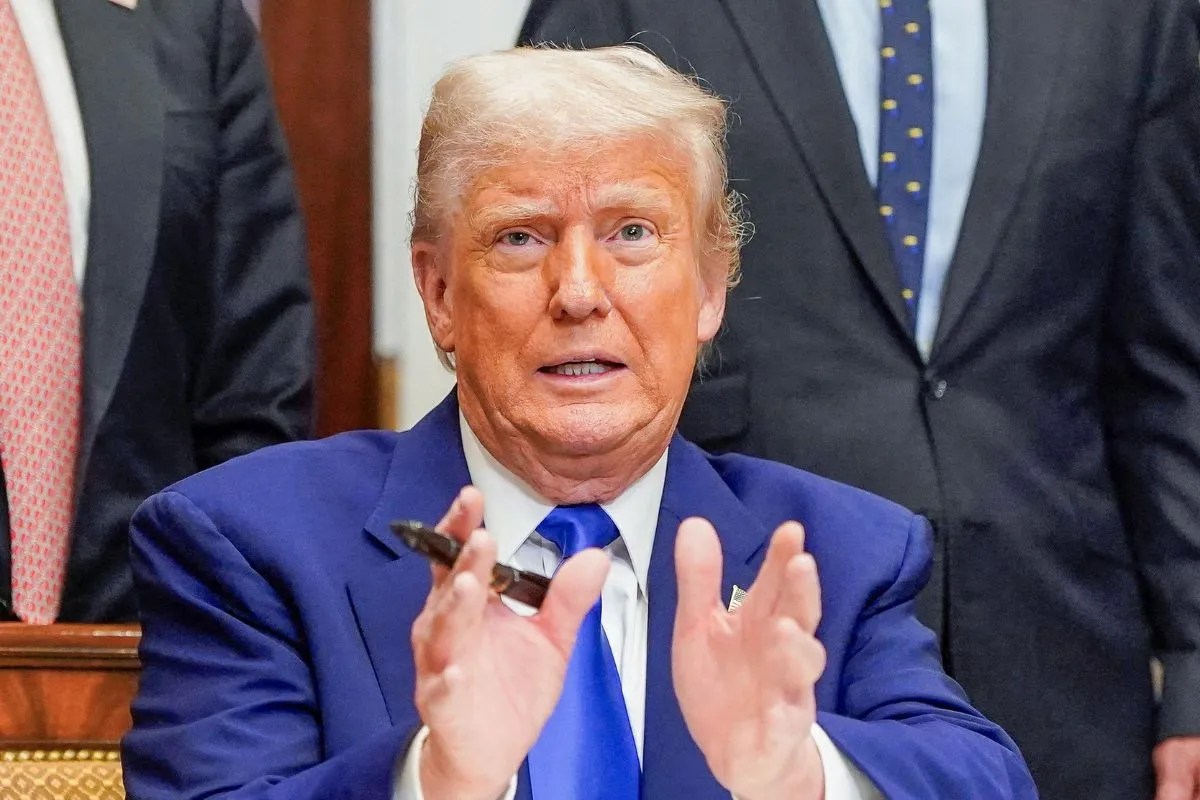
The internet is currently hyperventilating over a headline that sounds like a geopolitical fiction novel. Analysts are writing feverish essays claiming Donald Trump is thrilled about a nascent defense alignment between Saudi Arabia, Turkey, and Pakistan. The lazy consensus is simple, predictable, and entirely wrong. The mainstream narrative assumes that any grouping of major Muslim-majority nations buying hardware or coordinating security automatically triggers a specific, emotional reaction in Washington, let alone a cheerful endorsement from a transactional nationalist like Trump.
This is amateur hour.
Strip away the diplomatic theater. Look at the mechanics of power, debt, and leverage. Trump does not hand out political joy based on abstract brotherhood or military memos. He cares about balance sheets, export orders, and regional containment. If Riyadh, Ankara, and Islamabad want to draft joint communiques and hold symbolic exercises, Washington's reaction is not ecstatic celebration. It is cold, calculated indifference mixed with a quiet demand for payment.
Let us dismantle the fantasy.
The Myth of the Islamic NATO
Every few years, a think-tanker or an over-caffeinated wire service invents the concept of an "Islamic NATO." The recent chatter surrounding Saudi-Turkish-Pakistani defense cooperation is just a recycled version of this tired trope. Commentators look at Saudi capital, Turkish drone technology, and Pakistan nuclear capability, and they imagine an unstoppable security monolith.
They are confusing static assets with operational reality.
I have spent years watching defense procurement deals collapse under the weight of ego, logistics, and incompatible command structures. Pakistan’s military apparatus is deeply intertwined with its own domestic political survival and historically tied to American logistics and International Military Education and Training programs. Turkey is a rogue element inside NATO, perpetually at odds with European capitals, running an independent foreign policy driven by neo-Ottoman ambitions. Saudi Arabia is a capital-rich kingdom that outsources its core security needs while desperately trying to build a domestic defense manufacturing base through Vision 2030.
Put these three in a room to coordinate joint military doctrine. You do not get a superpower. You get a bureaucratic hostage situation.
Turkey wants to sell Bayraktar drones to anyone with cash. Pakistan wants financial bailouts from Riyadh to keep its sovereign debt crisis from turning into total default. Saudi Arabia wants security guarantees without getting dragged into another asymmetric quagmire in Yemen or the Levant. Their interests overlap occasionally, but they are fundamentally divergent.
To suggest Donald Trump looks at this shaky triad and smiles because of some grand strategic alignment is to misunderstand how the man views foreign policy entirely. Trump does not evaluate alliances through the lens of ideological harmony. He evaluates them through protection money and procurement contracts.
Follow the Money Not the Press Release
Why do people think Trump would love this pact? Because they assume Washington wants its allies to take on more burden-sharing. That is the textbook talking point. For decades, American presidents from both parties have whined about European and Middle Eastern allies not paying enough for their own defense.
So when Saudi Arabia and Turkey start talking about mutual defense, the superficial conclusion is that Washington should be popping champagne. America can finally pack its bags and let regional powers handle the sandbox.
That is not how Washington works, and it is certainly not how Trump works.
Trump is a protectionist dealmaker. He measures success in defense manufacturing jobs located in Ohio or Texas, not in local defense autonomy for foreign capitals. If Saudi Arabia buys indigenous Turkish drones instead of Lockheed Martin F-35s or Boeing strike packages, that is not a win for American interests. That is lost revenue.
Imagine a scenario where Riyadh redirects billions of dollars from American defense contractors to fund Turkish shipyards and Pakistani munitions factories. Does the tenant of the Oval Office clap for that? Absolutely not. He reaches for the phone to threaten secondary sanctions or demand reciprocal trade concessions.
The idea that Washington celebrates an independent security pact that bypasses American prime contractors reveals a profound ignorance of the military-industrial complex. Trump loves defense deals when America is the arms dealer. When middle-tier powers start cutting each other into regional security arrangements without American veto power, it sets off alarm bells in the Pentagon, even if the State Department puts out a bland, polite press statement welcoming regional dialogue.
The Pakistan Paradox
Let us look closer at Islamabad's role in this equation. Pakistan is perpetually balancing on a financial tightrope. Its nuclear arsenal is a permanent fixture of regional deterrence against India, but its economy requires constant life support from the International Monetary Fund, Beijing, and Riyadh.
When Saudi Arabia props up Pakistan’s central bank with multi-billion-dollar deposits, it is not an act of pure charity. It is debt-trap diplomacy with an Islamic aesthetic. Riyadh wants leverage. It wants access to military expertise, and historically, Pakistani troops have served as security details for the Kingdom's internal stability.
Where does Donald Trump fit into this dynamic? He views Pakistan through a lens of transactional utility and deep skepticism leftover from the war on terror era. Trump famously cut off hundreds of millions in security assistance to Islamabad during his first term because he believed Pakistan was playing a double game.
Do you really think a leader who ran on "America First" and openly mocked foreign aid handouts is sitting in Mar-a-Lago cheering for Saudi cash to stabilize a Pakistani military regime that has spent decades hedging its bets between Washington, Beijing, and regional Islamist factions?
The notion is absurd. Trump tolerates geopolitical maneuvers as long as they do not threaten American dominance or step on American toes. He does not endorse them with glee.
The Turkish Variable
Then there is Ankara. Recep Tayyip Erdogan has spent the last decade playing a masterclass in independent geopolitical blackmail. He buys Russian air defense systems while remaining in NATO. He normalizes ties with Israel one month and attacks its policies the next. He projects power into the Caucasus, North Africa, and the Gulf, all while wrestling with catastrophic domestic inflation.
Erdogan’s inclusion in any defense pact with Riyadh and Islamabad is designed to project strength at home and extract concessions from Washington and Brussels. Turkey wants F-16 upgrades, it wants Western investment, and it wants a free hand in northern Syria.
When Turkey deepens ties with Saudi Arabia, it is an attempt by Ankara to tap into sovereign wealth funds to keep its defense industry afloat. Baykar, the maker of the famous TB2 drones, is heavily reliant on foreign capital and export markets.
Trump knows how to deal with Erdogan. It is a relationship built on strongman chemistry and ruthless bargaining. But Trump does not view Turkey's regional ambitions as a stabilizing force. He views Erdogan as a difficult, unpredictable actor who needs to be managed, not cheered on.
To claim Trump is "happy" about this tripartite alignment is to project the wishes of liberal internationalists onto a nationalist populist. Liberal internationalists love multilateral pacts, regional dialogue frameworks, and cooperative security architectures. Trump despises them unless he is the one holding the pen on the final contract.
The Real Agenda: Hedging Against American Unpredictability
Why are Riyadh, Ankara, and Islamabad talking to each other with such newfound urgency?
It has nothing to do with making Donald Trump happy. It has everything to do with American unreliability.
Over the past decade, Middle Eastern and South Asian capitals have watched Washington pivot toward Asia, abandon allies in messy withdrawals, and weaponize the global financial system through sanctions. They have realized that relying exclusively on the American security umbrella is a high-risk gamble.
Saudi Arabia watched the Biden administration hesitate during Houthi drone strikes on Aramco facilities. Turkey watched the U.S. partner with Kurdish militias in Syria that Ankara views as existential threats. Pakistan watched the U.S. completely disengage from the region after the chaotic departure from Kabul.
So what do middle powers do when the hegemon starts looking distracted and erratic? They hedge. They diversify their security portfolios. They build mini-lateral arrangements to protect their own equities.
This is not a celebration of American leadership. It is an insurance policy against American absence.
Saudi Arabia wants Turkish drone tech so it is not entirely dependent on Washington's Byzantine export approval processes. Pakistan wants Saudi capital to insulate itself from Western financial pressure. Turkey wants Gulf liquidity to fuel its industrial base.
Trump is pragmatic enough to understand this hedging behavior. He does not take it personally, because he views foreign policy through the lens of leverage. But he certainly is not popping bottles of champagne over a pact designed to make these nations less dependent on American whim.
The Danger of Lazy Analysis
We are living through an era of media coverage that treats foreign leaders like cartoon characters reacting to plot developments. Headline writers grab a few keywords—Saudi Arabia, Turkey, Pakistan, defense, Trump—and spin a narrative designed to generate clicks from people who do not understand supply chains, sovereign debt, or military logistics.
The truth is starkly unromantic.
Donald Trump is focused on tariffs, border enforcement, domestic economic growth, and ending endless foreign entanglements. If Saudi Arabia, Turkey, and Pakistan want to sign defense memos, Washington views it with the cold, dead eyes of a risk-management auditor.
They are looking at the fine print to see if it hurts American arms sales, if it challenges Israeli security dominance in the region, or if it creates a new headache for the Pentagon.
The next time you see a breathless report about a new geopolitical axis bringing joy to Washington, check who is actually footing the bill and who is losing market share.
Stop reading the press releases. Start looking at the ledger.
(No conclusion, no summary, no sign-off.)

:max_bytes(150000):strip_icc()/lake-mead-173940030-5c25228846e0fb00014e8584.jpg)
