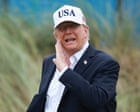
Foreign leaders usually stick to boring diplomatic scripts. They mumble about historic ties, praise regional stability, and avoid stepping on constitutional landmines. Then Donald Trump shows up at a golf resort in County Clare, brushes off decades of careful American neutrality, and announces that a united Ireland would be a fantastic thing.
People lost their minds. Unionists in Belfast called it reckless. British politicians fumed about loose talk. But if you look past the immediate outrage, Trump touching a raw nerve on Irish reunification exposes how fragile the status quo really is in Northern Ireland.
Breaking the Diplomatic Mold
For generations, Washington played it safe. The official line was always that the constitutional future of Northern Ireland is a matter for the people who actually live there, governed strictly by the terms of the 1998 Good Friday Agreement. US presidents visited Dublin and Belfast, smiled for the cameras, and whispered their support for the peace process without picking sides.
Trump shattered that cozy consensus. Standing on Irish soil, he didn't just endorse the abstract idea of peace; he actively rooted for a united Ireland, claiming it is bound to happen eventually.
Why does this matter? Because American political intervention carries weight. Even when critics dismiss his comments as shooting from the hip, those remarks yank a simmering constitutional debate out of the back rooms of Westminster and Dublin and shove it directly into the global spotlight.
The Reality Check on a Border Poll
Of course, wishing for a united Ireland on a golf course doesn't rewrite a 105-year-old border. The mechanics of Irish unification are brutally complicated.
Under the Good Friday Agreement, a border poll can only happen if the British Secretary of State believes a majority of voters in Northern Ireland would actually vote to leave the United Kingdom. It requires concurrent majorities north and south of the border. You can't just decree unity because it sounds cool or fits neatly into a campaign speech.
Right now, the demographic and political ground in Northern Ireland is shifting, but it's far from settled. While nationalists and Sinn Féin figures cheered Trump's comments, pro-British unionists reacted with absolute fury, viewing any external pressure for reunification as an existential threat to their identity and their country.
When outsiders like Trump casually weigh in, they hand ammunition to both sides. Nationalists feel validated by a global superpower, while unionists dig in their heels, accusing foreign leaders of ignoring the democratic consent of Northern Ireland's citizens.
Economic Realities and Whiskey Tariffs
Trump didn't just talk constitutional theory during his Irish swing. True to form, he mixed high-stakes geopolitics with transactional diplomacy. Amidst the chaos over his unity remarks, he also promised to scrap tariffs on Irish whiskey, drawing cheers and chants from the crowd.
That blend of casual border-state commentary and immediate trade concessions is classic Trump. It forces politicians to react to statements that defy traditional diplomatic guardrails. Irish Prime Minister Micheál Martin urged everyone to keep a calm perspective and labeled some of the frantic blowback an overreaction, knowing full well that alienating Washington over a golf course soundbite is bad for business.
What Comes Next for the Border Debate
Trump won't be drawing up the new maps of Ireland. He cannot force the UK government to call a referendum, nor can he negotiate the complex tax, healthcare, and security integrations required to merge two distinct economies.
Yet his intervention changes the psychological baseline. It normalizes talking about a united Ireland out in the open, stripping away some of the traditional taboo. As demographic trends continue to evolve and post-Brexit economic pressures mount in Belfast, the question of unification is moving from a distant hypothetical to an active political battleground.
Ignore the noise if you want. But don't pretend the border is permanent just because it's old.