Deep in the Siberian taiga, where the winter air feels like shattered glass in the lungs, a valve turns. It does not make a dramatic sound. There is no triumphant orchestral swell. Just the heavy, metallic clunk of steel meeting steel, followed by the faint, rushing hiss of pressurized natural gas surging southward.
Thousands of miles away, in the mirrored skyscrapers of Beijing and the gilded halls of the Kremlin, that hiss sounds like survival.
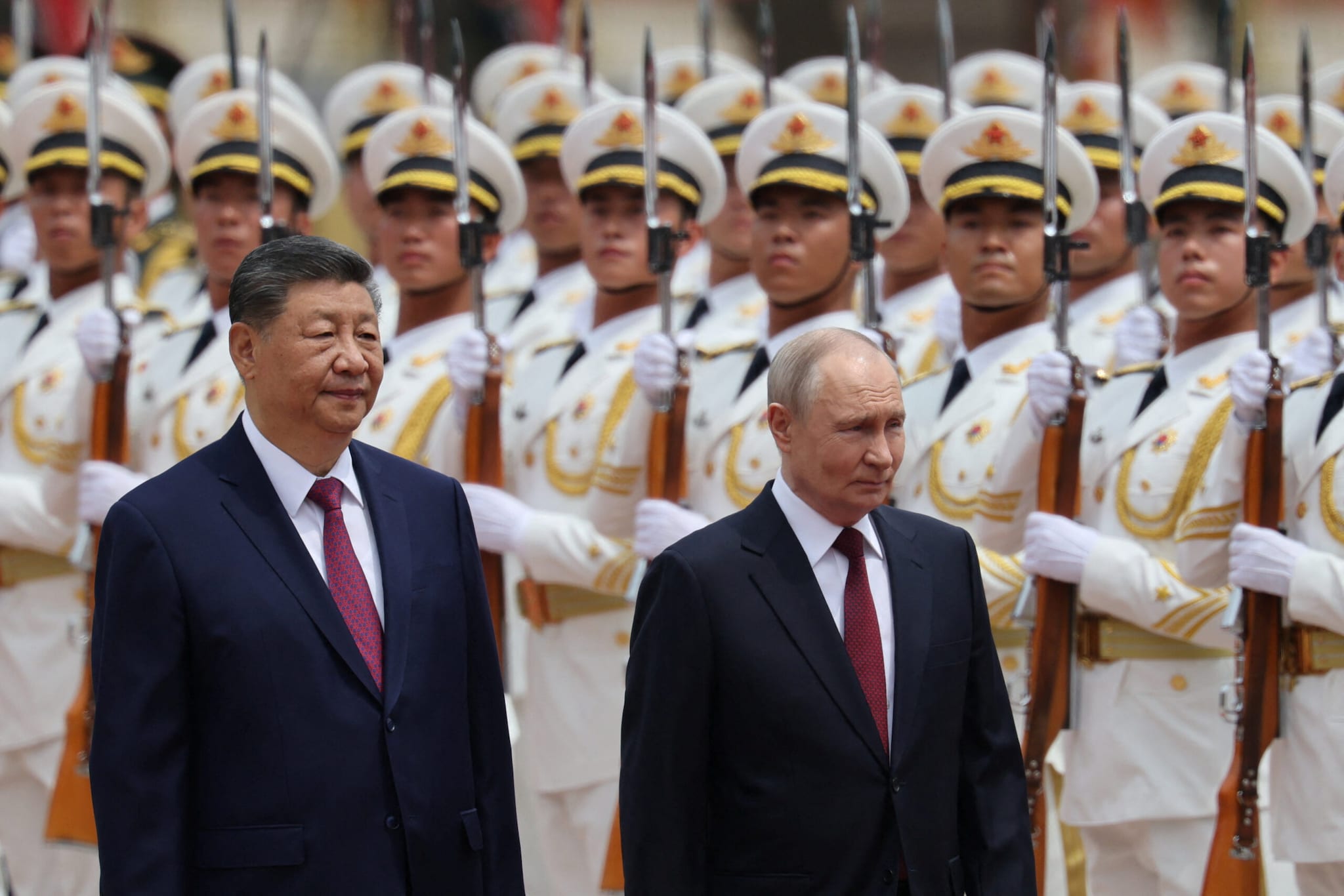
When Vladimir Putin and Xi Jinping meet, the cameras capture the stiff handshakes, the grand banquets, and the practiced choreography of global diplomacy. The official communiqués drone on about a "new era" and "strategic coordination." But strip away the geopolitical theater, the flags, and the translated pleasantries, and the relationship distills into something far more primal.
Warmth. Light. Factories that cannot afford to go dark. A massive, frozen expanse of resource-rich land bolted directly to the world’s hungriest industrial engine.
For decades, the West viewed the partnership between Russia and China through a lens of deep skepticism. Analysts argued that historical distrust, border disputes, and cultural friction would inevitably keep them apart. They were wrong. They missed the underlying physics of the relationship. Ideology is malleable. History can be selectively forgotten. But a pipeline? A pipeline is a physical, multi-billion-dollar umbilical cord forged in steel and buried in the earth. Once you build it, you are locked in.
To understand how we arrived here, we have to look past the political rhetoric and look at the map.
The Arithmetic of Isolation
Consider the predicament of a factory owner in Zhejiang province. Let us call him Mr. Chen. His facility runs twenty-four hours a day, stamping out precision components that find their way into smartphones and electric vehicles across the globe. For Chen, the grand strategy of the Chinese Communist Party matters far less than his monthly electricity bill and the stability of the local power grid. If the voltage drops, millions of dollars in delicate machinery freeze.
For years, China’s economic miracle ran primarily on coal, supplemented by liquefied natural gas (LNG) ferried across oceans on massive tanker ships.
But those ships must pass through maritime choke points. The Strait of Malacca, a narrow stretch of water between Sumatra and the Malay Peninsula, is a vulnerability that keeps strategic planners in Beijing awake at night. If a conflict breaks out, a naval blockade could cut off China's maritime energy supply in a matter of days.
Now, look north.
Across the Amur River lies a country possessing the world’s largest proven natural gas reserves, suddenly cut off from its traditional buyers in Europe. Following the escalation of the conflict in Ukraine, Moscow watched its decades-old energy relationship with Europe evaporate. The Nord Stream pipelines sat ruined at the bottom of the Baltic Sea. German factories scrambled to decouple from Russian gas.
Russia needed a buyer who could not be bullied by Western sanctions. China needed an energy supply that could not be intercepted by a hostile navy.
It is a marriage born of fierce, unsentimental necessity.
The centerpiece of this economic embrace is the Power of Siberia pipeline. Stretching over 1,800 miles through some of the most unforgiving terrain on Earth, this engineering marvel moves gas from the remote Chayandinskoye and Kovyktinskoye fields directly into northeastern China. By the time it reaches full capacity, it will pump 38 billion cubic meters of gas annually into the Chinese grid.
To put that number in perspective, it is enough to power tens of millions of homes like Mr. Chen’s, completely immune to naval blockades, Western sanctions, or maritime interdiction. It is a closed loop. A continental fortress of energy.
The Invisible Stakes
There is a temptation to view this solely as a transaction of convenience—Russia sells, China buys, everyone goes home happy.
The reality is far more complex, and for Moscow, far more perilous.
When you have only one major customer left, that customer dictates the terms. In the quiet, windowless rooms where energy contracts are negotiated, Chinese officials know exactly how much leverage they hold. They do not offer charity. They demand steep discounts.
For Russia, the pivot to Asia requires an astronomical capital investment. You cannot simply flip a switch and redirect gas meant for Germany toward Shanghai. The geology of the gas fields dictates the infrastructure. The fields in Western Siberia that historically supplied Europe are entirely separate from the Eastern Siberian fields feeding China. Connecting them requires thousands of miles of new pipelines across mountains, swamps, and permafrost.
Every mile of steel laid in that frozen ground binds Russia closer to Beijing's economic orbit.
It changes the cultural and economic gravity of entire regions. In Russian border cities like Blagoveshchensk, residents look across the river to see the glittering, futuristic skyline of Heihe, a Chinese city that barely existed a few decades ago. The contrast is stark. On one side, a stagnant resource economy trying to maintain its superpower illusions; on the other, an industrial titan with an insatiable appetite for everything Russia can dig out of the ground.
This asymmetry filters into the very language of their diplomatic statements. When Putin proclaims that energy is the "driving force" of their ties, it is both an acknowledgment of reality and a quiet plea for permanence. Russia provides the raw material; China provides the financial lifeline.
But what happens when the lifeline becomes a leash?
The Ghost of Pipelines Past
The transition is not without friction. To understand the anxiety humming beneath the surface of this alliance, one must look at the stalled negotiations over the proposed Power of Siberia 2 pipeline.
This second mega-project is designed to run through Mongolia, tapping into the very same Western Siberian gas fields that once supplied Europe, and delivering another 50 billion cubic meters of gas to China. On paper, it is the ultimate pivot. It would completely replace the lost European market.
Yet, the contract remains unsigned.
Month after month, year after year, the announcements from Beijing remain politely non-committal. Why? Because China is playing the long game. They are diversifying. They buy gas from Turkmenistan. They buy oil from Saudi Arabia. They are building solar arrays and nuclear plants at an unprecedented rate. They do not want to become overly dependent on a single, volatile neighbor any more than Europe did.
So they wait. They watch Russia's options narrow. They know that with every passing month, the price of Russian gas will only go lower.
This is the psychological undercurrent of the relationship. It is an alliance defined not by shared values or mutual affection, but by a shared adversary and a shared geography. It is an arrangement of cold, calculating survivalists who know that in the grand theater of global power, you keep your friends close and your supplier closer.
The View from the Valve
Back in the Siberian cold, the engineers who maintain the pipelines do not think about the grand chessboard of geopolitics. They think about pressure differentials. They think about valve seals that can withstand temperatures of minus fifty degrees. They think about the sheer, terrifying scale of the machinery keeping the world turning.
Their lives are dictated by the rhythm of the pumps.
But their labor ripples outward in ways they will never see. It lowers the cost of manufacturing for a factory in Zhejiang. It allows a family in Beijing to turn on their heating during a brutal winter snap without thinking twice. And it provides the financial oxygen that keeps the Russian state functioning under the weight of global isolation.
The West hoped that economic pressure would force a retreat, that isolation would breed compliance. Instead, it accelerated a continental realignment that was already underway. It forced the Bear into the embrace of the Dragon.
This alignment is not temporary. It cannot be easily undone by a change of leadership or a diplomatic reset. The infrastructure being carved into the Eurasian landmass creates a new reality. It shifts the center of gravity away from the maritime trade routes dominated by the West and burrows it deep into the heart of the Eurasian interior.
The next time you see a photograph of the two leaders standing side by side in a grand Kremlin hall, look past the suits and the smiles. Listen instead for the silent, unstoppable rush of methane through thousands of miles of buried steel. That is the true language of power in the twenty-first century. It does not care about treaties or press releases. It only cares about the flow.