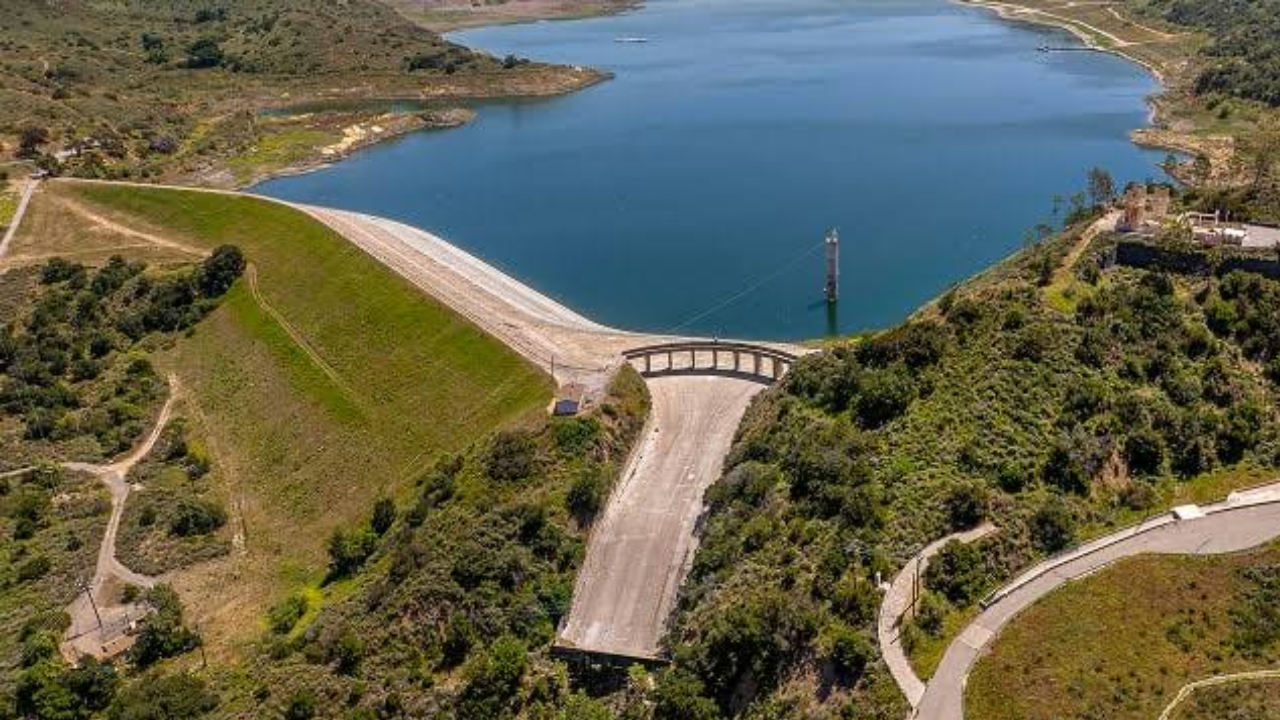
Draining a reservoir for five years is not a routine maintenance cycle; it is a deliberate shutdown of a multi-use asset to eliminate catastrophic downstream risk. When a 93-year-old dam undergoes major rehabilitation, the headline story focuses on lost water storage and closed recreation, yet the deeper operational reality lies in hydraulic safety, regulatory compliance, sediment dynamics, and regional water balance. This analysis breaks down the structural logic behind a multi-year drawdown at California’s Irvine Lake, separates established engineering and hydrological mechanisms from unverified site specifics, and maps the downstream economic and ecological consequences that surface-level reporting routinely overlooks.
The Structural Logic of a Multi-Year Drawdown
A five-year reservoir drawdown signals that superficial patching is no longer sufficient to meet modern dam safety standards. Dams built in the early twentieth century were constructed under older design codes, earlier seismic maps, and different assumptions about extreme precipitation and spillway capacity. Over nearly a century, concrete can experience alkali-silica reaction or freeze-thaw and thermal cycling fatigue, earthen embankments can develop internal seepage or foundation weaknesses, and mechanical outlet works or spillways can corrode or lose reliability.
When engineers and state dam safety regulators evaluate an aging structure, they weigh probability of failure against consequence of failure. Even if the annual probability of a breach or uncontrolled release is low, a high-hazard dam located upstream of populated areas, critical infrastructure, or sensitive waterways carries severe consequence scores. Lowering or draining the reservoir removes the hydrostatic head—the pressure exerted by a column of water against the dam face and foundation—which immediately reduces seepage forces and overturning or sliding stresses during construction and extreme storms.
In a multi-year timeline, the duration itself reveals important operational constraints. A single-season drawdown typically points to localized repairs, gate overhauls, or targeted inspections that can occur during dry months. A five-year window generally indicates complex, interdependent phases:
- De-watering and stabilization: Gradually lowering water levels to protect embankment pore pressures and allow safe access to submerged or saturated zones without triggering slope instability.
- Subsurface and structural remediation: Grouting, foundation work, concrete rehabilitation, spillway modifications, or outlet tower upgrades that require dry working conditions and curing or testing periods.
- Regulatory sign-off and staged refilling: Independent engineering reviews, state division of safety of dams approvals, and controlled re-impoundment to monitor seepage and instrumentation before returning to normal operations.
Fact Versus Educated Hypothesis in Reservoir Reporting
Because exact engineering audit findings, contractor schedules, and site-specific cost figures are not contained in the reference title alone, rigorous analysis requires separating verified concepts from educated hypotheses.
Known mechanisms include the physics of hydrostatic pressure reduction, the regulatory mandate of dam safety oversight in California, the loss of surface-water storage volume during drawdown, and the disruption of lake-dependent recreational businesses such as fishing concessions, boat rentals, and event venues.
Educated hypotheses include the specific failure modes driving the work (such as seismic stability upgrades, spillway enlargement, or outlet conduit replacement), the exact sequence of construction seasons, and the precise financial allocation between dam owners, water agencies, and concessionaires. Treating those hypotheses as confirmed facts would distort the analysis; treating them as testable operational hypotheses allows readers to track official engineering disclosures as they emerge.
The Four Pillars of Dam Rehabilitation Economics
Evaluating a five-year reservoir closure requires looking beyond the construction fence. In water infrastructure management, an extended outage alters four interconnected cost and value streams: capital expenditure, replacement water cost, foregone recreation and concession revenue, and environmental or sediment management costs.
Capital Expenditure and Schedule Risk
Heavy civil engineering on aging water infrastructure rarely follows a linear path. Once a reservoir is drawn down, exposing previously submerged concrete, riprap, or intake structures often reveals hidden deterioration. That discovery mechanism creates scope creep risk: a repair estimated as straightforward can expand into deeper foundation treatment or structural reinforcement.
In addition, working inside a former reservoir basin introduces weather and hydrology exposure. Unseasonal storms can force temporary water capture or diversion measures, halting dry-basin work and extending project schedules. In civil construction, time carries direct carrying costs for equipment mobilization, engineering oversight, and compliance monitoring.
Replacement Water and Supply Balance
A reservoir serves two broad functions depending on its design and ownership: direct water supply storage (for municipal, agricultural, or groundwater recharge use) and flood control or regulatory management. When storage capacity drops near zero for five years, water managers must rely on alternative supply sources, conjunctive use of groundwater, purchased transfers, or existing pipeline and canal deliveries.
The second limitation of a long drawdown is that system slack disappears. Reservoirs act as shock absorbers between wet and dry periods. Without that buffer, downstream users become more exposed to seasonal variability, conveyance bottlenecks, and higher spot or transfer costs during dry stretches. Even if a lake is primarily used for recreation or local regulation rather than major municipal supply, any linked diversion, percolation, or transfer agreement must be re-sequenced around the outage.
Recreational Revenue and Concession Viability
For public and private lakes that rely on fishing, boating, camping, or lakeside events, a five-year closure is an existential test for dependent businesses. Unlike a three-week maintenance closure where regular anglers can postpone trips, a five-year gap breaks customer habits and can force concessionaires or bait-and-tackle operators to exit or relocate.
This creates a rebound lag even after construction finishes. Once the dam is repaired and refilling begins, a lake does not immediately return to peak recreational utility. Water levels must climb to usable boat-launch and shoreline elevations, fish stocking programs need time to establish viable populations, and marketing must rebuild awareness among visitors who found substitutes elsewhere.
Sediment, Evaporation, and Water Quality Shifts
Draining a lake alters physical and chemical processes inside the basin. Exposed lakebed sediments can dry out, crack, and oxidize. When rains arrive or refilling eventually starts, exposed fine sediments can become susceptible to erosion or mobilization, affecting turbidity and downstream water quality if not managed with erosion controls and staged flows.
Conversely, removing a large open water surface eliminates evaporation from that specific impoundment during the dry period, though any water redirected elsewhere will experience its own storage and evaporation dynamics. Aquatic habitats inside the basin are fundamentally reset: littoral vegetation, fish populations, and benthic organisms cannot persist in a dewatered basin, meaning post-project ecological recovery requires deliberate planning rather than passive waiting.
Hidden Cause-and-Effect Chains Most Coverage Misses
Surface-level coverage often treats a reservoir draining as a simple binary: lake full before, lake empty for five years, lake full again later. In practice, multi-year infrastructure closures trigger cascading operational effects across adjacent systems.
The first cascading effect involves maintenance deferral elsewhere. Engineering teams and public agencies operate under finite budgets and staff bandwidth. When a flagship dam demands multi-year oversight, routine maintenance on secondary conveyance facilities, gauges, or access roads can face tighter scrutiny or competing priorities unless ring-fenced.
The second cascading effect is regulatory ratcheting. Modernizing a 93-year-old dam rarely means restoring it to 1930s standards. Regulators typically require upgrades aligned with current seismic hazard models, probable maximum flood criteria, and instrumentation standards. That means the post-rehab facility is designed to a higher safety threshold than the original structure, which justifies the multi-year timeline but increases technical complexity.
The third cascading effect centers on post-construction transition risk. The moment construction ends is not the moment risk hits zero. Re-watering a rehabilitated dam and its foundation is a critical test phase. Engineers monitor piezometers, seepage weirs, and survey monuments closely as hydrostatic load returns. A five-year outage only delivers full value if post-rehab commissioning is unhurried and data-driven.
Tactical Framework for Tracking and Navigating a Multi-Year Closure
Whether you are a local business operator, a water stakeholder, a policy observer, or a recreational user, reacting ad hoc to a five-year closure leads to avoidable losses. A structured approach helps align decisions with actual project milestones.
- Audit direct and indirect exposure: Map where operations depend on the reservoir—direct water deliveries, groundwater recharge timing, downstream flows, road access, or visitor foot traffic—and separate immediate impacts from multi-year compounding effects.
- Track engineering milestones rather than calendar dates: Watch for concrete milestones such as de-watering completion, foundation or spillway work completion, regulatory acceptance of inspection reports, and approved refilling plans, as civil schedules shift around technical findings and weather.
- Model multi-year cash flow and supply buffers: For businesses tied to lake recreation, stress-test finances against a multi-year revenue drop rather than bridge financing designed for a single off-season. For water users, evaluate firm supply contracts and alternative storage options early.
- Plan for the transition window: Start preparing supply schedules, stocking plans, or customer re-engagement ahead of physical completion so operations are ready when refilling and re-opening phases begin.
Practical Limitations and Tradeoffs
No analytical framework or operational plan eliminates the core tradeoff of aging infrastructure: accepting prolonged disruption today to prevent catastrophic failure or forced emergency restrictions tomorrow. Engineering schedules remain vulnerable to unforeseen subsurface conditions, extreme weather, and permitting or inspection cycles. Financial models can be upended by shifts in interest rates, construction material costs, or regional hydrology. Recognizing these constraints keeps expectations grounded and prevents over-reliance on optimistic timelines.
Strategic Play for Stakeholders
Treat a five-year dam drawdown as a structural reset rather than a temporary inconvenience. Water managers and infrastructure stewards should lock in transparent milestone reporting, ring-fence post-rehab commissioning and monitoring budgets, and coordinate supply alternatives early so downstream users are not caught off guard by dry-year swings. Recreational operators and local businesses dependent on the basin should pivot immediately toward alternative revenue streams or locations rather than waiting out a multi-year closure on thin reserves, positioning themselves to re-enter once water levels and ecosystem conditions support sustainable operations.



