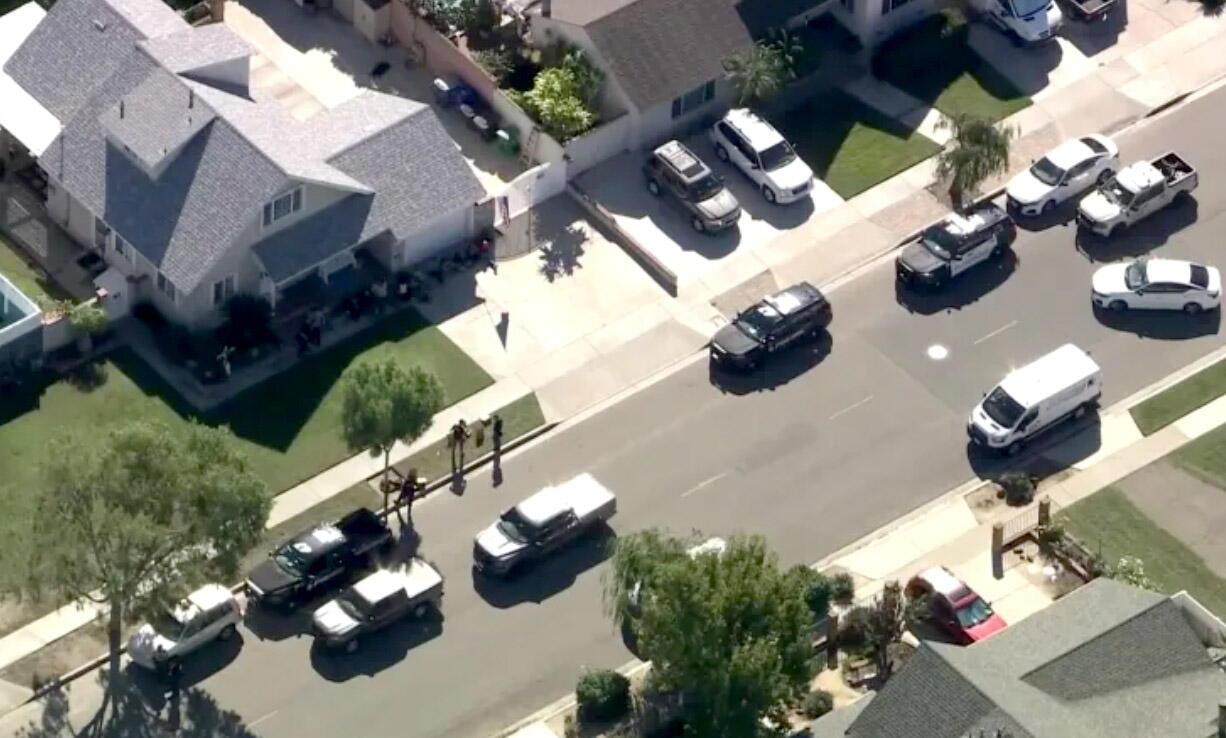
Sirens do not belong on a Tuesday night cul-de-sac.
You hear them first as a low, vibrating hum through double-pane glass, the kind of sound that makes a dog lift its head from a living room rug and a parent pause mid-sentence while folding laundry. In Westminster, a city full of quiet residential pockets where neighbors know which houses have trash cans left out too long and which porches catch the late afternoon sun, flashing lights against stucco walls feel like a glitch in the ordinary world. Ten people arrested inside an illegal gambling operation tucked behind ordinary residential walls turns a routine neighborhood block into a headline overnight. Meanwhile, you can explore related stories here: Inside the Nigerian Courtroom Custody Trap Threatening Media Freedom.
Arrests.
One word carries a sudden weight when it happens across the street from a swing set. You start looking at cars you never noticed before. You wonder how long the blinds stayed pulled tight. You ask yourself a question that feels slightly uncomfortable to voice out loud: how close does an underground operation have to get before it stops feeling distant and starts feeling personal? To explore the full picture, we recommend the detailed analysis by The New York Times.
I have spent years reporting on neighborhoods caught between quiet domestic routines and illicit economies, and the detail that always stays with me is how unremarkable the outside looks. There is rarely a neon sign or a velvet rope. Usually there is just a driveway with too many sedans parked at odd hours, a porch light left on past midnight, and neighbors telling each other they probably have family visiting from out of town. When a raid happens in a place like that, the shock comes not from movie-style drama, but from realizing how easily something hidden can sit right next to everyday life.
Because the competitor headline gives us the bare skeleton—an illegal gambling operation in a residential neighborhood raided in Westminster, with at least ten arrests—we have to look past the police blotter numbers to see what actually happens around an event like this. A headline compresses months of complaints, surveillance, tip lines, and quiet tension into twelve words. It rarely shows the people living fifty feet away who simply wanted a calm street and a safe place for their kids to ride bikes.
To understand the pull of these rooms and why they keep showing up in residential areas, it helps to use a metaphor. Think of an underground gambling den like a pressure cooker set on a back burner. On the outside, the pot sits quietly on the stove. Steam builds slowly behind a sealed lid—wagers stacking up, cash changing hands outside regulated oversight, tempers rising when luck turns sour, and outsiders passing through streets that were built for families rather than high-stakes traffic. A raid is what happens when the pressure gets noticed and the valve finally blows, though the heat underneath often takes time to cool.
Let me sketch a hypothetical scenario to make the human stakes concrete. Picture a homeowner named David—a hypothetical neighbor modeled on residents I have spoken with across similar suburban enforcement actions—living two doors down from a house that suddenly draws late-night visitors. David is not a detective. He is a guy who checks his ring camera out of habit, notices strange cars idling near his mailbox at 1:30 a.m., and feels a knot in his stomach when strangers knock on the wrong front door asking for a game. He doesn't want to play vigilante. He just wants his mornings to feel predictable again.
Then there is the other side of that door, another hypothetical figure we can call Marcus—someone drawn into an illegal gambling setup chasing quick money, easy action, or a sense of belonging in a room where cash moves fast. People walk into illicit games for all sorts of reasons. Some chase a streak they think is overdue. Others treat high-stakes action as an escape from bills, boredom, or pressure they cannot talk about at home. None of them picture handcuffs on a residential lawn when they first knock on the door.
Why do operators choose residential neighborhoods in the first place?
Location.
Commercial spaces cost more, draw sharper scrutiny from property managers and foot traffic, and sit under constant retail surveillance. A house in a quiet Westminster neighborhood offers cover. Neighbors often give one another the benefit of the doubt, assuming odd comings and goings are harmless quirks rather than an illegal gambling operation running behind closed doors. Even when residents suspect something is off, calling law enforcement feels heavy. Nobody wants to be wrong about a neighbor, and nobody wants retaliation or drama on their own block.
Consider what happens next: once a house becomes a magnet for cash and secrecy, the ripple effects spread wider than the people holding cards or chips. Extra vehicles crowd narrow streets. Strangers unfamiliar with the neighborhood arrive late at night and leave in a rush. Disputes over debts or losses rarely go to small claims court; when money moves off the books, conflict moves off the books too. What starts as a back-room game quietly reshapes the safety and peace of mind of everyone within earshot.
I should be honest here: when law enforcement raids a location and makes at least ten arrests, the public naturally wants clean answers. Who organized it? How long had it been running? Will it stay shut down? In real investigations, some details take time to verify while cases move forward, and the full picture often emerges piece by piece rather than all at once. Admitting that uncertainty matters. Jumping to conclusions about every person on a block—or assuming a single raid permanently erases demand—is how rumors start and real solutions stall.
Historically, unlicensed and underground gambling has always adapted to where regulation and enforcement meet human appetite. Long before apps and screens, back rooms, basements, and rented houses served as informal hubs where people gathered to wager outside official rules. When formal venues are restricted, expensive, or unattractive to certain crowds—or when operators see fast, untaxed profit—informal spaces pop up in the cracks. Residential streets are simply one of the easiest cracks to slip into until neighbors speak up and investigators connect the dots.
People reading about a raid in Westminster often wonder about practical questions right away. Is a residential neighborhood suddenly unsafe because a bust happened there? Usually, a coordinated police action means authorities are actively intervening, not ignoring the issue. Still, awareness changes how residents read their surroundings. Noticing patterns—frequent late-night drop-offs, covered windows, unfamiliar groups gathering at odd hours—helps separate normal neighborly activity from something worth flagging to local authorities.
And what happens to the ten or more people arrested? For some, an arrest is a jarring wake-up call tied to financial strain or risky habits they let spiral out of control. For organizers, it is the sharp end of breaking state and local laws that exist precisely because unregulated gambling carries steep risks—from predatory lending and rigged odds to neighborhood disorder and lack of consumer protection.
But the real problem lies elsewhere than just the room that got raided.
It lives in the quiet friction between convenience, secrecy, and community trust. Every time a neighborhood looks the other way because speaking up feels awkward, or every time someone convinces themselves that an underground game is harmless fun, the boundary between public safety and hidden risk gets a little blurrier.
The next morning on a street like that is strange. The cruisers are gone. The yellow tape, if there was any, comes down. Birds start up in the trees along the curb, a delivery van rolls past at a normal speed, and people walk their dogs past the same front steps where flashing lights painted the walls hours before.
The house sits quiet again, curtains drawn, leaving the rest of the block to breathe out—and to wonder what else was hiding behind a normal front door.