The afternoon heat in eastern Lebanon does not lift; it settles heavy over the Bekaa Valley, thick with the scent of ripening fruit and dry earth. For generations, the rhythm of life here has been dictated by the soil. You wake before the sun, you tend to the olives, you watch the shadows stretch across the hillsides, and you pray for rain.
Then comes the sound.
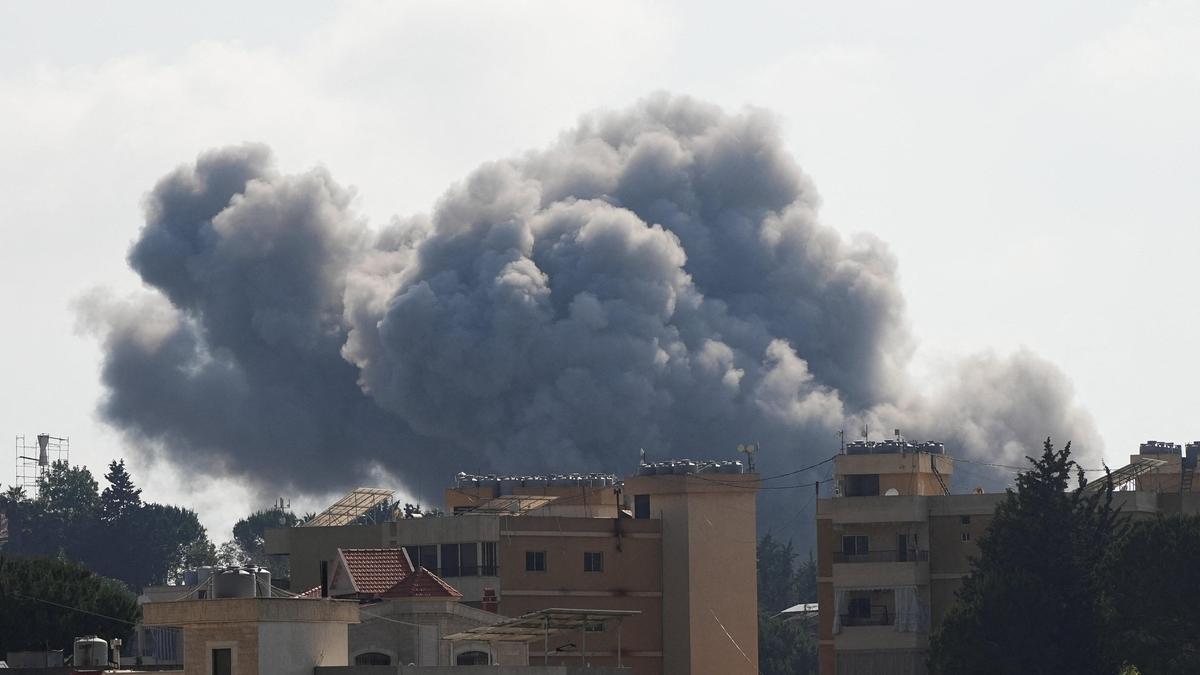
It is not a sound you hear with your ears first. It is a violent compression of air that slams into your chest, a sudden, blinding vacuum that rips the breath straight out of your lungs before the actual roar of the detonation catches up. When an airstrike hits a small village, the world fractures. The sky turns a bruised, unnatural gray. Concrete, dried mud, and ancient stone dissolve into a fine, choking powder that coats everything—the trees, the crops, the skin of the living, and the faces of the dead.
Twelve people died in a single village on a Tuesday afternoon. To a distant world skimming headlines on glowing screens, they are a statistic. A dozen lives checked off in a ledger of geopolitical friction. But in the dirt of eastern Lebanon, twelve is an absolute apocalypse. It is an entire ecosystem of memory wiped out in the span of a heartbeat.
Behind that number are specific, irreplaceable realities. There is the grandmother who held the secret recipe for the village’s best wild thyme flatbread. There is the shopkeeper who let the neighborhood kids run up a tab for candy they would never quite afford. There is the teenager who spent his evenings tuning an old scooter, dreaming of roads that stretched far beyond the valley. When the missiles strike, these are the invisible stakes. The ledger shows twelve casualties, but the village loses its anchor.
The ground shifts beneath the rubble, and the dust refuses to settle.
The Mathematics of Mobilization
While the smoke still rose from the shattered foundations in the east, another reality was unfolding across the border. Orders were cut. Ink dried on official documents. Thousands of miles away from the blast site, young men and women received notifications that their civilian lives were being put on pause.
Israel called up additional reserve troops.
To understand what this means beyond the military terminology, consider how a society functions when it shifts permanently to a war footing. Reservists are not abstract entities; they are high school history teachers, software engineers, baristas, and fathers. When the call-up happens, the gears of normal life grind to a halt. A laptop is shut mid-sentence in a Tel Aviv tech hub. A half-painted wall is left unfinished in Haifa. A suitcase is packed in a quiet bedroom while a partner watches from the doorway, silent, calculating the terrible odds of a conflict that seems to have no ceiling.
This is the hidden mechanics of a widening war. It demands more bodies, more fuel, more steel, and more certainty. Each side operates under a grim, unyielding logic: deterrence requires escalation. To stop the enemy from striking tomorrow, you must strike harder today. Yet, as the troop numbers swell on one side and the casualties mount on the other, the math begins to break down. The equation produces only a terrifying, self-sustaining loop.
The conflict in Lebanon has never been a static affair. It is an accordion of violence, expanding and contracting over decades, but always anchored in the same rocky terrain. For those who live along these fault lines, the current escalation feels less like a new chapter and more like the return of an old, familiar ghost.
The View from the Valley
Imagine standing at the edge of an olive grove that your great-grandfather planted. The trees have thick, twisted trunks that have survived droughts, locusts, and previous wars. You know every knot in the wood. You know which tree gives the bitterest oil and which one offers the deepest shade.
Now look toward the horizon. You see drones—small, dark shapes cutting through the haze like predatory insects. You hear the low, rhythmic thrum of their engines, a sound that has become the background white noise of modern life in southern and eastern Lebanon. It is an intrusive, constant reminder that your life is being observed, measured, and potentially targeted by someone sitting in an air-conditioned room miles away.
The tragedy of the Bekaa Valley is that its geography has made it a perennial highway for ambition and anger. It is beautiful, fertile, and strategically cursed. When geopolitical tensions spike, the valley becomes a canvas for heavy weaponry. The people who inhabit it are acutely aware that they do not control the forces shaping their destiny. They are caught between the ironclad resolve of regional paramilitaries and the overwhelming technological superiority of a state military.
When you speak to the survivors of these strikes, there is a striking absence of political rhetoric. In the immediate aftermath of a blast, ideology burns away. What remains is a raw, desperate focus on the immediate.
"We just wanted to finish the harvest," a local farmer might tell you, his hands stained with the dark residue of soil and soot. He isn't talking about grand strategies or international law. He is talking about the literal fruit of his labor, rotting in the fields because it is too dangerous to step outside into the open air.
The Illusion of Precision
Modern warfare is sold to the public as a triumph of precision. We are told about smart bombs, surgical strikes, and targeted operations designed to eliminate threats with minimal collateral damage. The language used by military spokespeople is clean, sterile, and clinical. They speak of "operational centers," "infrastructure," and "neutralization."
But on the ground, there is nothing surgical about a blast wave.
A missile designed to penetrate concrete does not stop to ask who is standing on the other side of the wall. The debris from a targeted house does not choose to spare the neighbor’s roof. When a village is struck, the distinction between combatant and civilian dissolves in the chaos of flying metal and collapsing masonry. The psychological toll is equally indiscriminate. A child who survives an explosion does not care that the target was a high-level commander; that child only knows that the ceiling fell on their bed and the world is no longer safe.
Consider the reality of a rural medical clinic in the wake of such an attack. These are not state-of-the-art medical centers. They are modest facilities with limited supplies, staffed by doctors and nurses who have been working on pure adrenaline for months. When twelve dead and dozens more wounded arrive simultaneously, the system collapses.
There are not enough tourniquets. There is not enough blood. The floor becomes slick with red mud, a mixture of bodily fluids and the dust carried in on the clothes of the victims. Decisions must be made in seconds—who can be saved, and who must be comforted while they pass. This is the true face of precision warfare, stripped of its digital gloss and presented in all its agonizing, human detail.
The Friction of Distance
The further you travel from the smoke of the Bekaa Valley, the more abstract the conflict becomes. In the halls of diplomacy, the deaths of twelve villagers become a talking point, a chess piece to be moved across a mahogany table. One side blames the other for using human shields; the other side vows bloody vengeance for the violation of sovereignty.
This distance creates a dangerous form of friction. It allows decision-makers to treat human lives as currency, tokens to be spent in pursuit of a larger strategic victory. It hardens hearts and closes eyes to the shared humanity of those caught in the crossfire.
But for those who have stood in the ruins, the distance vanishes. You realize that the mother weeping over a shroud in Lebanon feels the exact same tearing agony as the mother weeping over a coffin in an Israeli border town. The grief is identical. It has the same weight, the same darkness, and the exact same capacity to ruin a life forever.
The call-up of more troops suggests that the coming days will bring more of the same. More precision strikes. More sterile press releases. More villages transformed into dust and memory. The machine of war has an immense appetite, and it is currently being fed the lives of ordinary people who wanted nothing more than to watch the sun set over the hills without fear.
The afternoon fades into twilight, but the heat remains. In the quiet after the rescue crews have stopped digging, the silence is heavier than the explosion itself. It is a waiting silence, thick with the knowledge that the horizon is still loaded with iron, and the dust has not yet finished falling.