The soles of your boots do not merely wear out; they surrender. Every step across the Andean foothills is a silent negotiation between gravity and human stubbornness. Two hundred miles of jagged stone, blistering altitude, and relentless dust before a single drop of river water ever touches a paddle. Most
Where the Mud Meets the Sky
travel
The First Two Hundred Miles
Maps lie. They lie with clean blue lines and neat topographical contours, smoothing out the jagged, breathing reality of the earth into something a human hand can hold. But a map cannot tell you what it feels like to have your boots rot off your feet. It cannot explain the specific weight of mud that has baked in a ninety-percent humidity kiln for six months, clinging to denim and skin until every step feels like lifting an anchor from the river floor.
Most people look at the Amazon River and see a line. Two explorers—Ed Stafford and Luke Collyer, though names blur when you are staring down a wall of impenetrable green—looked at it and saw a gauntlet.
Before a single drop of water ever cradled their canoe, they had to earn the right to float. Two hundred miles. On foot. Through the dense, suffocating undergrowth of the Peruvian Andes and the upper reaches where the jungle closes overhead like a carnivorous jaw.
Imagine the sound of the forest. It is not quiet. It is a dense, vibrating wall of noise—insects clicking like miniature clockworks, the sudden shrieks of birds that look like painted glass, and the constant, dripping humidity that turns your own sweat into a second skin. They walked. They didn't glide. They trudged through ankle-deep rot, swatting away clouds of mosquitoes that didn't care about insect repellent, carrying packs that felt heavier with every passing hour.
Your muscles scream. Your blisters pop, refill, and pop again. You wake up soaked in dew, and you go to sleep soaked in sweat.
Why?
Because humanity has an ancient, stubborn itch to touch the edges of the map where the cartographers simply wrote here be monsters. We want to know what lies at the far end of endurance. We want to prove that the human machine can break down, rebuild itself with sheer spite, and keep moving forward.
The Shift from Earth to Water
There is a precise moment of psychological violence when you transition from walking the jungle to paddling it.
On foot, you are at eye level with the terror. You see the bullet ants, the fer-de-lance snakes coiled beneath damp ferns, the sharp thorns that tear through heavy canvas. You are part of the dirt.
Then comes the river.
After those brutal initial miles on foot, they finally reached a point where the water grew wide enough, deep enough, to bear the weight of a vessel. They climbed into their canoes. The ground vanished. Beneath them now was thousands of miles of liquid muscle, churning brown, carrying the runoff of an entire continent toward the Atlantic Ocean.
Water is a different kind of tyrant. On land, you control your speed. On the Amazon, the current dictates your pulse.
Listen closely. Can you hear it? The low, rhythmic thrum of the current pressing against the hull. The paddle dips. Pull. Glide. Breathe. Repeat it ten thousand times a day until your shoulders turn to iron and your palms are slick with calluses that split and bleed into the teakwood shafts.
You are entirely at the mercy of something much larger than yourself. Piranhas cruise the shallows. Caiman watch from the muddy banks with eyes like yellow marbles. Squalls roll in from nowhere, turning the broad expanse of the river into a churning washing machine of wind and whitecaps in a matter of minutes.
To survive this, you stop thinking about the finish line. If you think about the fact that you have four thousand miles left to go, your mind shatters. Instead, you shrink the universe. You focus only on the next stroke. Just this paddle. Just this bend in the river. Just this hour of daylight before the equatorial night slams down like a iron door.
The Silence of the Main Stem
As the weeks bled into months, the journey changed texture. The physical agony gave way to a deeper, stranger psychological landscape.
Solitude is a heavy blanket. When you are paddling the full length of the Amazon, the world shrinks to two fiberglass hulls, the rhythmic splash of carbon-fiber paddles, and the endless horizon of brown water meeting a heavy, grey-blue sky. Days pass without seeing another human being, save for the occasional flash of a remote village on the bank—a cluster of wooden huts on stilts, children waving with wide, curious eyes, fishermen holding nets like spiderwebs thrown across the surface.
To most of us, absolute silence is terrifying. We live surrounded by the hum of refrigerators, traffic, notifications, and the ambient noise of a civilization that refuses to sleep. Strip all of that away. Drop two men into the heart of the greatest rainforest on Earth, surrounded by an ecosystem that views humans as a temporary inconvenience.
What happens to the ego? It dissolves.
You realize how profoundly small you are. A single fallen mahogany tree, washed downriver by an upstream storm, can flip a canoe and scatter your gear into the dark, swirling depths in a heartbeat. A fever, born from a single mosquito bite, can end a multi-year expedition in a sweltering tent while your partner weighs whether to carry you out or bury you.
Yet, inside that vulnerability lies an intoxicating freedom. There are no bills. No emails. No schedules. There is only the river, the sun climbing its daily arc, and the raw, unadulterated mechanics of survival.
The Horizon at the Ocean
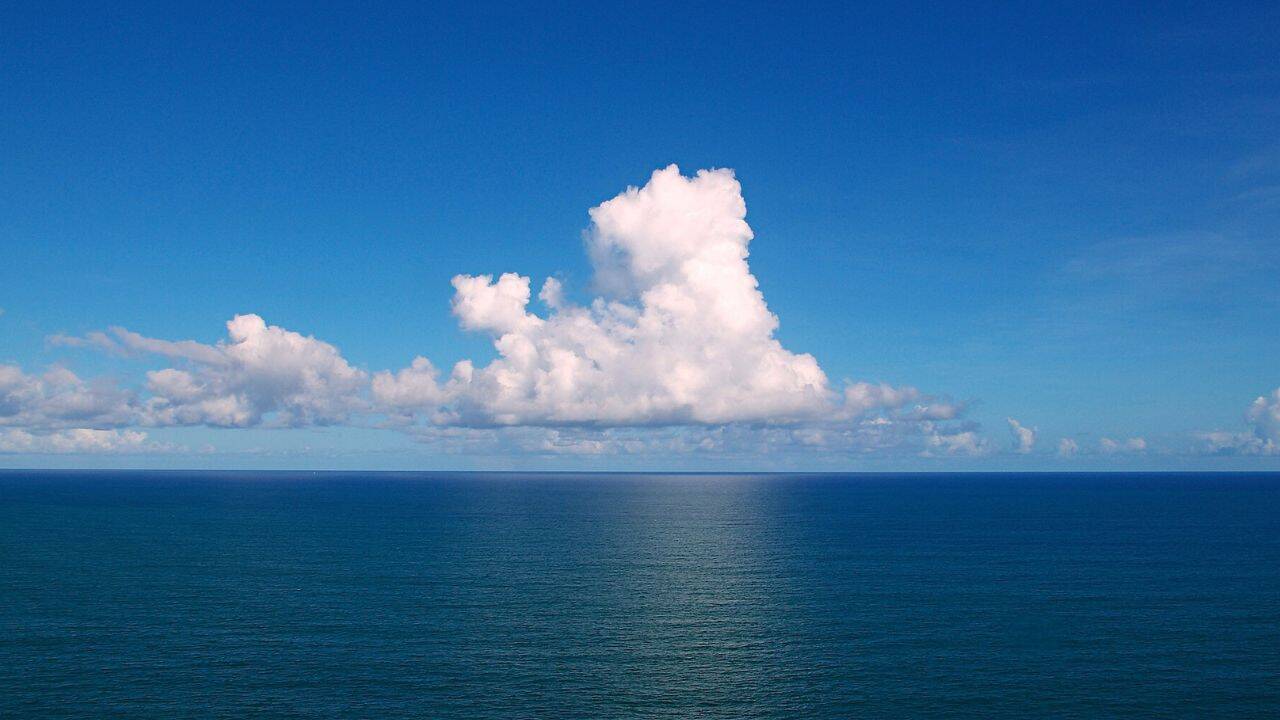
People love to ask about the finish line. They want to know what it felt like when the fresh water of the river finally tasted salty, when the waves of the Atlantic Ocean began to lift the canoes, signaling the absolute end of the line.
They expect fireworks. They expect a cinematic realization, a grand speech about conquering nature.
Nature cannot be conquered. You simply survive it long enough to earn its grudging respect.
When they finally struck the ocean, after thousands of miles of mud, sweat, malaria, piranhas, and blistering sun, there was no grand celebration. There was only exhaustion so deep it felt like a physical weight. There was the realization that the river had carried them through the beating heart of the planet, revealing secrets that most humans will only ever see through the flat, sterile glass of a television screen.
They stepped out of their boats. Their legs shook. The ground felt wrong—too stable, too still, refusing to sway beneath their feet like the deck of a canoe.
We look at feats like walking two hundred miles through the jungle just to paddle the rest of the Amazon, and we call it madness. We wrap it in statistics and file it away under extreme travel. But the truth is much simpler, and much more haunting.
We do not explore the world to conquer it. We explore the world to find out if we are strong enough to survive the reflection we find staring back at us from the water.
The current keeps moving. The jungle breathes in the dark. And somewhere out there, the map still has blank spaces waiting for someone stubborn enough to walk them.