The coffee cup didn't just slide across the table. It danced. It hopped twice, tipped over, and spilled dark, aromatic liquid across a map of Caracas before the floor beneath it gave a sickening, violent lurch.
That was the exact moment the ground stopped acting like solid earth and began behaving like the open sea.
When we think of natural disasters, we often look at the final tallies. We see the numbers on a screen, the statistics flashing at the bottom of a breaking news broadcast, or the sterile headlines detailing a tragedy from thousands of miles away. But a number like 164 is not just a statistic. It is 164 empty chairs at dinner tables. It is 164 voices silenced in the span of a few terrifying minutes. Venezuela is currently mourning this exact loss after a series of powerful earthquakes ripped through the country, shattering infrastructure and fracturing lives.
To truly understand what happened, you have to look past the Richter scale. You have to look at the dust.
The Sound of the Fault Lines
Earthquakes do not arrive with a polite warning. They begin with a sound that originates deep within the marrow of the planet—a low, guttural growl that you feel in your teeth before you hear it with your ears. For millions of Venezuelans, that sound became the backdrop of an ordinary afternoon.
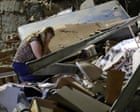
Consider a mother in a hillside barrio of Caracas, holding her toddler, feeling the concrete walls she built with her own hands suddenly turn into a trap. Or an elderly man in Cumaná, watching the colonial architecture that survived centuries of history crumble into white powder in less than sixty seconds. The initial shockwave was powerful, but it was the successive tremors that broke the spirit of the rescue teams. Each aftershock felt like a cruel joke, a repetitive strike against a nation already weary from years of economic hardship.
The infrastructure of Venezuela, strained by years of neglect and lack of investment, stood little chance against tectonic shifts of this magnitude. Roads buckled like ribbon. Bridges snapped. In the immediate aftermath, the silence that followed the crashing of concrete was perhaps the most terrifying sound of all. Then came the sirens.
A Landscape Interrupted
It is easy to misjudge the scale of a disaster when looking at it from an aerial photograph. You see collapsed roofs and blocked highways. What you do not see is the invisible paralysis.
When the earth shifts, everything we take for granted vanishes. Electricity blinks out, plunging entire cities into darkness. Water pipes burst underground, turning streets into muddy rivers while simultaneously cutting off clean drinking water from the survivors. Cell phone towers topple, leaving desperate people staring at screens with zero bars, unable to find out if their children, their parents, or their spouses are alive beneath the debris.
Imagine searching for a loved one in total darkness, using only the weak glow of a dying flashlight, while the ground beneath your feet continues to tremble.
The rescue efforts have been nothing short of heroic, defined by ordinary citizens digging through rubble with their bare hands. Neighbors became first responders. Shopkeepers became medics. In the absence of heavy machinery, human chains formed to move massive blocks of concrete, piece by agonizing piece. They are fighting against time, and they are fighting against the sheer weight of the earth.
The True Cost of the Tremor
The death toll stands at 164, but the ripple effects of this disaster will be felt for generations. Thousands are now homeless, sleeping in makeshift camps, public parks, or out on the asphalt, terrified to step back inside any structure that still has a roof. The psychological trauma of an earthquake is unique; it robs a person of the foundational belief that the ground beneath them is stable.
When the very earth fails you, where do you turn?
Hospitals that were already struggling with a shortage of medical supplies are now overwhelmed with the injured. Doctors are performing surgeries by flashlight. The crisis is not contained to the moments of the shaking; it expands every hour that clean water, antibiotics, and shelter fail to reach the hardest-hit zones. The international community has begun to pledge aid, but geopolitical complexities often mean that help arrives as a trickle when a flood is required.
Venezuela is a land of staggering beauty, from the snow-capped peaks of the Andes to the vast expanses of the Orinoco delta. It is a country defined by resilience, by a population that has endured crisis after crisis with an unbreakable cultural pride. Yet, this natural catastrophe strikes at a moment of profound vulnerability.
The dust will eventually settle over Caracas and the surrounding provinces. The headlines will inevitably shift to another corner of the globe, focusing on a new political scandal, a different conflict, or a fresher tragedy. The numbers will freeze in the archives of history.
But in the quiet neighborhoods where the tremors felt the strongest, the reconstruction will take years. It will happen one brick, one conversation, and one grief-stricken day at a time, long after the rest of the world has stopped watching.
A single, red plastic shoe sits atop a mound of gray concrete dust in a collapsed residential district, completely undisturbed by the wind.