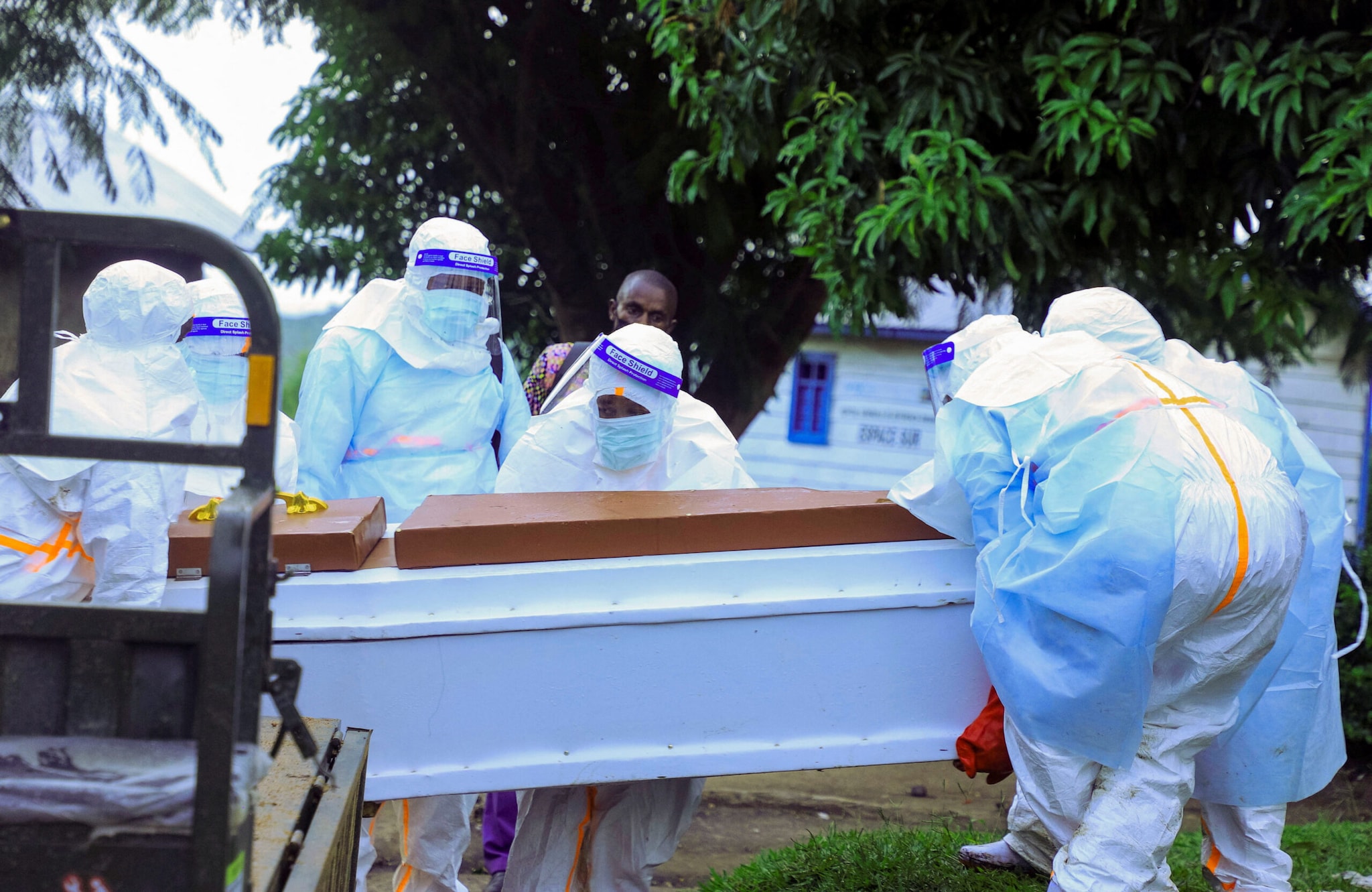
The World Health Organization is flashing the red light in the Democratic Republic of Congo again. The headlines scream the same tired formula: 900 suspected cases, 101 confirmed, and a rising body count. The global health apparatus mobilizes. Billion-dollar donor funds prepare to clear their throats.
It is a masterclass in institutional theater.
The lazy consensus among health journalists and armchair epidemiologists is that a spike in "suspected cases" equals a runaway catastrophe. The narrative is always linear: virus emerges, numbers go up, global intervention is the only savior. But anyone who has spent time analyzing epidemiological data in conflict zones knows that these macro-numbers are often a mirage. They hide a much more complex, bureaucratic, and sometimes cynical reality on the ground.
We are looking at the data upside down. The obsession with raw, unverified case counts does not save lives. It distorts the allocation of resources, fuels local distrust, and ignores the structural failures that make these outbreaks cyclical.
The Suspected Case Trap
Let us dismantle the 900 suspected cases metric. In the context of the DRC, labeling someone a "suspected Ebola case" requires little more than a fever, a headache, and malaria-like symptoms in a designated health zone.
Do you know what else causes a fever and a headache in the North Kivu or Equateur provinces? Malaria. Typhoid. Cholera. Yellow fever. Universal, everyday poverty.
When international funding is tied to Ebola response metrics, local surveillance networks face an perverse incentive structure. If you are a clinic director in a starved healthcare system, listing a patient as a standard malaria case gets you nothing. Listing them as a suspected Ebola case triggers immediate international attention, resources, PPE shipments, and per diems for staff.
The gap between 900 suspected cases and 101 confirmed cases isn't just a lag in laboratory testing. It is a statistical buffer zone filled with misdiagnoses and institutional survival mechanisms. When only 11% of your suspected cases turn out to be real, your surveillance system isn't "vigilant." It is wildly inaccurate.
The Colonial Legacy of Ring Vaccination
The standard playbook for containment is ring vaccination—vaccinating the contacts of confirmed cases, and the contacts of those contacts. On paper, it is brilliant math. In practice, it often operates on a top-down, neo-colonial model that treats local populations as vectors rather than human beings.
During major outbreaks, international agencies roll into villages with armored SUVs and militarized escorts. They isolate patients, disrupt traditional burial practices, and demand compliance.
Then they wonder why communities hide their sick.
The resistance to Ebola interventions is not driven by ignorance or witchcraft. It is driven by rational skepticism. If an organization ignores your child's chronic malnutrition for a decade, but suddenly spends millions of dollars to isolate them because of a virus that might threaten the West, you do not thank them. You distrust them. The hard truth is that the infrastructure built to fight Ebola is temporary; it vanishes the moment the news cycle moves on, leaving the baseline health system just as broken as before.
The Opportunity Cost of Single-Virus Obsession
Every dollar channeled into an emergency Ebola response fund is a dollar diverted from basic healthcare infrastructure. While the global media fixates on 101 confirmed Ebola cases, thousands of children in the same regions are dying quietly from easily preventable diseases.
| Disease | Annual Mortality Risk (Regional Average) | Global Funding Priority |
|---|---|---|
| Ebola Outbreak | Low-to-Moderate (Localized) | Hyper-Critical / Emergency |
| Malaria | High (Endemic) | Routine / Chronically Underfunded |
| Measles | High (Epidemic waves) | Reactive / Secondary |
| Diarrheal Diseases | High (Lack of clean water) | Minimal International Press |
By turning Ebola into a hyper-visible boeygman, the global health community treats the symptom of a collapsed state as an isolated medical anomaly. Ebola thrives because there are no roads, no clean water, and no stable clinics. Deploying high-tech experimental treatments into an environment that lacks basic clean needles is like putting a spoiler on a car with no engine.
Realism Over Rhetoric
To truly change the trajectory of infectious disease management, the entire framework must be inverted.
First, stop reporting unverified suspected cases as front-page news. It creates a cycle of panic and fatigue that desensitizes donors and the public. Focus exclusively on laboratory-confirmed transmission chains.
Second, decouple emergency funding from case counts. Provide block grants to local health zones to build permanent diagnostic laboratories that can differentiate between typhoid, malaria, and hemorrhagic fevers within hours, not days. If a local clinic can test for everything simultaneously, the inflation of Ebola numbers disappears.
Third, hand the keys to local leadership. The reliance on foreign emergency medical teams is a temporary band-aid that creates dependency. The successful management of an outbreak depends on village elders, local nurses, and community leaders who understand the social fabric. They do not need western experts to lecture them on hygiene; they need the capital to buy soap and clean water infrastructure on their own terms.
The next time a press release drops warning of thousands of suspected cases, look past the big number. Look at the ratio of confirmation. Look at the underlying healthcare vacuum. Stop buying into the theater of emergency response. The bureaucrats need the panic to justify their budgets. The people on the ground just need a functioning hospital.