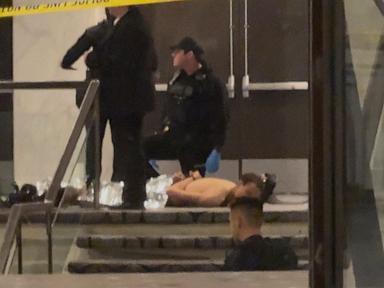
The air in the White House briefing room usually smells of stale coffee and the electric hum of expensive cameras. It is a room built on the premise of verbal combat—a place where the weapons of choice are sharpened ironies and pointed questions. But on a Tuesday that should have been defined by policy memos and routine travel logs, the vocabulary of the capital shifted. It shifted from the abstract to the visceral. It shifted to the sound of a shotgun.
Washington D.C. is a city of perimeters. There are rings of concrete, rings of steel, and rings of human vigilance. We walk through these barriers every day, often forgetting they exist until someone tries to tear through them. When the news broke that a suspect had fired a weapon near the very heart of American executive power, the city didn’t just pause. It held its breath.
Jeanine Pirro was among the first to give the chaos a name. The reports were jagged. A suspect. A shotgun. A discharge of lead and fire in a place where only words are supposed to fly.
The Fragile Illusion of the Gates
To understand the weight of a trigger pull on Pennsylvania Avenue, you have to understand the psychology of the fence. For the journalists who cram into those small, uncomfortable chairs in the West Wing, the building is an office. For the Secret Service, it is a fortress. For the rest of the world, it is a symbol.
When a man—later identified and pursued—decides to bring a long gun into this geography, he isn’t just attacking a building. He is attacking the assumption that the center can hold.
Imagine being a correspondent. You are checking your phone, worrying about a deadline, perhaps debating the phrasing of a lead sentence. Then, the shouting begins. The "lockdown" isn't just a word; it is the heavy thud of doors being bolted and the sight of men in tactical gear moving with a practiced, terrifying fluidity.
The facts of the incident began to crystallize through the fog. The suspect didn't just carry a weapon; he used it. Pirro’s account highlighted the weapon of choice: a shotgun. In the world of ballistics, a shotgun is messy. It is loud. It is a weapon of proximity and intimidation. It lacks the surgical coldness of a rifle. It is a blunt instrument.
The suspect fired. The sound would have rippled across the lawn, bouncing off the historic stone, a violent intrusion into the choreographed silence of the executive mansion.
The Men on the Line
We often treat the Secret Service as part of the architecture. They are the statues in suits, the silent sentinels with earpieces. But when a shotgun blast echoes near the North Fence, these statues break into a sprint.
The response was a masterclass in the tension between restraint and force. There is a specific kind of courage required to run toward the sound of a 12-gauge discharge when you don't know if it’s a lone actor or the start of something much larger. Every security failure of the last decade flashes through the collective memory of the city. The time a man made it over the fence. The time a shooter targeted the building from a distance.
This time, the perimeter held, but the psychic barrier was breached.
The suspect was taken into custody, but the narrative didn't end with the handcuffs. It began a new chapter of scrutiny. Why was a man with a shotgun able to get close enough for the blast to be heard by the world’s most powerful press corps?
The Cost of a Climate
The metal of the gun and the lead of the shot are tangible things. You can weigh them. You can measure the velocity. But what you cannot measure is the temperature of the society that produced the moment.
We live in an era where the distance between "disagreement" and "destruction" is shrinking. The White House has always been a lightning rod, but the bolts are hitting closer to the ground lately. The incident serves as a grim reminder that the rhetoric we trade in has physical consequences.
When Jeanine Pirro broke down the details of the shotgun, she wasn't just reporting on a crime. She was reporting on the vulnerability of our institutions. It is easy to feel safe behind the heavy black iron of the White House fence until you realize that iron is only as strong as the peace it represents.
The suspect, according to the emerging details, wasn't a phantom. He was a person who made a series of choices that led him to a confrontation with the most elite security force on the planet. Whether driven by a fractured mind or a desperate grievance, the result is the same: a moment of pure terror that forces us to re-evaluate how we protect the symbols of our democracy.
The Silence After the Blast
After the suspect was neutralized and the area cleared, a strange quiet settled back over 1600 Pennsylvania Avenue. But it wasn't the same quiet as before.
The correspondents returned to their desks. The tourists eventually came back to the sidewalk to take their selfies. But the air remained charged. Every loud noise—a car backfiring, a heavy door slamming—caused heads to turn.
The "invisible stakes" of the White House Correspondents' beat are usually related to access, to the truth, and to the First Amendment. On this day, the stakes were simply life.
We talk about "the news" as if it is a product we consume. But for those on the ground, the news is a physical environment. It is the smell of gunpowder. It is the sight of a uniform-clad officer with his hand on a holster. It is the realization that the walls we build are never quite high enough to keep out the chaos of the world.
The shotgun didn't change the laws of the land. It didn't alter the course of the upcoming election. It didn't fix a single problem it was perhaps intended to address. All it did was leave a scar on the afternoon and a ringing in the ears of those whose job it is to watch the throne.
The suspect is in a cell. The shotgun is in an evidence locker. But the question remains, hanging in the humid D.C. air like the smell of burnt powder: How do we stay an open society when the gates are being hunted?
There is no policy memo that can answer that. There is only the watchful eye of the guard and the shaky hand of the reporter, picking up their pen to record the day the world tried to break through the fence.
The sun sets over the Potomac, casting long, jagged shadows across the lawn where the pellets landed, a reminder that the peace we enjoy is not a natural state, but a fragile, hard-won truce.



