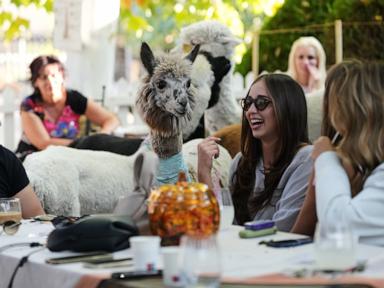
The modern hospitality market suffers from extreme commodity homogenization. When coffee beans, espresso machines, and interior aesthetics are easily replicated, the marginal cost of imitation approaches zero. To escape this trap, operators must introduce non-replicable assets that drive pricing power and organic distribution. Integrating live exotic animals, specifically South American camelids such as alpacas, into a commercial cafe environment represents an extreme manifestation of this strategy. Beneath the viral novelty of sipping espresso next to a domesticated herbivore lies a complex operational model balancing high capital expenditures, specialized labor requirements, strict regulatory frameworks, and rapid novelty decay.
The Margin Mechanics of Experiential Retail
Traditional specialty cafes operate under a compressed financial model. Gross margins on beverage sales hover around seventy to eighty percent, but net profitability is constrained by labor costs, rent per square foot, and transaction volume limits. A customer occupies a seat for an average of forty-five minutes, generating a fixed ticket price with negligible pricing elasticity.
Introducing live animals alters the underlying unit economics by shifting the monetization vector from the product to the environment. The coffee transitions from a core product to a low-cost loss leader or a high-margin access ticket. Operators do not sell caffeine; they sell controlled proximity to a charismatic megafauna.
This shift alters three critical financial variables:
- Dwell Time and Ticket Inflation: While traditional cafes struggle with table turnover during peak hours, animal-integrated venues command higher baseline entry fees or minimum spend thresholds tied to interaction zones. Customers trade time for access, willingly paying a premium bundled into reservations or mandatory service charges.
- Organic Customer Acquisition Cost: Visual content generated by live animals performs exceptionally well across algorithmic feeds. This reduces paid marketing expenditure to near zero during launch phases, yielding a high volume of top-of-funnel traffic driven entirely by user-generated media.
- Ancillary Revenue Expansion: Proximity to live animals creates high-conversion opportunities for secondary retail products, including fiber goods, branded merchandise, and specialized feed packages sold at the point of interaction.
The Cost Function of Livestock Integration in Urban Environments
While top-line revenue metrics appear attractive, the underlying cost structure diverges sharply from standard food and beverage operations. Running a live animal facility inside or adjacent to a hospitality venue introduces capital and operational expenditures that traditional restaurateurs are unequipped to manage.
Real estate requirements expand significantly. Alpacas require adequate shelter, climate-regulated indoor resting areas, biosecure fencing, and durable flooring that withstands heavy waste and hoof traffic without degrading sanitary standards. Urban zoning laws often restrict livestock presence, requiring specialized municipal permits, environmental health clearances, and continuous acoustic and odor mitigation protocols.
Labor specialization creates another friction point. Standard cafe staff trained in customer service and espresso extraction cannot manage animal welfare, behavioral monitoring, or sanitary compliance. The venue must employ certified handlers, animal behaviorists, or dedicated husbandry staff whose wages do not scale linearly with beverage sales volume.
Veterinary overhead represents a fixed liability regardless of customer volume. Routine vaccinations, shearing, dental maintenance, hoof trimming, and emergency medical interventions demand ongoing capital allocation. Biosecurity protocols must isolate the food preparation zone completely from animal housing to prevent contamination, requiring physical architectural segregation that increases initial buildout costs.
The Novelty Decay Curve and Retention Dynamics
The primary strategic vulnerability of animal-integrated hospitality is the novelty decay curve. Viral attention generates a massive initial spike in foot traffic, but repeat visitation rates for novelty concepts typically exhibit steep monthly declines once the local market has exhausted its curiosity.
To model this accurately, operators must distinguish between two distinct consumer cohorts:
- The Tourist or One-Time Visitor: Attracted by social media visibility and experiential novelty. They exhibit low lifetime value and zero brand loyalty. Their utility is derived entirely from capturing digital media for their personal networks.
- The Local Regular: Seeks a functional workspace, reliable coffee quality, and social ambiance. The presence of unpredictable animals, heightened noise levels, and specialized crowds often alienates this core demographic, reducing baseline weekday revenue.
When a venue relies exclusively on tourist traffic, revenue volatility becomes extreme. Seasonal dips, adverse weather, and shifts in platform algorithms can collapse top-line revenue overnight. Sustained viability requires transforming the venue from a static tourist trap into a functioning community hub or a specialized agritourism destination with diversified revenue streams.
Behavioral Risk Architecture and Liability Management
Inviting the public to interact directly with large mammals introduces severe liability and operational risk. Alpacas are generally docile, but they remain prey animals capable of kicking, spitting, or biting when stressed by sensory overload, improper handling, or children moving too quickly.
Mitigating this risk requires strict behavioral protocols enforced by continuous staff supervision. Venues must establish clear operational boundaries:
- Sensory Capping: Limiting the number of simultaneous visitors in the animal zone to prevent herd stress and accidental injury.
- Dietary Control: Restricting feeding strictly to venue-provided, calibrated feed packets to prevent fatal gastrointestinal blockages in the animals.
- Zoning Segregation: Maintaining absolute physical barriers between dining areas where food is consumed and animal interaction zones to comply with health codes regarding animal dander and fecal contamination.
Insurance premiums for businesses incorporating live animals into public retail spaces reflect these hazards. Comprehensive general liability policies must cover animal-related incidents, requiring rigorous documentation of staff training, visitor waiver execution, and veterinary health certifications.
Capital Allocation and Strategic Mandate
Operating an alpaca cafe is not a food and beverage business with animals; it is an animal management business that happens to sell coffee. Conflating these two operational priorities leads to structural failure.
Operators entering this space must treat the animal asset as a capital investment with a specific depreciation schedule, maintenance overhead, and risk profile. The coffee service must be treated as a secondary amenity designed to monetize the waiting periods and enhance the overall dwell experience.
Long-term survival depends on weaning the business off pure novelty. Successful venues transition their brand equity into agricultural education, proprietary fiber products, or breeding programs, insulating their cash flow from the inevitable decline of social media trends. The strategic mandate is clear: novelty opens the door, but rigorous operational hygiene and asset diversification keep the enterprise solvent.