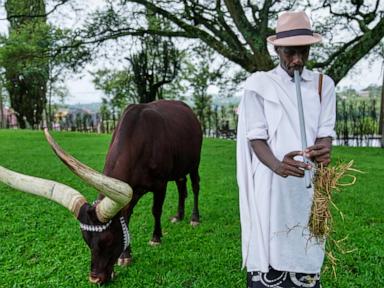
Rwanda is pouring significant resources into preserving the Inyambo, a majestic breed of long-horned cattle deeply woven into the nation’s pre-colonial history. While casual observers view the traditional poetry recited to these animals as a mere tourist spectacle, the strategy runs much deeper. This is a deliberate, state-backed effort to rebuild a national identity and capture high-value cultural tourism. The initiative faces a difficult balancing act, pitting the high costs of preserving a non-commercial breed against the urgent economic needs of rural farmers who require high-yield livestock to survive.
The cultural resurrection centered on these animals is not an accident of folklore. It is a highly structured program managed under the umbrella of national heritage preservation. You might also find this similar story interesting: Why Bad Weather Couldn't Stop Hong Kong Tourism From Growing in July.
The Machinery Behind the Majesty
To understand the scale of this operation, one must look past the striking, symmetrical horns that can span over two meters. The Inyambo were historically the property of Rwandan kings, serving as living symbols of status, grace, and social cohesion. During the upheavals of the late twentieth century, the breed came perilously close to extinction within Rwanda's borders, as livestock populations were decimated and agricultural priorities shifted toward basic survival.
The current revival operates out of specialized centers, most notably the King's Palace Museum in Nyanza. Here, the cattle are not treated as livestock, but as historical artifacts. They undergo rigorous training from a young age to accustom them to human presence and the specific cadences of Amashyo—the traditional poems chanted by designated keepers. These poems praise the beauty of the cows, their lineage, and their elegant movement. As highlighted in detailed coverage by Condé Nast Traveler, the implications are significant.
The keepers are skilled professionals. They maintain a precise vocal tone and physical posture to keep the herd calm during public exhibitions. The economic infrastructure supporting this is entirely distinct from standard dairy or beef farming. The funding flows through cultural preservation budgets, national museums, and high-end tourism initiatives. The return on investment is measured not in liters of milk or kilograms of beef, but in cultural capital and foreign currency spend from luxury travelers.
The Friction on the Farm
Outside the manicured grounds of the cultural centers, a harsh agricultural reality creates a sharp divide. For the average Rwandan smallholder farmer, the Inyambo breed is an expensive luxury they cannot afford to maintain.
- Low Productivity: An Inyambo cow produces significantly less milk than European crossbreeds like Holsteins or Jerseys. In a country where land is scarce and highly fragmented, every square meter of pasture must yield maximum output.
- Resource Intensity: The massive horns and large frames of these cattle require substantial caloric intake, meaning they consume resources that could otherwise support more productive animals.
- Veterinary Overhead: Keeping a rare breed genetically viable without widespread commercial breeding networks increases the risk of inbreeding and specialized disease vulnerability.
Because of these factors, the government’s broader agricultural policy actually pushes in the opposite direction of the cultural preservation drive. Programs like Girinka (One Cow per Poor Family) overwhelmingly distribute crossbred dairy cows to rural households. This creates a fascinating paradox. The state celebrates the Inyambo as the ultimate symbol of Rwandan pastoral pride, yet encourages everyday farmers to raise foreign breeds to lift themselves out of poverty.
This divide means the Inyambo exists almost exclusively in a state-subsidized bubble. The cattle depend entirely on their status as living museum exhibits. If tourism revenues dip, or if state priorities shift toward hard agricultural metrics, the financial floor supporting these herds becomes incredibly fragile.
The Tourism Gamble
The strategy relies on a high-value, low-volume tourism model. Rwanda has consciously positioned itself as an expensive, exclusive destination, famous for its mountain gorillas and luxury eco-lodges. The Inyambo herds are marketed as a premium cultural add-on, a way to keep international visitors in the country for an extra day or two after their trekking expeditions.
This model brings in significant revenue per visitor, but it leaves the cultural preservation apparatus highly vulnerable to global economic shocks. When international travel contracts, the funding for these specialized heritage sites faces immediate strain. Unlike commercial livestock, you cannot simply pivot an Inyambo herd to the local meat market without destroying millions of dollars in cultural branding and years of specialized training.
A Question of Authenticity
As the practice becomes more intertwined with the hospitality sector, it faces critique from cultural purists. Historically, the relationship between the keeper and the herd was a genuine daily reality of Rwandan pastoral life. Today, the performances at Nyanza are carefully timed for tour groups.
The poems, while linguistically accurate, are delivered on a schedule dictated by itineraries rather than the natural rhythm of a herding day. This shift from a living culture to a curated performance is the price of survival for the breed. Without the tourist dollars generated by these performances, the capital required to maintain the genetic purity of the royal herd would be a tough sell to taxpayers in a developing economy.
The true test of the program will be its sustainability over the next decade. If the Inyambo remain confined to a few state-supported showcase farms, they risk becoming mere caricatures of a history that ordinary citizens can no longer afford to participate in. For the revival to genuinely succeed, the state must find a way to integrate the breed into the broader economy, perhaps through specialized regional branding or premium niche dairy products, rather than relying solely on the theater of the royal court.