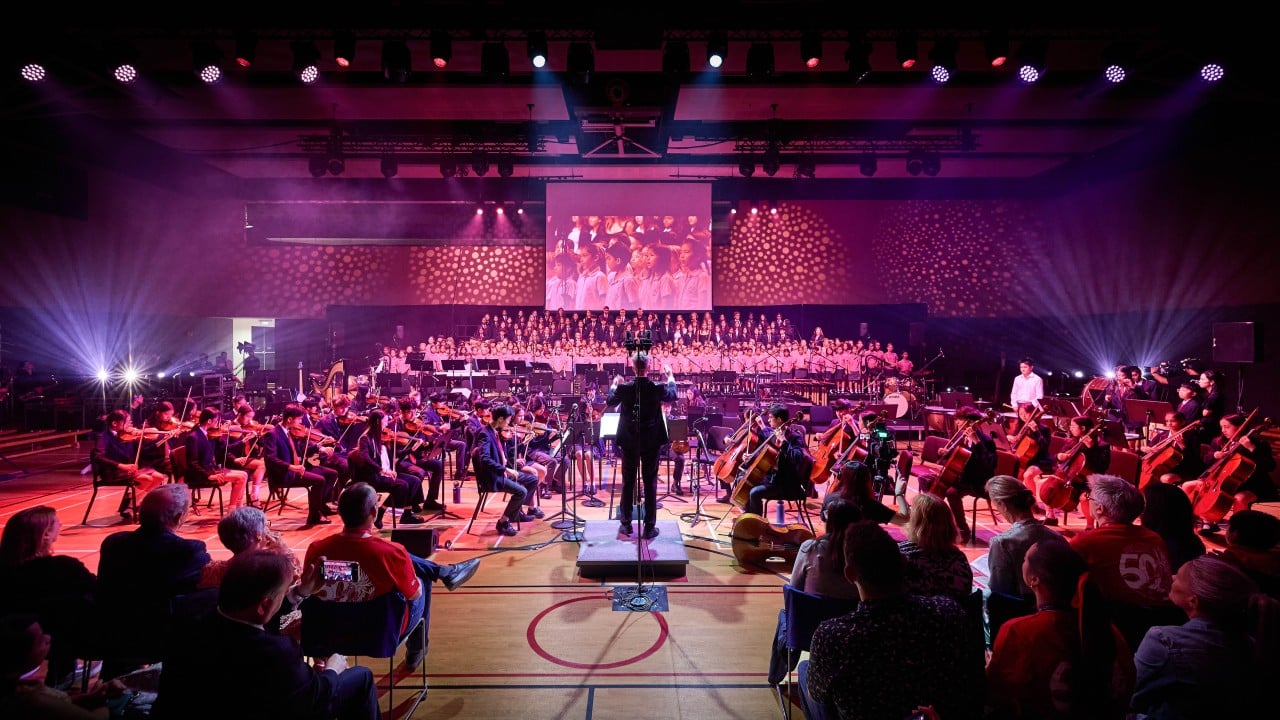
The survival of a non-profit, parent-governed educational institution over a fifty-year horizon requires capital discipline that standard market valuations often ignore. While public-facing institutional narratives attribute operational longevity to abstract cultural variables like community spirit or an enduring ethos, structural solvency depends entirely on the math of the balance sheet. For a self-financed international educational asset operating without sovereign backing or a franchise safety net, the primary operational directive is minimizing the variance of the cost function while maximizing long-term capital deployment efficiency.
Long-term institutional viability is driven by specific mechanics: capital expenditure models, strategic endowment matching, and structural mitigation of geographic and economic constraints.
The Structural Capital Vulnerability of Independent K-12 Models
Independent, non-profit educational institutions operate under an inverted financial risk structure compared to corporate or franchised entities. They lack equity markets for capital generation, sovereign subsidies for downside protection, and centralized shared-service efficiencies. The financial equilibrium of a standalone entity relies on an allocation identity:
$$TR = OE + CE + S$$
Where $TR$ is total revenue (composed of tuition fees, capital levies, and philanthropic inflows), $OE$ is operating expenses (dominated by highly inelastic instructional labor costs), $CE$ is capital expenditure (facilities depreciation and modernization), and $S$ is the net structural surplus targeted for the endowment.
Independent operations face structural constraints that introduce friction to this equilibrium:
- Labor Inelasticity: High-caliber international instruction requires market-clearing compensation packages that scale faster than baseline inflation, making $OE$ highly rigid downward.
- CapEx Volatility: Educational infrastructure requires periodic capital injections for real estate retrofitting, digitization, and expansion. Without debt access, these spikes threaten liquidity.
- Enrollment Cyclicality: Demand for premium education correlates heavily with regional economic shifts, corporate relocation indices, and local demographic changes.
The baseline risk is clear: an independent institution cannot rely on external capital to absorb operational volatility. Sustainability requires a multi-decade mechanism that transforms transient tuition surpluses into long-term capital reserves.
The Capital Deployment Framework: Strategic Inflows and Outflows
To maintain equilibrium over a 50-year horizon, an institution must run a dual-engine capital allocation model. This framework segregates immediate operational needs from long-term capital improvements.
       [ Total Revenue Inflows ]
         /                  \
        /                    \
[ Tuition & Levies ]    [ Philanthropic / Endowment ]
       |                             |
[ Operating Expenses ]       [ Strategic Initiatives ]
(Labor, Rent, Utilities)     (Bursaries, CapEx Expansion)
Capital Generation Mechanisms
Tuition fees only fund current-period operating expenses. Long-term initiatives require structured capital generation. These revenue streams consist of mandatory capital levies or debentures paid by entering cohorts, targeted multi-year fundraising goals, and passive endowment investment returns.
The primary utility of these structures is to separate long-term capital accumulation from the immediate pricing of tuition. This prevents educational delivery from becoming unaffordable during periods of infrastructure expansion.
Long-Term Resource Allocation
Accumulated capital is deployed across three strategic vectors designed to maximize institutional longevity:
- Campus Refurbishment and Structural Modification: Upgrading aging physical plant assets to comply with modern accessibility standards, reducing long-term maintenance overhead, and optimizing space utilization per square meter.
- Next-Generation Specialized Facilities: Developing specialized infrastructure, such as advanced secondary education centers, tailored to facilitate tertiary transition. This maintains structural competitiveness against well-capitalized franchise networks.
- Bursary Funding and Socioeconomic Outreach: Allocating capital to fully funded student placements and community educational modules. This diversifies the student pool and builds deep localized institutional equity, acting as a buffer against regional political or economic shifts.
De-Risking the Institutional Footprint
The ultimate limitation of the independent model is its concentration risk. Unlike corporate networks that spread geopolitical and localized market risks across multiple regions, a single-market educational institution is entirely exposed to local shocks.
Mitigating this vulnerability requires institutionalizing self-evaluation frameworks. This means moving away from internal consensus and shifting toward rigorous external auditing bodies, such as the Council of International Schools (CIS). These external frameworks force the calibration of risk-management strategies against global benchmarks. This changes institutional review from a reactive crisis response into a predictable, data-driven cycle of optimization.
The long-term survival of an educational institution is not a byproduct of cultural inertia. It is an active financial state maintained by matching capital inflows to long-term liabilities. Sustaining this over a half-century requires viewing educational delivery not as a static service, but as an evolving capital optimization problem. The next strategic play for mature independent institutions is implementing automated endowment drawdown formulas and index-linked capital levies. These tools insulate future capital expansions from volatile macroeconomic cycles.