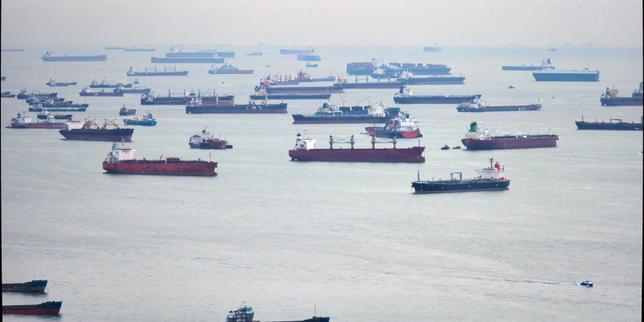
Geography dictates the physical boundaries of international trade, but narrow maritime channels dictate its economic efficiency. The Strait of Malacca—a 500-mile waterway situated between the Malay Peninsula and the Indonesian island of Sumatra—operates as the primary maritime highway connecting the Indian Ocean to the Pacific Ocean. By condensing millions of tons of maritime cargo and nearly a third of global crude oil shipments into a passage that narrows to less than three kilometers at its Phillip Channel bottleneck, this corridor generates a distinct economic dynamic. Evaluating this waterway requires moving past broad descriptions of geopolitical importance to analyze the specific cost functions, capacity constraints, and structural vulnerabilities that define contemporary supply chains.
The Economic Efficiency Equation
The core utility of the Malacca Strait stems from a simple calculation: distance reduction. For cargo vessels and Very Large Crude Carriers transiting between Middle Eastern energy producers and East Asian manufacturing economies, circumnavigating the Indonesian archipelago through alternative passages such as the Sunda or Lombok straits adds days of transit time and substantial fuel expenditures.
The economics of maritime shipping depend on continuous asset utilization. When a bulk carrier or container ship is forced to divert from an optimal route, the cost function shifts across three primary variables:
- Fuel Consumption: Additional nautical miles directly translate to higher bunker fuel consumption, which historically accounts for a major percentage of operational voyage expenses.
- Vessel Charter Rates: Time lost in transit reduces annual round-trip rotations, effectively lowering the revenue-generating capacity of the fleet.
- Inventory Carrying Costs: Extended transit times delay supply chain replenishment, forcing manufacturers to hold higher buffer stocks or risk stockouts.
The Malacca Strait minimizes these variables for maritime operators, serving as a low-cost conduit that compresses transit times between Europe, the Middle East, and East Asian hubs like Singapore, Shanghai, and Yokohama.
The Carrying Capacity Threshold
As traffic volume through the strait climbs toward historical highs—with tens of thousands of vessel transits recorded annually—the waterway faces structural limits governed by physical geography. The primary constraint is not merely width, but depth. Certain sections of the strait shallow to approximately 25 meters, creating a draft restriction known as the Malacca Max limitation.
This depth restriction prevents fully laden Very Large Crude Carriers (VLCCs) exceeding specific tonnage thresholds from passing through safely, forcing operators to either lighten their loads, accept navigational delays waiting for high tides, or divert to deeper southern routes. This physical bottleneck introduces an operational friction cost that balances against the time savings of the route.
Furthermore, high traffic density creates collision and grounding risks. A maritime accident involving a large container vessel or tanker in the narrowest segments of the channel can temporarily disrupt traffic flows, creating immediate economic ripples across regional ports and global commodity markets. Port authorities and littoral states manage these operational hazards through vessel traffic management systems and coordinated navigational safety frameworks, but the risk of localized disruption remains a permanent variable in maritime insurance and freight rate pricing.
Strategic Hedging and Alternative Routes
The concentration of trade and energy flows through a single geographic point creates systemic vulnerability, often framed in strategic literature as the Malacca Dilemma. Major importing nations, particularly those with high energy dependencies on Middle Eastern supply lines, face structural exposure to any disruption within the corridor—whether driven by geopolitical friction, piracy, or navigational accidents.
This exposure has driven capital investment into alternative transit corridors designed to bypass or supplement the strait:
- Overland Pipelines: Energy infrastructure projects, such as oil and gas pipelines running from Myanmar’s coast to southwestern China, reduce absolute dependency on maritime transport for specific localized inputs.
- Rail and Multimodal Corridors: Initiatives linking regional ports to inland logistics hubs attempt to diversify cargo distribution networks, though they cannot match the sheer volume capacity of container ships.
- Distant Maritime Alternatives: Utilizing eastern Indonesian straits or Arctic shipping routes offers contingency paths, but these alternatives involve distinct cost penalties, seasonal ice limitations, or extended voyage distances.
Despite these diversification efforts, the structural cost advantages of the Malacca Strait ensure its continued dominance. Alternative routes function primarily as risk-mitigation buffers rather than wholesale replacements for the primary channel.
Port Economics and Transshipment Dynamics
The economic footprint of the strait extends beyond mere transit; it anchors a dense cluster of high-performance transshipment ports along its littoral shores. Facilities in Singapore and Malaysia capture substantial economic rent by providing localized maritime services, including bunker fueling, cargo consolidation, container transshipment, and ship maintenance.
These ports operate within a competitive regional matrix where berth productivity and turnaround times determine market share. By capitalizing on the high volume of ships already passing through the corridor, these logistics hubs minimize deviation costs for mainline operators while capturing high-value-added service revenues. The economic vitality of the region is thus deeply tied to the efficiency with which the strait processes continuous maritime traffic, transforming geographic constraint into commercial advantage.
Strategic Allocation of Capital and Risk
Navigating the future of Asian maritime trade requires factoring the Malacca Strait not as an immutable natural highway, but as a constrained resource subject to rising congestion costs and geopolitical calculus. Logistics operators and supply chain architects must continuously stress-test their networks against potential transit bottlenecks by maintaining multimodal flexibility and factoring disruption premiums into long-term freight contracting.