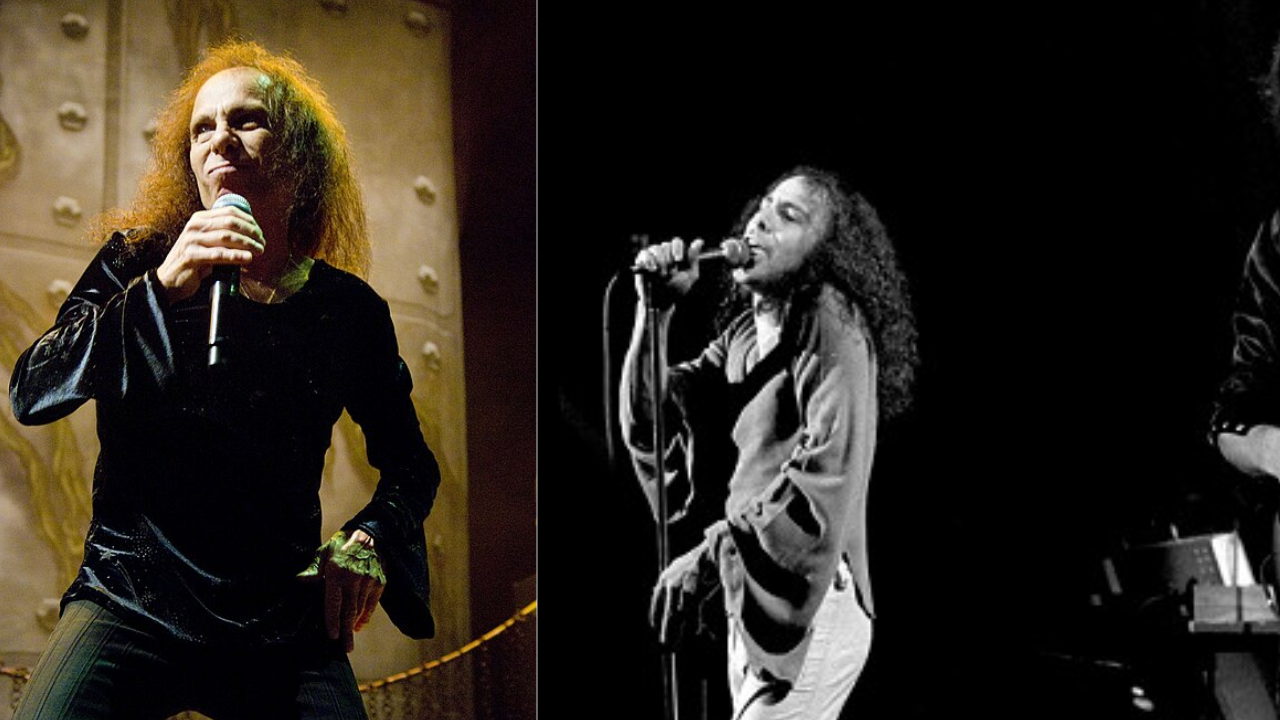
Surpassing $2 million in cumulative fundraising for cancer research is an anomaly for a single-night, subculture-specific charity event, yet the Ronnie James Dio Stand Up and Shout Cancer Fund has achieved this benchmark through its annual Bowl For Ronnie tournament. Most celebrity-backed memorial foundations suffer from rapid donor attrition within thirty-six months of the namesake's passing, collapsing under high administrative overhead and fading public urgency. The Dio fund inverted this decay curve by weaponizing high-affinity community dynamics, low-friction participation mechanics, and direct-to-research capital allocation.
The Structural Failures of Standard Celebrity Philanthropy
To understand why the Bowl For Ronnie model works, one must first examine why traditional memorial charities fail. When a prominent figure dies—as Ronnie James Dio did from gastric cancer in May 2010—an immediate, emotionally driven wave of capital flows into newly formed tribute entities. This initial capital surge masks three structural vulnerabilities that destroy most foundations by year three.
First, standard charity galas rely on high-ticket, low-engagement formats. Black-tie dinners require massive upfront capital expenditure for venue rental, catering, and production, frequently consuming 40% to 60% of gross receipts before a single dollar reaches a laboratory. Second, passive fundraising relies on donor guilt rather than experiential value, creating rapid donor fatigue. Once the immediate grief of the fan base subsides, asking the same demographic for repeated cash donations yields diminishing returns. Third, diffuse mission statements dilute donor trust. Foundations that split funds across vague "awareness" campaigns, patient support, and administrative salaries fail to demonstrate tangible scientific return on investment, alienating major donors who demand measurable outcomes.
The Ronnie James Dio Stand Up and Shout Cancer Fund bypassed these failure points by designing an operational engine tailored specifically to the behavioral economics of the heavy metal community.
The Three Pillars of Subculture Fundraising Mechanics
The fund's ability to clear the $2 million threshold rests on three operational pillars that convert passive fandom into recurring financial yield.
1. Experiential Access Over Passive Donation
Traditional charity auctions sell physical memorabilia, which limits revenue to the purchasing power of the top 1% of wealthy collectors. Bowl For Ronnie, hosted annually at PINZ Bowling Center in Studio City, California, shifts the primary product from physical goods to proximity and shared experience.
By structuring the event around celebrity bowling teams, the organization monetizes fan access at multiple price tiers. General admission tickets capture the mass market, lane sponsorships capture mid-tier corporate and fan-group capital, and individual spots on celebrity teams—featuring prominent figures from bands like Judas Priest, Metallica, Guns N' Roses, and Slayer—command premium pricing. In behavioral economics, this transforms a charitable contribution into an experiential luxury purchase. The donor is not merely writing a check; they are buying a three-hour social interaction with their musical heroes in a low-barrier, egalitarian environment. Bowling requires zero athletic specialization, allowing a sixty-year-old rock icon and a thirty-year-old fan to compete on equal footing. This flattens the social hierarchy and maximizes perceived value per dollar spent.
2. Subculture Tribalism and Network Density
The heavy metal demographic exhibits unusually high brand loyalty and tribal cohesion compared to mainstream pop audiences. In sociological terms, this represents high network density. When key nodes within this network—specifically veteran musicians, radio personalities like Eddie Trunk, and industry executives—commit to the event, their participation acts as a trust signal for the entire ecosystem.
Because the hard rock and heavy metal industry operates as a tight-knit guild rather than a fragmented corporate market, talent acquisition costs for the event remain near zero. Musicians donate their time, instruments, and stage-worn gear without demanding appearance fees or luxury hospitality riders. This eliminates the single largest variable cost in celebrity event production. Furthermore, cross-promotion occurs organically across artist social channels, niche podcasts, and specialized press, driving customer acquisition costs down while maintaining near-capacity attendance year after year.
3. Capital Allocation and Scientific Specificity
Donor retention at the institutional and high-net-worth level depends entirely on capital efficiency. Founded by Wendy Dio alongside medical professionals like Dr. Sandy Kapoor and Dr. Sandeep Kapoor, the fund maintains a strict focus on early detection, prevention, and targeted research for gastric, colon, and other cancers.
Rather than dispersing micro-grants across dozens of institutions, the fund concentrates capital into high-impact, identifiable research initiatives. Notable allocations include substantial funding for Dr. David Wong’s research at the UCLA School of Dentistry, specifically targeting the development of a simple, non-invasive saliva test for early gastric cancer detection—a technology known as EFIRM (Electric Field-Induced Release and Measurement). By tying fundraising directly to a comprehensible, tangible scientific milestone—preventing the exact diagnostic delay that killed Ronnie James Dio—the organization gives donors a concrete narrative of utility. Donors can trace their ticket purchase directly to a specific laboratory assay.
Deconstructing the Revenue Architecture
A single bowling alley in Los Angeles has a hard physical capacity limit. A venue like PINZ cannot scale to accommodate ten thousand attendees in a single night. Therefore, crossing $2 million in cumulative funds requires maximizing revenue per square foot through diversified monetization layers within a constrained footprint.
- Tiered Ticketing and Lane Sponsorships: Base entry fees cover operational baselines, while corporate and VIP lane packages generate high-margin upfront cash flow months before the event doors open. This de-risks the event financially prior to execution.
- The Live and Silent Auction Multiplier: Physical space constraints are overcome through high-yield auction inventory. Because participating artists donate autographed guitars, custom artwork, and rare vinyl directly, the cost of goods sold (COGS) is effectively zero. Every dollar bid above the administrative processing fee represents pure net margin.
- Digital Extension and Raffle Mechanics: To capture capital from the global fan base unable to travel to Southern California, the fund integrates online raffles and digital bidding platforms. This decouples revenue generation from the physical capacity of the bowling alley, turning a local Los Angeles event into a global fundraising node.
- Year-Round Merchandising and Strategic Partnerships: The bowling event acts as the annual flagship marketing anchor that drives traffic to secondary revenue streams, including branded merchandise, tribute album royalties, and direct recurring donations.
The Cost Function and Operational Constraints
While the Bowl For Ronnie model demonstrates exceptional efficiency, it operates within strict structural boundaries that limit infinite scaling. Understanding these constraints is critical for any strategist attempting to replicate the framework.
The primary bottleneck is key-person dependency. The organization's operational cohesion relies heavily on the personal relationships and administrative leadership of Wendy Dio and a core group of dedicated board members. In non-profit management, founder-led networks struggle with succession planning. The goodwill that secures zero-cost talent participation from legacy rock musicians is rooted in personal loyalty to Ronnie James Dio and his widow. As the first generation of heavy metal icons ages out of active touring and public appearances, the fund will face a natural contraction in its core celebrity draw.
The second limitation is geographic concentration. Anchoring the flagship event in Los Angeles maximizes access to resident musicians and entertainment industry sponsors, yet it imposes travel friction on the broader Midwest and European fan bases, where heavy metal consumption is statistically highest. Expanding into satellite events in markets like London, Chicago, or Munich introduces complex logistical overhead, local tax compliance burdens, and the risk of diluting the exclusivity that makes the flagship event profitable.
The third constraint is macroeconomic sensitivity among mid-tier donors. Unlike foundations backed by billionaire endowments, subculture charities rely heavily on working-class and middle-class discretionary spending. Inflationary pressures, rising travel costs, and tightening household budgets directly impact silent auction bidding ceilings and VIP ticket velocity.
The Strategic Play for Niche Non-Profits
For foundation directors and event strategists operating in specialized verticals, the Bowl For Ronnie milestone offers a clear operational mandate: abandon the generic gala template and build monetization engines around authentic community behaviors.
To replicate this financial trajectory, non-profits must execute three specific maneuvers:
- Eliminate high-overhead production venues in favor of interactive, mid-sized environments where fixed costs are predictable and social friction is low.
- Replace passive donation asks with high-access experiential tiers, monetizing direct interaction with respected figures inside a closed-loop subculture.
- Consolidate grant-making into a single, easily articulated scientific or operational target, allowing donors to visualize the exact mechanism their capital funds.
Niche foundations survive not by appealing to the general public, but by extracting maximum lifetime value from a concentrated, high-trust tribe. The Ronnie James Dio Cancer Fund proves that when experiential value, zero-cost talent alignment, and transparent capital allocation intersect, a single bowling alley can outperform a ballroom.