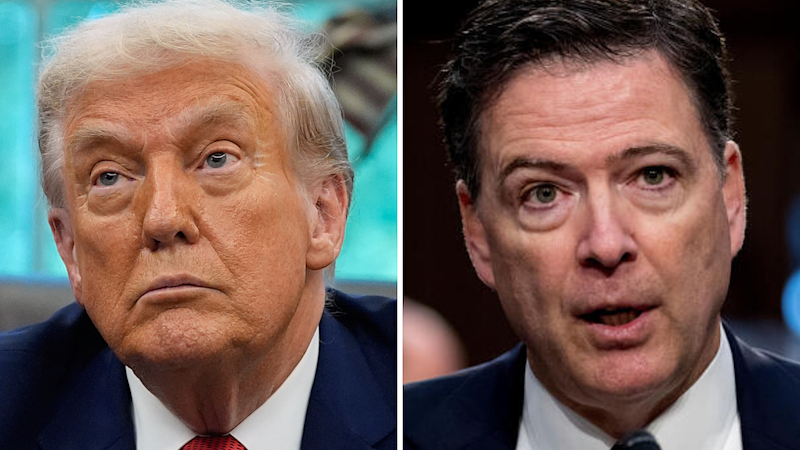
Offering a $1-million reward for tips leading to the prosecution of voter fraud introduces a high-variance financial incentive into the administrative ecosystem of American elections. When political figures—specifically Donald Trump, as reported in coverage of pre-midterm campaign strategies—propose seven-figure bounties for election-related whistleblower tips, they alter the cost-benefit calculus of civic reporting. Standard news coverage typically frames such announcements through the lens of partisan rhetoric or immediate campaign optics. An analytical examination requires treating the bounty as an economic mechanism: a market-style intervention designed to surface low-frequency, high-impact anomalies within a decentralized, high-volume system.
To evaluate the operational reality of a $1-million voter fraud reward, one must examine the structural mechanics of bounty programs, the signal-to-noise ratio in election administration, the legal constraints governing campaign finance and whistleblower payouts, and the downstream institutional costs absorbed by local election officials.
The Structural Mechanics of Asymmetric Bounties
In mechanism design, a bounty is a contingent contract. The principal (the entity offering the reward) promises a fixed payout to an agent (the tipster) upon the verifiable delivery of a specific outcome—in this case, actionable evidence resulting in a conviction or proven instance of systemic voter fraud.
The effectiveness of any bounty system depends on three variables:
- Payout Magnitude ($V$): The gross financial reward advertised to the public ($1,000,000).
- Probability of Verification ($P$): The statistical likelihood that a submitted tip meets the evidentiary threshold required by prosecutors and courts.
- Submission Cost ($C$): The time, effort, and legal exposure incurred by the tipster to gather and submit the claim.
A rational actor submits a tip when the expected value exceeds the cost ($V \times P > C$). Because the advertised payout ($V$) is exceptionally high—orders of magnitude larger than standard municipal crime-stopper rewards, which typically range from $1,000 to $5,000—the equation becomes heavily distorted. Even if an individual believes the probability of their tip resulting in a conviction is near zero ($P = 0.001$), an expected value of $1,000 easily outweighs the near-zero cost of filling out an online form or calling a hotline.
This creates an adverse selection problem. Rather than exclusively attracting high-level insiders with documentary proof of coordinated fraud—the intended target of high-value whistleblower programs like the SEC’s Dodd-Frank awards—an open-to-the-public million-dollar bounty floods the intake funnel with low-probability, high-noise submissions.
Signal-to-Noise Ratios in Election Administration
Modern election administration in the United States operates across more than 10,000 local jurisdictions, processing over 150 million ballots in federal cycles. Within any data-processing operation of that scale, routine operational friction occurs. Poll books experience synchronization delays, provisional ballots require manual adjudication, signature verification algorithms flag legitimate changes in a voter's handwriting, and clerical errors occur during late-night precinct tallies.
To an untrained observer or a motivated bounty hunter, routine administrative friction is visually indistinguishable from malicious manipulation.
The Three Categories of Intake Submissions
When a high-dollar reward is introduced into this environment, intake centers must triage three distinct categories of information:
- Type I: Legitimate Criminal Anomalies. Statistically rare events involving double voting, non-citizen registration, ballot harvesting violations, or insider tampering. Historically, state audit databases and academic reviews (such as those conducted by the Heritage Foundation and university election science labs) demonstrate that confirmed cases occur at fractions of a single percent of total votes cast.
- Type II: Misinterpreted Administrative Friction. Valid procedural safeguards mistaken for fraud. Examples include voters receiving multiple mail-in ballot applications from third-party civic groups, poll workers assisting disabled voters, or batch uploads of absentee counts causing sudden shifts in publicly reported vote totals.
- Type III: Fabricated or Bad-Faith Claims. Submissions generated solely to capture the financial reward, harass political opponents, or overwhelm local administrative bandwidth.
Because the reward structure does not penalize false positives—unless a tipster crosses the high legal threshold of filing a false police report under oath—Type II and Type III submissions dominate the intake pipeline. The analytical bottleneck shifts from finding fraud to filtering millions of unverified claims.
Legal and Regulatory Constraints on Political Rewards
A campaign or political action committee (PAC) cannot simply write a $1-million personal check to a citizen who reports an election crime. Executing such a payout involves navigating strict federal and state statutory frameworks.
First, Federal Election Commission (FEC) regulations govern how campaign funds and leadership PACs disburse money. Expenditures must have a direct nexus to campaign operations or political advocacy, and any payout exceeding $200 requires public itemization, including the recipient's name, address, and purpose of disbursement. Anonymity—a foundational requirement for legitimate corporate and government whistleblower programs—is largely incompatible with federal campaign finance transparency laws.
Second, state anti-bribery and witness-tampering statutes strictly regulate payments tied to testimony or criminal prosecutions. Under federal law (18 U.S.C. § 201) and parallel state codes, offering anything of value to a person for or because of their testimony under oath is a felony. While rewards for information leading to an arrest are legal when structured carefully through law enforcement channels, a private political entity offering a $1-million payout contingent on a specific legal outcome risks severe legal challenges regarding witness contamination. Defense attorneys in any resulting criminal trial would immediately move to impeach the tipster's credibility, arguing that a million-dollar financial contingency incentivized the witness to fabricate or embellish evidence.
Third, evidentiary chain-of-custody rules render most amateur citizen surveillance inadmissible. Bounty-driven tipsters frequently rely on unauthorized photography inside polling places, tailgating ballot couriers, or scraping public voter rolls without understanding database update cycles. Without proper legal chain of custody or warrant-backed collection, prosecutors cannot introduce crowd-sourced tips into criminal proceedings, rendering the payout condition unmet.
Historical Precedents and Empirical Outcomes
The political utility of election-fraud bounties is not theoretical; empirical data exists from prior election cycles. Following the 2020 presidential election, Texas Lieutenant Governor Dan Patrick offered up to $1 million from his campaign funds for information leading to an arrest and final conviction of voter fraud.
The operational outcome of that initiative illustrates the divergence between political signaling and prosecutorial reality:
- Volume vs. Yield: The hotline received thousands of tips from across the country, requiring significant staff hours to log, categorize, and forward to law enforcement.
- Payout Distribution: Only a single payout—$25,000, the minimum tier—was ever issued.
- Target Alignment: Notably, the $25,000 reward went to a progressive poll worker in Pennsylvania who reported a Republican voter attempting to cast a ballot on behalf of his son—a minor, isolated infraction rather than the systemic, outcome-altering conspiracy the bounty was publicized to uncover.
This outcome aligns with standard economic predictions regarding tail-risk incentives. When the underlying event (systemic fraud) has an exceptionally low base rate, increasing the reward size fails to generate high-yield discoveries. Instead, it captures isolated, low-level infractions that local election safeguards were already equipped to detect.
Downstream Operational Costs for Local Jurisdictions
While the political principal captures immediate media attention and base mobilization from announcing a $1-million reward, the operational costs are externalized onto county clerks, registrars, and state attorneys general. This represents a classic negative externality in public administration.
Local election offices operate on fixed municipal budgets with lean full-time staff, scaling up only temporarily with volunteer poll workers during election weeks. When a high-profile bounty incentivizes thousands of citizens to act as freelance investigators, local offices face immediate resource diversion:
- Public Records Saturation: Bounty hunters routinely file broad Freedom of Information Act (FOIA) requests for cast vote records, ballot images, and voter roll histories to mine for anomalies. Processing, redacting, and fulfilling these requests consumes administrative hours needed for ballot testing and poll worker training.
- Chain-of-Custody Disruptions: Aggressive amateur monitoring at drop boxes and polling locations creates security incidents, requiring local law enforcement deployment and forcing election administrators to manage physical perimeter conflicts rather than ballot logistics.
- Investigative Bottlenecks: State election integrity units and attorneys general are legally obligated to review formal complaints. Flooding these specialized investigative units with thousands of unvetted, bounty-motivated leads delays their ability to investigate genuine administrative lapses or legitimate statutory violations.
Strategic Function vs. Administrative Reality
To understand why political leaders continue to deploy seven-figure bounty offers despite low empirical payout rates, one must separate the administrative objective from the communications objective.
Administratively, a $1-million public reward is an inefficient fraud-detection mechanism. Effective fraud prevention relies on institutional controls: bipartisan chain-of-custody logs, signature verification protocols, automated voter roll maintenance via cross-state databases, and risk-limiting audits (RLAs) conducted after polls close. These systems catch anomalies mathematically and systematically without relying on financialized crowd-sourcing.
As a communications and political strategy, however, the bounty operates differently. It serves as a high-salience framing device. By attaching a concrete, seven-figure dollar amount to the concept of voter fraud, the announcement signals absolute conviction to supporters, dominates earned media cycles without requiring ad spend, and shifts the burden of proof onto institutional critics. If no major fraud is uncovered, proponents can argue the bounty acted as a deterrent; if a minor infraction is found, it validates the narrative.
Operational Protocol for Election Administrators and Watchdogs
For election officials, legal counsel, and institutional observers managing the operational fallout of high-dollar political bounties during midterm cycles, reactive public relations is insufficient. Mitigation requires structural adjustments to intake, transparency, and physical security protocols:
- Standardize Public Data Dashboards Before Voting Begins: Publish clear, machine-readable explanations of how batch reporting works, why vote totals shift during absentee tabulation, and how voter roll maintenance operates. Pre-bunking common Type II administrative friction reduces the volume of mistaken fraud reports submitted to hotlines.
- Enforce Strict FOIA Triage and Fee Schedules: Utilize existing statutory provisions to batch similar public records requests, publish frequently requested cast vote records proactively on public portals, and apply standard administrative fee schedules to prevent bad-faith volume attacks from paralyzing clerk offices.
- Establish Clear Buffer Zones and Law Enforcement Protocols: Coordinate with local sheriff departments and municipal police prior to early voting to establish unambiguous physical boundaries around drop boxes and polling entrances, ensuring citizen observers cannot intimidate voters or interfere with election couriers.
- Route All External Tips Through Standardized Sworn Affidavits: Require any third-party fraud submission forwarded to state investigators to be accompanied by a signed statement under penalty of perjury detailing firsthand knowledge. Requiring skin in the game immediately filters out Type III fabricated claims and preserves investigative bandwidth for verifiable statutory violations.