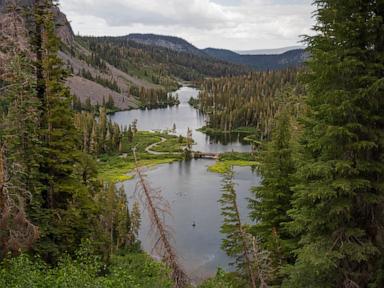
The federal regulatory apparatus governing public lands is undergoing a structural realignment. By initiating the full rescission of the 2001 Roadless Area Conservation Rule, the Department of Agriculture and the United States Forest Service have set a procedural trajectory to unlock approximately 45 million acres of inventoried backcountry for industrial development, commercial timber extraction, and permanent road infrastructure. Understanding this shift requires moving past polarized political rhetoric to analyze the underlying resource allocation models, institutional incentives, and long-term economic trade-offs inherent in public asset monetization.
The Regulatory Mechanics of the Rollback
For a quarter-century, the Roadless Rule functioned as a legal constraint on capital expenditure within designated tracts of the National Forest System. By prohibiting commercial timber harvesting and new permanent road construction across nearly 59 million total acres, the policy created an artificial scarcity of accessible public timber while insulating high-altitude and remote ecosystems from industrial capital deployment.
The current administration's strategy dismantles this constraint through a two-pronged administrative mechanism:
- Regulatory Excision: Filing to rescind the 2001 rule in its entirety, thereby transferring discretion back to decentralized agency units.
- Procedural Acceleration: Compressing the environmental review timelines mandated by the National Environmental Policy Act (NEPA) and narrowing public comment parameters.
Proponents, led by Agriculture Secretary Brooke Rollins, frame this shift through the lens of asset optimization and risk mitigation. The core argument posits that federal restrictions have produced a static, over-accumulated biomass inventory. Without active commercial intervention, these tracts transform into high-hazard fuel loads, increasing the incidence and severity of unmanaged wildfire events. Under this economic rationale, permitting commercial timber extraction is not merely a subsidy for raw material supply chains, but a delegated method of subsidized brush clearance and fuel reduction.
The Cost Function of Deferred Management
To evaluate the validity of the administration's thesis, one must analyze the cost function of forest management. Federal agencies face a persistent capital deficit in maintaining ecosystem health. Appropriations for hazardous fuels reduction treatments historically cover only a fraction of high-risk acreage, particularly within remote backcountry zones.
When capital allocation is constrained by environmental prohibitions, liabilities accumulate off-balance-sheet. These liabilities materialize as catastrophic wildfire suppression costs, localized watershed degradation, and the destruction of downstream municipal infrastructure. The administration's economic model assumes that transferring the burden of access creation and biomass extraction to private commercial timber entities converts an unfunded federal liability into a revenue-generating enterprise. Private operators construct the necessary infrastructure—permanent and temporary roads—in exchange for access to high-value old-growth timber stands.
However, this calculation contains structural blind spots regarding long-term asset depreciation. Intact backcountry forests provide unpriced ecosystem services, including carbon sequestration, natural water filtration, and microclimate stabilization. When these tracts are opened to industrial logging, the immediate private gain of timber yield must be weighed against the public amortization of lost ecosystem services. The net present value of harvested lumber frequently fails to account for the permanent loss of natural capital assets that require centuries to regenerate.
Capital Deployment and Market Supply Dynamics
The push to expand domestic timber production is fundamentally tethered to construction sector input costs and geopolitical supply chain vulnerabilities. Heavy reliance on imported lumber introduces supply volatility, exposing domestic real estate and infrastructure development to external price shocks. By unlocking federal tracts, policymakers seek to increase market supply elasticity, driving down input costs for residential and commercial construction.
Despite these intentions, the operational realities of remote timber extraction present significant capital expenditure barriers. Much of the newly accessible acreage is located in geographically complex terrain—such as portions of the Tongass National Forest in Alaska or rugged sub-alpine regions in the Intermountain West—where extraction costs are exceptionally high. Commercial entities do not uniformly rush to harvest low-margin species or distant stands; capital is preferentially deployed where yield-to-extraction ratios are favorable. Consequently, the commercial response may concentrate heavily on remaining old-growth stands, yielding maximum short-term corporate returns while failing to treat the widely dispersed small-diameter brush that drives high-intensity wildfire risk.
Institutional Friction and Litigation Risk
The transition from a preservation-oriented regime to an extraction-oriented framework does not occur smoothly. It encounters substantial institutional friction, primarily expressed through administrative law and federal litigation.
Environmental coalitions routinely utilize judicial review to challenge expedited rulemakings, arguing that the administration's administrative shortcuts violate statutory obligations under NEPA and the Endangered Species Act. Every preliminary injunction or prolonged court battle introduces regulatory uncertainty for capital markets. Timber firms face a strategic dilemma: committing capital to equipment and workforce expansion based on a rule change that remains vulnerable to judicial reversal or subsequent administration recall carries severe financial risk.
This dynamic creates a boom-bust cycle of public land management. When policy shifts with executive turnover, long-term capital planning becomes nearly impossible for both industrial operators and conservation stewards. The true cost of this volatility is the degradation of the administrative apparatus itself, as agency personnel are perpetually diverted from on-the-ground ecological management to defend administrative procedures in federal court.
Strategic Resource Allocation
To optimize public land governance under these competing pressures, decision-makers must abandon binary frameworks that treat industrial extraction and ecological preservation as absolute mutual exclusives.
Capital should be concentrated on localized, high-intensity buffer zones immediately adjacent to human settlements—known as the Wildland-Urban Interface—where mechanical thinning yields high risk-reduction dividends without requiring the industrial penetration of pristine backcountry tracts. Conversely, remote, intact roadless areas must be evaluated as permanent natural infrastructure assets whose primary economic utility lies in carbon banking, hydrological stability, and biodiversity preservation. Directing public subsidies toward targeted mechanical treatments in high-risk zones, rather than granting blanket concessions for commercial road building in core wilderness, optimizes public expenditure while preserving long-term ecological capital.