The hum of a home ventilator at three in the morning has a rhythm all its own. It is not the frantic, high-pitched alarm of an emergency room, nor is it the gentle, rhythmic sigh of healthy lungs expanding in sleep. It is a mechanical, steadfast percussion—a steady whir-click, whir-click that measures out a human life in pressurized breaths.
For a teenager in Hong Kong living with Duchenne muscular dystrophy, that sound is not an intrusion. It is the baseline soundtrack to survival. In similar news, read about: The Biochemistry of Warren Buffett’s Diet and Why Standard Longevity Metrics Fail.
Eighteen. To most teenagers in a hyper-kinetic metropolis like Hong Kong, turning eighteen is a bureaucratic milestone wrapped in a burst of sudden freedom. It means applying for an adult Hong Kong Identity Card, staying out past midnight in Mong Kok without a curfew, sitting for the grueling Diploma of Secondary Education exams, and stepping clumsily into the architecture of adulthood.
For a young person born with severe muscular dystrophy, turning eighteen is an act of quiet, sustained defiance against biology itself. National Institutes of Health has analyzed this critical issue in great detail.
When the diagnosis first lands in a doctor’s office—usually when a toddler struggles to climb stairs or pushes themselves up off the floor by walking their hands up their own thighs—parents are handed a timeline disguised as a prognosis. Decades ago, that timeline rarely stretched past the middle of high school. Even today, in a city with world-class medical facilities and dizzying skyscrapers, reaching legal adulthood with progressive muscle degeneration means outliving old medical textbooks, outmaneuvering respiratory infections, and navigating a physical environment that was never built for wheels.
To understand what it takes to reach that eighteenth birthday, you have to strip away the sterile clinical definitions and look at the invisible math of a single day.
The Physics of a Vanishing Body
Muscular dystrophy is not one single disease, though Duchenne is its most common and relentless childhood form. At its biological core, it is a genetic typographical error. Imagine an intricate suspension bridge spanning Victoria Harbour, held aloft by thousands of braided steel cables. Now imagine that the blueprints for those cables are missing a single, critical instruction for a protein called dystrophin. Without dystrophin acting as the shock absorber inside muscle fibers, every ordinary movement—lifting a spoon, turning a page, laughing at a friend’s joke—causes microscopic tears. The muscle cannot repair itself. Slowly, steadily, muscle tissue is replaced by fat and scar tissue.
Gravity, which the rest of us treat as a neutral background condition, becomes an active adversary.
By age ten or twelve, walking gives way to a power wheelchair. By mid-adolescence, the muscles in the arms and hands lose their leverage, making the simple act of scratching an itch on your own forehead an impossible negotiation. And beneath the surface, unseen by strangers passing by on the MTR concourse, the muscles that matter most—the diaphragm that pulls air into the lungs and the myocardium that pumps blood through the heart—are fighting the exact same war of attrition.
I remember sitting in a cramped rehabilitation clinic waiting room in Kowloon years ago, watching a mother adjust the neck brace of her teenage son while holding a portable suction machine in her other hand. The sheer physical choreography required just to exist outside the bedroom was staggering. Every outing required calculating battery life, checking the status of station elevators, packing emergency resuscitation bags, and bracing against the sudden, suffocating humidity of a Hong Kong summer.
People often ask what muscular dystrophy feels like from the inside, expecting an answer about sharp, agonizing pain. Usually, it is not sharp pain. It is a heavy, creeping exhaustion. It is the sensation of wearing a lead suit that gets a fraction of a gram heavier every single morning, while the world around you keeps moving at the frantic, impatient speed of Hong Kong’s financial district.
The Architecture of Obstacles
Hong Kong is a vertical city built on steep granite hills, cramped footprints, and relentless efficiency. For an able-bodied commuter, the network of elevated walkways, escalators, and subterranean rail links is a marvel of urban engineering. For a teenager navigating the city in a three-hundred-pound motorized wheelchair, it is an obstacle course full of silent, exclusionary traps.
Consider what happens when a single lift at an MTR exit goes down for maintenance. For a walking commuter, it is a thirty-second inconvenience on an escalator. For a wheelchair user, it can mean a twenty-minute detour through uneven side streets, dodging delivery trolleys, blocked curb cuts, and crowded pavements where pedestrians stare down at their glowing smartphone screens, oblivious to the machine humming quietly at knee level.
And yet, within those tight, vertical concrete apartments—where living rooms are measured in square feet rather than square meters—an extraordinary resilience takes root.
Let us consider a hypothetical composite of the young Hongkongers crossing this threshold today. Call him Anson. Anson lives in a public housing estate in the New Territories, in a flat where every inch of floor space has been negotiated between a hospital bed, a Hoyer lift for transfers, respiratory equipment, and a desk cluttered with textbooks and gaming controllers.
His world could easily have shrunk to the four walls of that bedroom. Instead, it expanded.
Through specialized adaptive switches that require barely a twitch of an index finger, Anson writes essays, edits videos, and competes online with friends who have no idea that his chest is strapped to a corset to keep his spine from collapsing into his lungs. When he talks about his future, he does not speak in the cautious, hedged language of survival rates. He speaks with the blunt, unadorned urgency of a young man who knows that time is a non-renewable currency.
"Be alive."
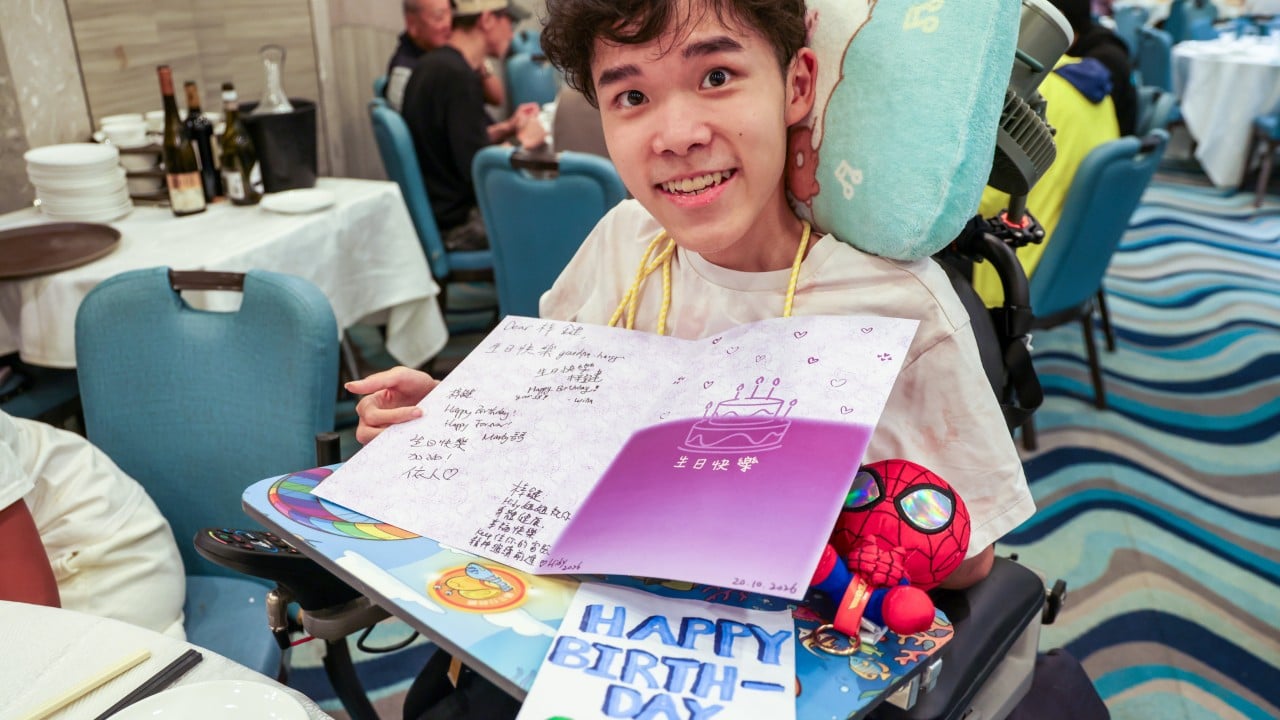
Those two words, spoken by a young Hongkonger celebrating his eighteenth birthday against every statistical expectation, carry more philosophical weight than a library of self-help books. They are not a passive wish. They are an active command.
Why Eighteen Means Everything—And Complicates Everything
Reaching adulthood with a rare neuromuscular disorder brings a profound psychological shift, alongside a bureaucratic cliff that catches many families off guard.
In pediatric care, the medical system wraps a protective, coordinated blanket around the child. Pediatricians, physiotherapists, occupational therapists, and social workers operate under one roof, tracking growth curves and respiratory capacity with synchronized precision.
The moment a patient turns eighteen, that safety net is often unceremoniously pulled away.
Transitioning into adult healthcare in Hong Kong means moving from holistic pediatric wards into fragmented adult specialty clinics. Suddenly, the pulmonologist is in one building, the cardiologist is in another, and the rehabilitation specialist is booked out for nine months. The burden of coordinating complex, life-sustaining care falls squarely onto aging parents—mothers and fathers whose own backs are beginning to give out after a decade of lifting their growing child from bed to wheelchair, from wheelchair to shower chair, and back again.
At the exact same moment, the young adult’s mind is wide awake, hungry for autonomy, privacy, and purpose. Imagine being eighteen years old, possessing a sharp, fully intact intellect, adult emotions, and personal ambitions, yet still needing your mother to brush your teeth, position your limbs at night so you do not develop pressure sores, and clear secretions from your throat when you catch a mild cold.
That tension—between a fiercely independent mind and a completely dependent body—is the invisible emotional core of living with muscular dystrophy. It requires a rare kind of courage: the courage to accept total physical help without surrendering your personal dignity.
The Quiet Revolution in Care
If a teenager with Duchenne muscular dystrophy had been born in Hong Kong in 1985, their eighteenth birthday would likely have been a quiet, heartbreaking memorial rather than a celebration. What changed?
It was not a single miracle cure, though modern gene therapies, exon-skipping drugs, and corticosteroids have begun altering the landscape of what is biologically possible. Rather, the survival curve shifted because medicine finally learned how to protect the lungs and the heart before they failed.
Non-invasive ventilation—masks that deliver pressurized air while a patient sleeps, resting exhausted respiratory muscles—transformed life expectancy overnight. Cough-assist machines, which mimic the explosive pressure of a natural cough to clear mucus from the airways, turned what used to be fatal cases of pneumonia into manageable home recoveries. Routine cardiac medications, started early before heart muscle scarring takes hold, bought years, and then decades, of steady circulation.
Still, technology alone does not keep a person alive. Love does, backed by stubborn, unglamorous daily discipline.
Think about the parents who wake up every two hours through the night, year after year, simply to turn their child’s body a few degrees to the left or right. Think about the teachers at special schools like the Hong Kong Red Cross John F. Kennedy Centre, who adapt science labs and art classes so that students with minimal muscle strength can still hold a paintbrush or conduct a chemistry experiment. Think about the patient advocacy groups in Hong Kong that lobby relentlessly for subsidized home-care aides, wheelchair-accessible taxis, and access to prohibitively expensive orphan drugs.
When a young person with muscular dystrophy turns eighteen, they do not arrive at that milestone alone. They arrive carried on the shoulders of an entire ecosystem of quiet devotion.
Beyond Inspiration Porn
There is a trap we often fall into when reading stories about young people overcoming severe disabilities. We turn them into "inspiration porn"—one-dimensional saints whose sole purpose is to make able-bodied readers feel grateful that they can walk up a flight of stairs or tie their own shoes.
That misses the point entirely, and it diminishes the real human being in the wheelchair.
A teenager with muscular dystrophy does not want to be your motivational poster. They get frustrated when their wheelchair battery dies in the rain. They get annoyed when adults talk over their heads to their parents instead of addressing them directly. They worry about university admissions, money, loneliness, and whether anyone will ever look past the tubes and metal frames to see who they actually are.
To honor their milestone honestly, we have to meet them at eye level. We have to recognize that their life is not valuable in spite of their disability, nor is it valuable merely because they "beat the odds." It is valuable because they are here, thinking, feeling, laughing, and insisting on taking up space in a city that often forgets to leave room for the vulnerable.
Ask yourself what you were doing at eighteen. Most of us were drifting through our days on autopilot, taking every breath, every heartbeat, and every effortless movement of our fingers for granted, assuming we had an endless supply of tomorrows stacked neatly in reserve.
Now picture sitting in a sunlit room overlooking the concrete towers of Hong Kong, surrounded by a handful of family members, nurses, and friends. A birthday cake sits on the table, its candles flickering in the draft from an air conditioner. You cannot lean forward to blow them out yourself—your diaphragm does not have the force to push a gust of air across the table. Someone holds a straw or helps you angle your breathing tube, or maybe a friend leans in beside you so you can blow them out together.
The flame dies. Smoke curls upward into the humid air.
Outside the window, six million people rush toward trains, offices, and dinner reservations, chasing deadlines that will be forgotten by next Tuesday. Inside the room, a teenager smiles, listens to the steady, faithful whir-click of the machine keeping his chest rising and falling, and chooses—deliberately, defiantly, joyfully—to simply be alive.