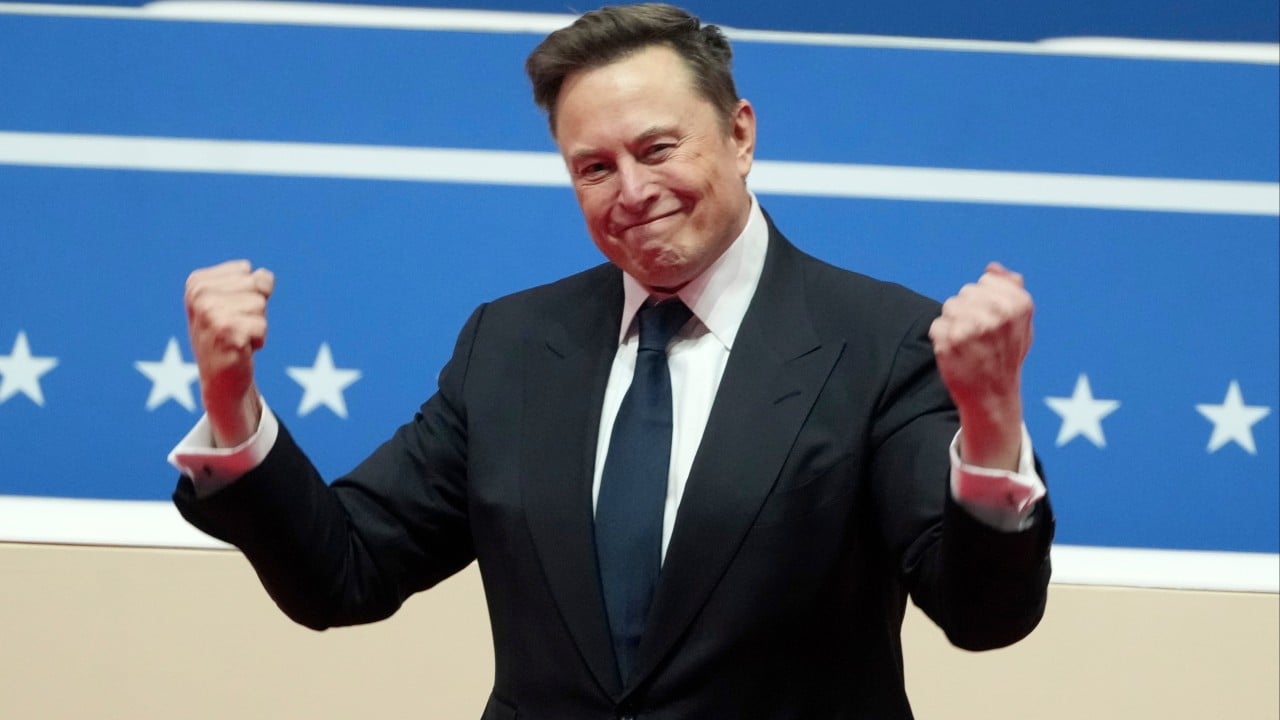
The hand-wringing over Elon Musk writing nine-figure checks to back Republican candidates in the midterm elections misses the point entirely. Editorial boards are weeping about the death of democracy, campaign finance reformers are hyperventilating about dark money, and partisan pundits are framing it as a desperate bid by a rogue billionaire to buy himself a legislative shield. They are all wrong.
Strip away the moral panic and the democratic nostalgia, and you are left with a simple corporate transaction. Musk is not funding a political party out of ideological charity or civic romanticism. He is engaging in classic, hard-nosed regulatory arbitrage. When you run a portfolio of companies colliding daily with federal bureaucracies, Federal Aviation Administration launch licenses, National Highway Traffic Safety Administration autonomous vehicle probes, Department of Justice antitrust inquiries, and National Labor Relations Board complaints, a hundred million dollars spent on congressional influence is not campaign spending. It is a capital expenditure. And compared to the billions lost to regulatory delays and compliance friction, it offers an astonishing return on investment.
We have spent decades pretending that political donations are about hearts and minds. They are not. They are about zoning permits, safety waivers, and antitrust exemptions at scale.
The Myth of the Civic Donation
The lazy consensus in modern political commentary assumes that billionaires buy elections to shape the national soul. Pundits look at a massive super PAC contribution and write overwrought columns about oligarchy, as if a campaign ad can rewrite human nature or alter a voter's worldview.
I have watched corporate boards deliberate on government affairs budgets for fifteen years. Nobody sits around a mahogany table talking about saving the republic. They talk about compliance drag. They talk about compliance officers at the Federal Communications Commission sitting on spectrum licenses for eighteen months because a mid-level bureaucrat wants to make a point. They talk about the cost of a subpoena.
When Tesla or SpaceX faces an existential regulatory bottleneck, the bottleneck is not ideological. It is mechanical. It is hundreds of civil servants whose institutional incentive is to say no because saying yes carries personal career risk, while saying no delays progress safely behind a wall of bureaucratic red tape.
Musk realized what every legacy industrial titan figured out a century ago: if you cannot change the bureaucracy, you must change the people who write the rules that bind the bureaucracy. Pouring money into competitive congressional races is not about installing sycophants. It is about shifting the congressional committee chairmanships. It is about ensuring that the people holding the oversight gavels understand the difference between engineering velocity and bureaucratic inertia.
Regulatory Arbitrage as a Core Competency
Let us look at the mechanics. SpaceX operates in an industry where its primary competitor, legacy aerospace, has spent fifty years mastering the art of cost-plus contracting and regulatory capture. Every time Starship sits on a launchpad waiting for environmental review approvals that take longer to secure than it took to build the rocket, millions of dollars in capital burn away.
That is not a market failure. That is a regulatory tax.
If you are building reusable orbital-class rockets or deploying global satellite constellations, a federal agency moving at the speed of a 1970s filing cabinet is a direct threat to your balance sheet. By injecting capital into the political process to alter the composition of oversight committees, Musk is executing a hostile takeover of his own regulatory environment.
Critics call this buying influence. In corporate finance, we call it vertical integration of the political supply chain. If your suppliers are government agencies, managing those suppliers is a core operational duty. Leaving your regulatory fate to the whims of career civil servants who have never shipped a physical product in their lives is corporate negligence.
Traditional View: Billionaires donate to influence ideology and win culture wars.
Contrarian Reality: Billionaires spend on elections to bypass bureaucratic compliance drag and accelerate operational velocity.
The Democrats Made This Monster
There is an exquisite irony in the panic coming from the center-left over corporate money in politics. For decades, the progressive coalition patted itself on the back as Wall Street, Silicon Valley, and corporate boardrooms aligned cleanly with the Democratic Party. Mega-donors funneled billions into campaigns, secure in the knowledge that their cultural alignment bought them a seat at the table.
What the pundit class failed to anticipate was what happens when a visionary industrialist's interests diverge from the progressive regulatory agenda.
When Musk began dismantling the orthodoxy around labor unions, remote work, free speech moderation, and government spending, the political alignment shattered. The establishment realized, with sudden horror, that campaign finance laws cut both ways. As long as tech billionaires funded green energy subsidies and social media censorship architectures, their spending was lauded as enlightened corporate citizenship. The moment that same capital pivoted toward deregulation, government efficiency, and congressional oversight of the administrative state, it instantly became an existential threat to democracy.
This is hypocritical nonsense. You cannot build a system where the federal government holds absolute veto power over every physical and digital innovation, and then act shocked when the innovators try to buy the veto stamp.
The Real Cost of Doing Nothing
Let us be transparent about the downsides of this approach, because my contrarian take is not that money in politics is pure and wonderful. It is corrosive. It degrades public trust. It turns governance into a pay-to-play auction where Main Street gets outbid by Silicon Valley and Wall Street.
When billionaires treat elections as corporate venture capital rounds, they crowd out grassroots participation. They warp legislative priorities away from things that matter to ordinary citizens and toward things that matter to balance sheets. Musk's heavy-handed electoral involvement risks creating a hyper-partisan backlash that could ultimately result in even more punitive, retaliatory legislation if the political winds shift.
That is the trade-off. It is messy, it is aggressive, and it accelerates the erosion of democratic norms.
Yet from a pure fiduciary standpoint, doing nothing was never an option. When the state possesses the power to crush your company through targeted investigations, slow-rolled permits, and politically motivated inquiries, self-defense is mandatory.
Elon Musk is not saving the Republican Party. He is buying insurance for his supply chain, his launch cadence, and his right to build things in the physical world without asking permission from a committee of mid-level compliance officers. Until we strip the federal government of its arbitrary power to pick winners and losers through regulatory gatekeeping, writing nine-figure checks to rewrite Congress will remain the highest-yielding asset class in American business.