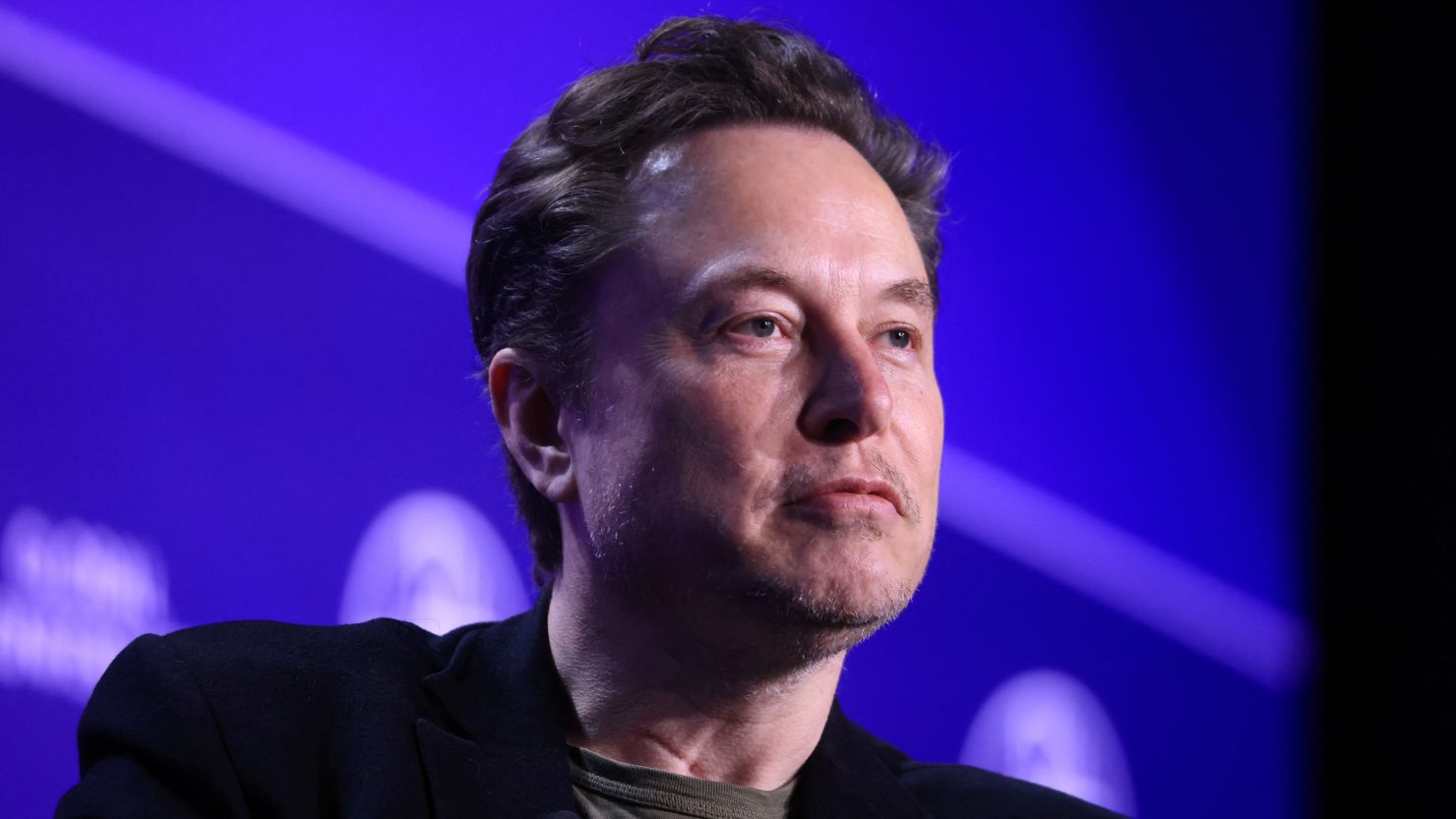
Elon Musk became the biggest known individual donor of the 2026 midterm elections to Republican groups, pouring roughly $446 million into super PACs, field operations, and aligned committees in a bid to hold Congress. It bought him a historic line in Federal Election Commission filings. It did not buy him the election results he wanted.
After suggesting in May 2025 that he would pull back from massive political spending following his roughly $290 million push in 2024, Musk reversed course and spent roughly 84% more during the 2026 cycle. Even for a centibillionaire whose net worth hovered near $924 billion, writing checks on that scale represents a deliberate act of political force. Yet when the votes were counted in November 2026, Democrats swept key races, including major contests where Musk’s money and megaphone were heavily concentrated.
Having watched campaign finance cycles up close for decades, I have seen plenty of billionaires treat elections like acquisition targets. Politics rarely behaves like a balance sheet. Voters do not always reward capital concentration; sometimes they resent the sight of it.
How the Money Moved Through the Machine
Most casual readers treat a super PAC check like a single arrow aimed at a single target. Real campaign finance is messier than that.
Through mid-October federal disclosures and reported figures tracked across the cycle, Musk’s roughly $446 million total flowed through a web of committees and operations. Around $216 million went into America PAC, the super PAC he directly controls, which funded ground-game canvassing, voter-registration drives, and high-dollar ad pushes across multiple states. Another $168 million went to the Senate Leadership Fund, accounting for roughly 31% of that committee’s raised funds through mid-October. Additional sums moved to groups such as the Congressional Leadership Fund, Fight for Kentucky, V-PAC, MAGA Inc., and IRS-reporting nonprofits.
A dollar inside a super PAC is fungible. Once it enters a committee’s ledger, it can underwrite television spots in one battleground state, digital targeting in another, or door-knocking payroll across a dozen districts.
That structure also creates a crucial distinction between spending on a race and winning a race. In Texas—home base for major pieces of Musk’s corporate empire—America PAC and allied groups leaned hard into major statewide contests, including the Senate battle featuring Ken Paxton against Democrat James Talarico and the gubernatorial race involving Greg Abbott. Musk also amplified attacks relentlessly on X, his own social platform, turning his personal feed into an extension of campaign messaging.
Massive super PAC spending can flood an airwaves market and staff a field army, yet it cannot override voter fatigue or turn a polarizing benefactor into a popular messenger.
When Democratic candidates won major statewide offices in Texas and captured key Senate contests where America PAC had put heavy weight, the gap between financial input and electoral output became impossible to ignore. Democrats won all five Senate races where America PAC spent the most backing Republican candidates.
The Law of Diminishing Returns in Modern Campaigns
Campaign strategists often talk about "saturation" in polite, technical terms. In practice, saturation looks like voters muting their televisions, ignoring the third identical mailer of the week, and tuning out door knockers who read from the same script.
In the 2026 cycle, the top 40 donors collectively poured more than $2.4 billion into midterm races through mid-October—roughly eight times the inflation-adjusted pace of top donors in 2014. More than 500 donors gave at least $1 million to super PACs, accounting for over 70% of super PAC contributions tracked in Public Citizen’s analysis.
Money still matters in elections. Without it, campaigns cannot buy media time, run logistics, or reach persuadable precincts.
Yet money hits a ceiling faster than mega-donors like to admit. Once both sides have enough cash to blanket swing districts with television ads, text blasts, and digital spots, adding another $50 million often buys higher frequency rather than higher persuasion. Worse, an ultra-visible donor can become part of the ballot story itself.
In Texas, opponents framed the contest explicitly around concentrated wealth and corporate influence, pointing to Musk’s outsized role as evidence that ordinary voters were being outspent by a single billionaire. Whether fair or not, that framing landed with segments of the electorate. When a mega-donor’s name becomes a shorthand critique on the stump, every extra dollar spent can carry political friction alongside it.
What Was Actually at Stake Beyond Partisan Control
To view Elon Musk’s 2026 midterm donations solely through the lens of red versus blue is to miss half the story. Industrial policy sat right beneath the partisan rhetoric.
Musk leads companies operating in capital-intensive, heavily regulated sectors—spaceflight, electric vehicles, artificial intelligence, energy infrastructure, and satellite communications. Decisions made in Washington and in state capitals like Austin affect permitting timelines, federal contracting, environmental reviews, land and water rules, and regulatory oversight.
For a founder-CEO whose enterprises depend on speed and scale, a friendly legislature and executive branch can smooth friction across years of operations. Conversely, a shift toward Democratic majorities in Congress and state leadership raises the prospect of tougher scrutiny, subpoenas, regulatory pushback, and stricter oversight of major tech and infrastructure players.
Look at the math from a pure risk-management standpoint. Even $446 million is a fraction of Musk’s estimated net worth—less than 0.05% of a fortune near $924 billion. To a billionaire, spending hundreds of millions to protect regulatory posture or influence policy direction can look like an affordable hedge rather than reckless extravagance.
The catch is that political power does not behave like an options contract. You pay the premium upfront, and you still might finish out of the money.
Four Lessons From the 2026 Spending Surge
Anyone studying American campaign finance—whether an investor, a policy analyst, or an engaged voter—can extract practical lessons from how this cycle played out:
- Checkbook dominance is not vote-count dominance. Setting a single-cycle giving record establishes financial scale, not electoral inevitability.
- Messenger visibility cuts both ways. A quiet donor can shape races behind closed doors; a celebrity billionaire who posts constantly on a platform he owns invites direct counter-mobilization.
- State and local battles carry outsized operational weight. Federal races grab national headlines, but state houses, governors’ mansions, and local regulators shape day-to-day business realities on the ground.
- Disclosure rules only tell part of the story. FEC filings capture large swaths of super PAC activity, while IRS-reporting nonprofits and late-cycle spending windows can obscure final totals until well after Election Day.
Consider a hypothetical scenario to see how quickly political math shifts: suppose a donor funds a $30 million ad blitz in a single battleground state during the final three weeks of a campaign. If the underlying electorate has already hardened around cost-of-living pressures or dissatisfaction with incumbents, those extra spots may energize the donor’s base without moving enough undecided voters across the finish line.
Comparing the Scale of Modern Mega-Donors
Context clarifies just how skewed modern campaign finance has become. Historically, midterms saw lower donor concentration than presidential years, largely because presidential campaigns command national spectacle.
In 2026, that pattern broke decisively. Musk’s roughly $446 million outpaced other top super PAC contributors by hundreds of millions of dollars, and analysts noted that only Michael Bloomberg’s massive self-funded 2020 presidential run exceeded his single-cycle political outlay.
| Metric or Factor | 2026 Midterm Context | Practical Takeaway for Watchers |
|---|---|---|
| Elon Musk’s Reported Cycle Giving | Roughly $446 million across super PACs and aligned groups | Largest known individual non-self-funded cycle total in modern U.S. history |
| Top 40 Donors Combined | Over $2.4 billion through mid-October | Eight times the inflation-adjusted pace of 2014 top donors |
| Threshold to Enter Top 40 | About $25 million | Ten times the inflation-adjusted $2.3 million mark in 2014 |
| Share of Musk’s Net Worth | Less than 0.05% (near a ~$924B fortune) | Staggering in politics, modest as a fraction of ultra-wealth |
Numbers like these explain why critics across the political spectrum argue that small-dollar donors are increasingly drowned out. At the same time, the November 2026 outcomes complicate the opposite cliché—the idea that a single ultra-wealthy donor can simply buy whatever legislative map he desires.
The Aftermath for Musk and the GOP
After election night, Musk’s public tone turned wry and detached—joking online about "election-interfering space lasers" and "data centers in space" even as Republicans absorbed bruising losses in races he had worked to buoy. By mid-November, reports surfaced that Musk expressed regret over his midterm spending, a telling reaction from a man accustomed to engineering outcomes through sheer intensity and capital.
For Republicans, the post-mortem is unavoidable. Relying heavily on one mega-donor’s checkbook may plug short-term fundraising gaps, yet it can also hand opponents a potent populist talking point and mask deeper vulnerabilities with swing voters.
For Musk, the real test begins now—not at the FEC filing counter, but in committee hearings, agency rulemakings, and statehouses where winners hold actual authority.


