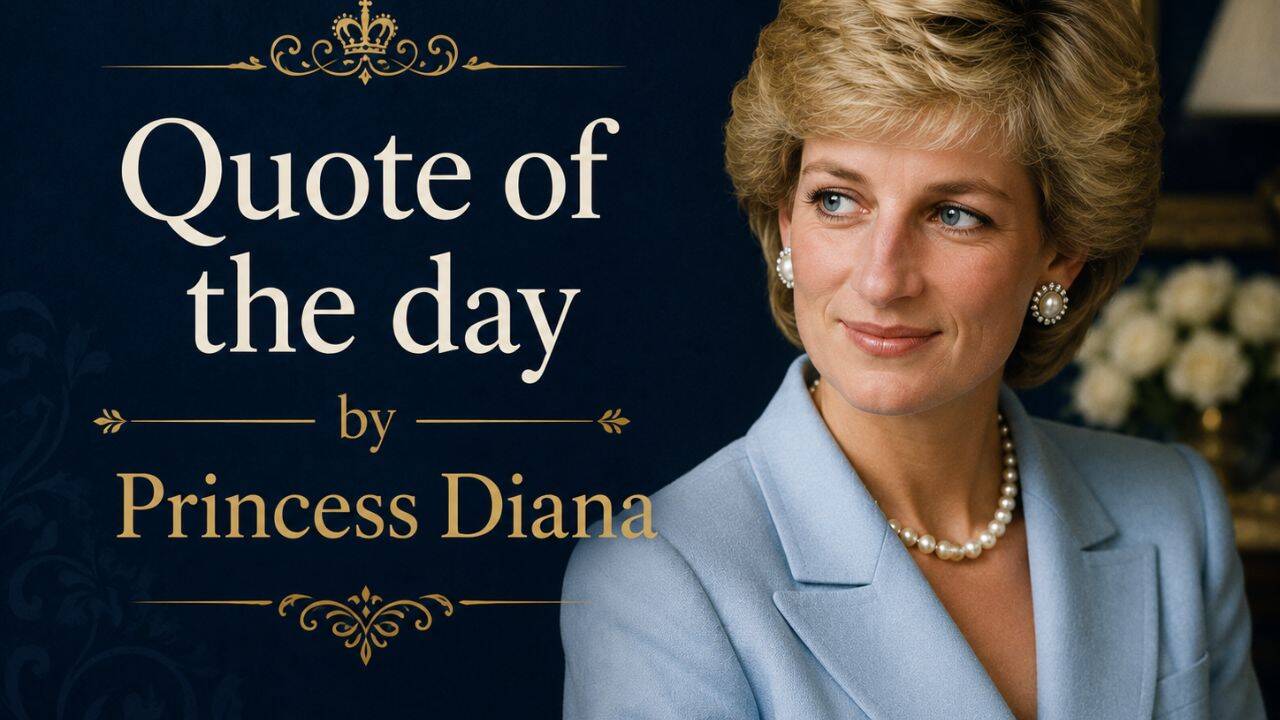
"I don't want expensive gifts; I don't want to be bought... I just want someone to be there for me, to make me feel safe and secure."
It is a beautiful quote. It looks fantastic on a pastel Instagram graphic. When Princess Diana said it, the world nodded in collective, teary-eyed agreement. The conventional wisdom peddled by lifestyle gurus and relationship experts ever since is simple: emotional security is the pure, noble goal of human connection, while material wealth is just hollow, superficial noise.
This sentiment is comforting. It is also a massive lie.
The lazy consensus insists that love and emotional safety exist in a vacuum, entirely separate from your bank account. We are told to prioritize the intangible and dismiss the financial. But this romanticized view completely ignores how human psychology and economics actually interact.
The brutal truth? Emotional security is not the alternative to wealth. It is a luxury product funded by it.
The Maslow Misconception: Why You Can't Hug Your Way to Safety
We love to treat emotional safety as a baseline human right that anyone can access if they just find the right partner. This view misunderstands how human survival works.
Let us look at Abraham Maslow’s hierarchy of needs. At the very bottom, you have physiological needs (food, water, shelter). Just above that is safety—which includes financial security, health, and resources. Only after those are locked down can you climb into the realm of love, belonging, and emotional security.
          [ Self-Actualization ]
         [   Esteem & Respect   ]
        [ Love & Emotional Safety ]  <-- You cannot steady this layer...
       [   FINANCIAL & PHYSICAL   ]  <-- ...if this foundation is crumbling.
      [    Physiological Needs     ]
When a competitor article tells you to focus on "someone being there for you" instead of "expensive gifts," they are skipping the foundation. They want you to build the third floor of a house while the ground floor is actively on fire.
Imagine a scenario where a couple is deeply, madly in love. They have endless emotional warmth. They hold hands, they validate each other's feelings, and they communicate flawlessly. But they also cannot pay their electricity bill, their rent is three months overdue, and a single dental emergency will plunge them into bankruptcy.
No amount of "being there" will stop the cortisol flooding their brains. Financial stress triggers the exact same fight-or-flight neural pathways as being chased by a predator. You cannot feel emotionally secure when your nervous system is screaming that you are unsafe.
Wealth does not buy happiness directly, but it buys the removal of misery. It buys the space required for emotional security to even exist.
Princess Diana and the Blind Spot of Extreme Privilege
To understand why the "gifts don't matter" narrative is so flawed, we have to look at the source.
Princess Diana was an icon, but she was also a woman born into the British aristocracy who then married into a billion-dollar royal family. She lived in palaces. She had private security, chef-prepared meals, and access to any medical specialist on earth at a second's notice.
When you have a permanent guarantee of physical and financial safety, money becomes invisible.
When Diana said she did not want expensive gifts, she was speaking from a position where her basic survival needs were so completely satisfied that they ceased to exist as concerns. For the ultra-wealthy, material goods lose their utility and become mere social signaling. Of course she wanted emotional security—it was the only thing she could not easily buy.
But for the average person, a partner who can help pay the mortgage, share the burden of childcare, and provide a financial cushion is not "buying" love. They are providing the structural integrity that keeps the relationship from collapsing under the weight of modern economic reality.
- The Rich: Seek emotional security because their material security is guaranteed.
- The Rest of Us: Must build material security in order to protect our emotional security.
Calling material support "superficial" is a viewpoint reserved exclusively for those who have never had to choose between buying groceries and paying for medicine.
The Data on Dollars and Divorce
Let us move away from philosophy and look at cold, hard numbers. If emotional security were truly independent of wealth, we would see relationship stability distributed evenly across all income brackets.
We do not.
Sociological data consistently shows that financial distress is one of the strongest predictors of relationship dissolution. According to research from the University of Denver, financial issues are cited as a major contributor to divorce in over one-third of all marriages, sitting right alongside infidelity and compatibility issues.
Furthermore, studies utilizing the distress-disclosure model show that couples under high financial strain communicate worse. They are more irritable, less empathetic, and less likely to offer the very "emotional validation" that lifestyle writers claim is free.
Why? Because poverty depletes cognitive bandwidth. When you are constantly calculating how to stretch twenty dollars until Friday, you do not have the mental energy left to actively listen to your partner’s workday frustrations. You are depleted.
Wealth provides a buffer against life's friction. When the washing machine breaks, a wealthy couple calls a repairman. It is an inconvenience. When the washing machine breaks for a low-income couple, it is a financial catastrophe that sparks a three-day argument about who forgot to clear the pockets.
Money did not buy the wealthy couple love, but it prevented a mechanical failure from eroding their emotional security.
The "Bought" Fallacy: Material Support is Emotional Support
We have been conditioned to believe that accepting material help, gifts, or financial stability from a partner somehow cheapens a relationship. We use derogatory terms like "gold digger" or talk about people being "bought."
This is a toxic framework. It separates the physical world from the emotional world, as if our bodies and minds do not occupy the same space.
Providing resources is an act of emotional care.
When a partner works hard to provide a stable home, pays for a vacation so you can rest, or covers the bills while you transition careers, they are not buying you. They are using their labor to shield you from the harshness of the world. That is the ultimate form of "being there."
On the flip side, a partner who claims to offer endless emotional security but refuses to hold down a job or contribute financially is actually transferring their stress onto you. They are emotional vampires living off your labor while claiming the moral high ground because they "don't care about money."
Let us stop pretending that financial reliability is a cold, clinical trait. It is a profound emotional gift.
How to Build Real Security: A Checklist for Realists
If you want a relationship that actually survives the meat grinder of real life, you need to abandon the fairy tale and get practical. Here is how you build a relationship that is genuinely secure:
1. Merge the Ledger and the Heart
Stop treating financial discussions as unromantic. Before you commit to someone, you need to know their debt-to-income ratio, their credit score, and their spending habits. If they view this as an interrogation rather than a joint strategy session, they are not ready for a mature partnership.
2. Fund Your "Emergency Independence"
True emotional safety in a relationship paradoxically comes from knowing you can survive outside of it. If you are entirely dependent on someone else for your survival, your "love" can easily morph into hostage-taking. Both partners should maintain a degree of financial autonomy. You cannot freely choose to stay every day if you do not have the financial means to leave.
3. Price Your Stressors
Identify the recurring arguments in your relationship. How many of them could be solved by throwing money at them? If cleaning the house causes fights, hire a cleaner. If cooking causes stress, budget for meal delivery. Do not waste emotional capital fighting over chores if you can afford to outsource them.
Stop Romanticizing Scarcity
The idea that "all you need is love" is a weaponized myth. It keeps people staying in unstable, stressful situations because they feel guilty for wanting material comfort. It allows partners who refuse to contribute to weaponize their emotional availability as a substitute for actual responsibility.
Princess Diana was half right. No one wants to be "bought" in a way that strips them of their agency or dignity. But do not let the romanticized complaints of royalty convince you that money does not buy the foundation upon which real, lasting emotional safety is built.
Stop looking for someone who just makes you feel safe. Look for someone who has the capability, the drive, and the practical mindset to actually make you safe.