The wind off Sydney Harbour doesn’t care about bloodlines. It whips around the concrete sails of the Opera House with a democratic chill, biting into the necks of tourists and locals alike. On a Tuesday morning that feels like any other, a woman named Margaret stands by a barricade. She’s seventy-two. Her coat is buttoned to the chin. She has been here since five.
She isn’t entirely sure why. If you liked this article, you might want to read: this related article.
"I liked his mother," Margaret says, her voice competing with the rhythmic slap of water against the pier. "And I suppose I want to see if he has her eyes. Or her heart."
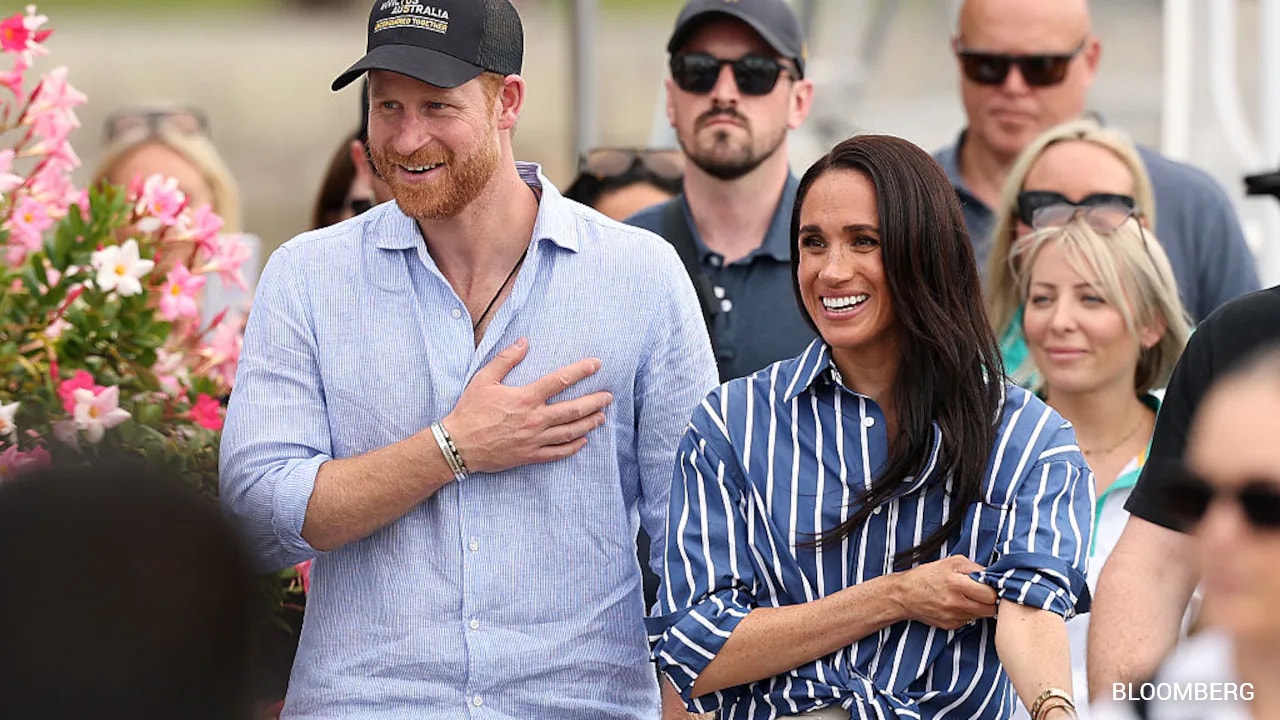
There is a strange, quiet tension humming through the Australian air. It’s not the fever of 2018, when Harry and Meghan first stepped onto this soil as newlyweds, glowing with the promise of a modernized monarchy. That was a fairy tale. This is something else. This is a sequel written in a different genre altogether. For another perspective on this development, refer to the latest update from Wall Street Journal.
The Duke and Duchess of Sussex are returning to a country that has, in their absence, begun to wonder if it still needs the theater of royalty at all.
The Ghost of 2018
Eight years ago, the atmosphere was electric. You could feel it in the way people spoke about the "Sussex Effect." It was a moment of unbridled optimism. A biracial American actress and a rebellious prince were going to bridge the gap between a colonial past and a diverse, independent future. They felt like us. They felt like the version of ourselves we wanted to project to the world—vibrant, inclusive, and slightly irreverent.
But the intervening years have been heavy.
We’ve watched the interviews. We’ve read the memoirs. We’ve seen the Netflix specials that peeled back the gilded wallpaper to reveal the damp rot beneath. The narrative shifted from a public service announcement to a private soap opera. Now, as the motorcade prepares to roll through streets lined with a mix of the curious and the cynical, the stakes have changed.
The invisible thread connecting the British Crown to the Australian spirit is fraying. It isn't snapping—not yet—but it is stretched thin by the weight of a thousand headlines. For many Australians, this visit isn't about diplomacy. It’s about a fundamental question: Is this still a connection, or is it just a brand?
A House Divided by a Picket Fence
Drive twenty minutes away from the harbour, into the suburbs where the lawnmowers hum on Saturday mornings, and the conversation takes a sharper turn. In a sun-drenched kitchen in Marrickville, David is making coffee. He is thirty-four, a graphic designer who thinks about the monarchy about as often as he thinks about the mechanics of a rotary phone.
"I don't know why they're coming," he says, echoing a sentiment that has become a common refrain across the continent. "It feels like a press tour for a movie that came out three years ago. We’re dealing with a housing crisis. We’re looking at the cost of living. And we’re supposed to stand on the curb and wave at two people who live in a mansion in California? It feels... disconnected."
David represents a growing demographic. For him, the Sussexes aren't villains, but they aren't heroes either. They are celebrities. And in Australia, we have a complex relationship with celebrity. We love a winner, but we have a visceral, cultural allergy to anyone who seems to be "putting on airs."
This is the "Tall Poppy Syndrome" in its most refined form. We want our icons to be relatable, but we also want them to be stoic. Harry and Meghan, with their penchant for emotional vulnerability and public reckoning, clash with the traditional Australian ideal of the "quiet achiever."
Yet, there is a paradox. Even those who claim they don’t care find themselves clicking on the articles. They find themselves debating the nuances of the "Megxit" fallout over a beer. We say we want them to go away, but we can't stop watching the spectacle.
The Architecture of a Modern Myth
Consider the mechanics of a royal tour. It is a carefully choreographed ballet of handshakes, floral bouquets, and "spontaneous" interactions. Every tilt of the head is analyzed. Every outfit is a coded message.
For Harry, Australia was always a refuge. This is where he worked as a jackaroo in his youth, sweating under the outback sun, far from the flashbulbs of London. He has spoken often of his love for the "Aussie spirit." But you cannot go back to the same river twice. The boy who herded cattle is now a man carrying the heavy luggage of his own history.
Meghan, too, occupies a complicated space in the Australian psyche. To some, she is a victim of a rigid, archaic system that refused to bend. To others, she is the architect of a rift that shattered a family. The truth, as it usually does, lies in the messy, gray middle.
But a crowd doesn't gather for the gray middle. They gather for the extremes.
As the sun climbs higher over Sydney, the crowd at the Opera House grows. It’s a mosaic of humanity. There are teenagers with iPhones ready, hoping for a viral moment. There are monarchists in Union Jack hats, clinging to a sense of tradition that feels increasingly fragile. And then there are the skeptics, standing on the fringes with their arms crossed, waiting to be unimpressed.
The Invisible Stakes
Why does it matter? Why do we spend our breath on people who live on the other side of an ocean?
It matters because the Sussexes have become a mirror. When we talk about them, we are really talking about ourselves. We are talking about our views on family loyalty versus personal mental health. We are talking about our feelings on inherited privilege in a world that prides itself on merit. We are talking about whether Australia should finally take that final step toward becoming a republic.
The royal visit acts as a catalyst for a conversation we aren't quite ready to finish.
If the visit is a success, it reinforces the idea that the monarchy—even its estranged branches—still holds a magical, unifying power. It suggests that there is something worth preserving in the old ways. If it is a frost-bitten affair, marked by apathy and "I don't know why they're coming," it provides fuel for those who believe the time for kings and princes has long since passed.
The stakes aren't just about PR. They are about the identity of a nation.
The Weight of the Crown
In the middle of the crowd, a young girl sits on her father’s shoulders. She’s holding a drawing of a koala wearing a crown. To her, this isn't about the Republican Movement or the nuances of the Commonwealth. It’s about a real-life prince and princess.
There is a primitive, deeply human part of us that craves the archetype. We want the leaders. We want the symbols. We want the story to be true.
But stories need a climax. They need a resolution.
As the motorcade finally appears, a ripple goes through the throng. The cameras rise like a forest of black glass. There is a cheer—not the thunderous roar of a championship win, but a polite, curious sound. It’s the sound of a people looking for a reason to care.
Harry steps out. He looks older. There is a tiredness around his eyes that no amount of California sun can wash away. Meghan follows, her smile practiced and luminous, a shield against the scrutiny. They move toward the barricades. They reach out.
Margaret, the seventy-two-year-old who has been waiting since dawn, finds herself face-to-face with the Duke. He takes her hand. It’s a brief moment, less than five seconds. He says something about the weather. She nods, speechless.
Later, when the crowds have thinned and the barricades are being packed away into the bellies of trucks, Margaret stands on the pier, looking out at the water.
"Did he have her eyes?" I ask.
She looks at me, her expression unreadable. "He had his own," she says quietly. "And they looked very heavy."
The spectacle is over, but the questions remain. The Sussexes will fly back to their sanctuary, and Australia will return to its quiet, everyday struggles. The chair at the Opera House is empty again. We are left with the realization that no matter how many hands are shaken or how many smiles are captured, the distance between the palace and the pavement has never been wider.
We aren't waiting for a prince to save us. We aren't even sure we want him to visit. We are just a nation standing on a pier, watching the tide go out, wondering when we became so tired of the fairy tale.
The wind picks up, turning the water into a chopped sea of grey and white. The sun slips behind the sails of the Opera House, casting a long, jagged shadow across the concrete. In that shadow, the glitter of the morning feels like a trick of the light.