The headlights sweep across the empty kitchen wall at 5:45 AM. Outside, the morning air carries the sharp, familiar bite of an approaching Australian winter. Inside, Sarah stands by the counter, listening to the low hum of the refrigerator. She stares at a slip of crinkled thermal paper sitting next to the toaster.
Two hundred and fourteen dollars.
That is what it costs now to fill the family SUV. Not for a luxury road trip across the Red Centre. Just to get to work, drop the kids at school, and pick up groceries that seem to cost more with every passing week.
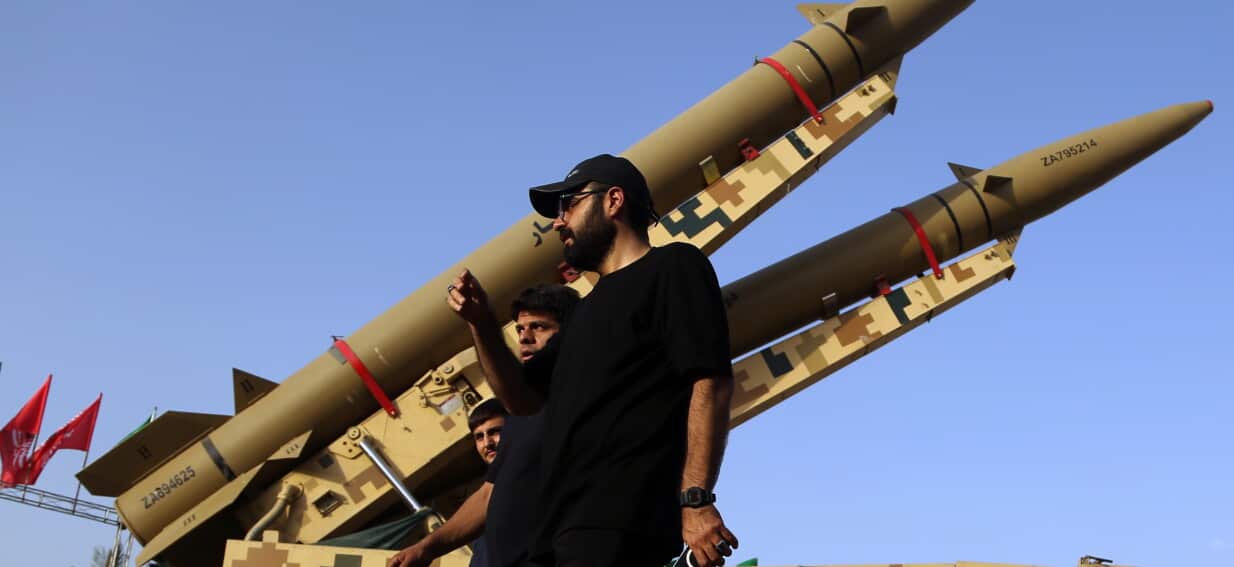
Sarah is not an economist. She does not track geopolitical treaties on her phone over breakfast. But she feels the arithmetic of global conflict right here, in the quiet ache of her bank account. Far away, thousands of miles from the suburban sprawl of Sydney or the dusty grid of Adelaide, geopolitical tensions in the Middle East are tightening a screw. And that screw turns directly inside Sarah's engine.
War is loud. Explosions make the evening news. Fighter jets streak across television screens in flashes of fire and smoke. But the true reach of modern conflict is whisper-quiet. It travels through pipelines, across shipping lanes, and straight to the local petrol station. When the Strait of Hormuz becomes a flashpoint, the cost of crude oil shifts on international exchanges. Refineries adjust their output. Wholesalers panic. And by the time the fuel truck pulls up to the corner station with the flashing yellow price board, the burden has been handed entirely to the everyday driver.
Consider what happens next: the pump clicks. The numbers spin upward faster than the fuel flows into the tank.
Australia imports a massive portion of its refined petroleum products. We are an island nation tethered to global supply chains that stretch across volatile oceans. When peace frays, our isolation stops being a geographic quirk and turns into a financial trap. De-escalation efforts fail. Diplomatic tables empty. And fuel prices climb, not because of local demand, but because the world is holding its breath.
Every cent added to a litre of unleaded fuel is a tax on distance. Australia is a sprawling land. We drive to work because our cities sprawl outward in ribbons of asphalt. We drive because public transit does not reach the outer ring where housing is marginally more affordable.
Drive.
It is not a luxury. It is a mandatory subscription to modern life.
When fuel prices spike, families do not stop driving. They simply cancel everything else. They trade the weekend soccer tournament for staying home. They skip birthdays. They ration the air conditioning. The invisible tax of global conflict is paid in the currency of missed moments and restricted lives.
Economists call this imported inflation. They talk about supply shocks, barrel pricing, and Brent Crude benchmarks. They use sanitized terms to describe a slow-motion squeeze on the middle class.
Let us translate that into human terms.
Imagine a hypothetical delivery driver named Marcus. Marcus owns a small courier van. He wakes up before the sun, navigating the arterial roads of Melbourne to deliver packages to small businesses. When fuel prices jump by thirty cents a litre, Marcus cannot simply pass that cost on to his clients overnight without losing them. Instead, his profit margin shrivels. The money that was supposed to pay for his daughter’s braces or build a modest emergency fund is funneled directly into the fuel tank.
Marcus is working harder, driving further, and earning less.
Multiply Marcus by a few million. Multiply Sarah's kitchen table by every suburban household from Perth to Brisbane. Suddenly, you see the macro-economic reality for what it truly is: a collective drag on the entire national heartbeat.
Why does this keep happening?
The vulnerability is structural. For decades, Australia has operated with thin fuel security reserves. While government strategies slowly shift toward boosting local storage and transitioning toward electric fleets, the transition is a marathon run in heavy boots. Electric vehicles are arriving, yes. But for the tradie with a heavy-duty ute, the regional family driving hundreds of kilometres between towns, and the millions of households locked into older petrol vehicles, the electric future is a promise that exists tomorrow, while the fuel bill arrives today.
And the global horizon offers little comfort. When diplomatic channels stall, oil markets react with algorithmic anxiety. Traders look at troop movements, naval patrols, and rhetoric from foreign capitals, pricing in worst-case scenarios before a single shot is fired. Speculation is an engine of its own. It feeds on fear. Every time peace talks collapse, the futures market spikes.
We are tethered to these distant wars by invisible cords of petroleum.
There is a strange helplessness in watching the price board change on the way home from a grueling shift. You cannot negotiate with a barrel of Brent crude. You cannot vote on a geopolitical standoff in the Middle East. You simply pull in, insert the nozzle, watch the numbers climb, and swipe your card.
Sarah steps away from the counter. She grabs her keys, walks out to the driveway, and opens the car door. The engine turns over with a familiar purr. As she pulls out into the morning traffic, she glances in the rearview mirror at the quiet house.
The war is thousands of miles away. But the cost of it is riding right beside her in the passenger seat.