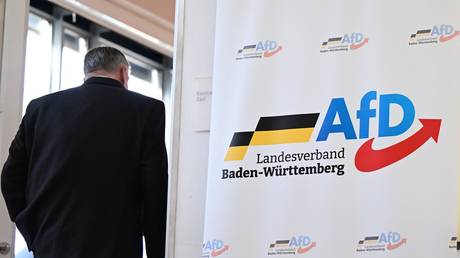
The ground in southwestern Germany didn’t just shift this week; it cracked. In the affluent, industrial powerhouse of Baden-Württemberg, the Alternative for Germany (AfD) nearly doubled its previous performance to secure 18.8% of the vote. While the headline across European tabloids focuses on the Green Party’s narrow survival, the real story is the unprecedented normalization of a hard-right movement in the very state that builds the world’s luxury cars. For decades, this region was the bedrock of centrist stability. That stability is gone.
The 2026 Baden-Württemberg election was supposed to be the moment Chancellor Friedrich Merz proved his toughened stance on migration could pull voters back to the center-right CDU. It didn't. Instead, the CDU languished at 29.7%, trailing the Greens who squeezed out a 30.2% victory under Cem Özdemir. The AfD didn't just pick up protest votes from the fringes; they took a massive bite out of the working-class and middle-management demographics that form the spine of the German economy.
The Detroit of Europe
Walking through the industrial corridors of Stuttgart or the tool-making hubs of the Black Forest, you no longer hear the quiet hum of German efficiency. You hear anxiety. The transition to electric vehicles (EVs) is not a theoretical debate here; it is an existential threat. With Chinese EV manufacturers aggressively undercutting German prices and energy costs remaining stubbornly high, the "Länd" is terrified of becoming a rust belt.
The AfD played this fear like a master cellist. They didn't just talk about borders; they talked about the "de-industrialization" of Germany. They framed climate mandates not as environmental necessity, but as an elite-driven war on the German worker. When the CDU’s Manuel Hagel fumbled basic questions about climate science during the campaign, it wasn't just a gaffe. It was a signal to voters that the traditional conservatives had no better answers than the Greens they were trying to replace.
Breaking the West German Taboo
For years, political analysts dismissed the AfD as an "Eastern" phenomenon—a byproduct of post-communist resentment in states like Saxony or Thuringia. This election has shattered that comfort blanket. Baden-Württemberg is one of the wealthiest regions in the world. It has low unemployment and high exports. If the AfD can pull nearly 19% of the vote here, the "firewall"—the agreement by mainstream parties to never cooperate with the far right—is no longer a strategic choice. It is a siege wall that is beginning to crumble under the weight of its own irrelevance.
- The Blue-Collar Shift: Among industrial workers, the AfD is now the dominant force, often outpacing the CDU and the SPD combined.
- The Youth Vote: Early data suggests a significant swing among first-time voters toward populist rhetoric, driven by concerns over housing and social security.
- The SPD Collapse: The Social Democrats, once the party of the laborer, plummeted to a disastrous 5.5%. They are no longer a factor in the region's future.
The Özdemir Factor
The only thing that prevented a total conservative takeover was Cem Özdemir. A veteran of the federal stage, Özdemir ran a campaign that was Green in name but profoundly conservative in temperament. He distanced himself from the more radical climate activists in Berlin, even questioning the 2035 combustion engine ban that is loathed by local autoworkers. He presented himself as the "Landesvater"—the father of the state—in the mold of his predecessor, Winfried Kretschmann.
But Özdemir’s victory is a hollow one for the democratic center. He will likely be forced back into a coalition with the CDU, a "Grand Coalition" of necessity that exists only to keep the AfD out of the room. This "marriage of convenience" is exactly what the populists want. It allows them to frame every mainstream politician as part of a single, indistinguishable "system" that ignores the will of the people.
The Migration Trap
Friedrich Merz took the chancellery in 2025 on a promise to fix the migration crisis. In Baden-Württemberg, he campaigned on "order and limits." Yet, the AfD’s Markus Frohnmaier simply shouted louder. The problem for the CDU is a classic insurgent’s trap: if you adopt the rhetoric of the far right to win back voters, you often end up validating the far right’s premise without actually satisfying their supporters.
Voters in Mannheim and Karlsruhe didn't see a reason to vote for "AfD-Lite" when the original was on the ballot. The migration debate in Germany has moved past policy and into the realm of identity. For the 18.8% who went blue, the issue isn't just about how many people cross the border; it’s about a perceived loss of control over the national story.
A Fragmented Future
The ripple effects of this result will hit Berlin immediately. Merz is now leading a federal government that has lost its first major test of public opinion. With municipal elections in Bavaria and Hesse around the corner, and the looming threat of the AfD taking a plurality in eastern state elections this September, the Chancellor is pinned. He cannot move further right without alienating his moderate base, and he cannot move left without hemorrhaging more workers to the populists.
Germany is entering a period of permanent instability. The old three-party system—CDU, SPD, and FDP—is a relic. In its place is a fractured landscape where the only way to govern is through "everything but the AfD" coalitions. These governments are inherently slow, indecisive, and prone to the very infighting that fuels populist rage.
The "firewall" still stands in the legislatures, but in the streets of the West, it has already been breached. The AfD is no longer an outsider looking in. They are now a permanent fixture of the German heartland, and they are just getting started.
Would you like me to analyze the upcoming Rhineland-Palatinate election data to see if this trend holds?