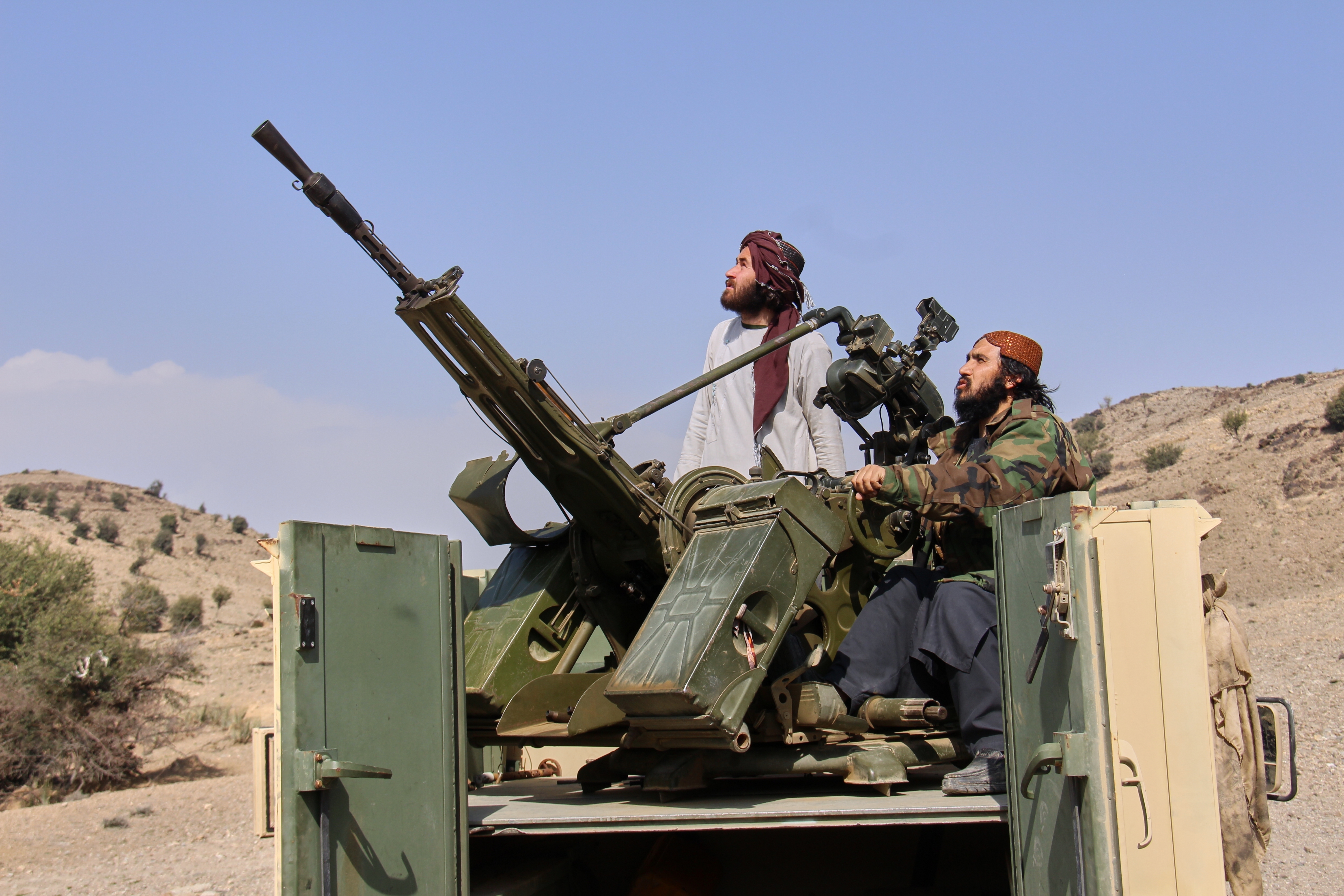
The pretense of a "brotherly Islamic relationship" between Pakistan and Afghanistan has finally collapsed under the weight of ballistic reality. When Pakistani jets crossed the border to strike targets in Khost and Paktika, they didn't just hit militant hideouts. They incinerated decades of strategic depth doctrine. Islamabad has now shifted from a policy of managed friction to a state of unacknowledged, yet open, kinetic warfare. This is no longer about border skirmishes over fence posts. It is a fundamental breakdown of the security architecture in South Asia.
The immediate trigger for the strikes was a series of high-profile attacks within Pakistan, specifically a suicide bombing in North Waziristan that killed seven Pakistani soldiers. For the military establishment in Rawalpindi, the patience for the Taliban’s "hospitality" toward the Tehrik-i-Taliban Pakistan (TTP) has run dry. The TTP, often referred to as the "Pakistani Taliban," uses Afghan soil as a sanctuary. Despite years of diplomatic pleading, the Kabul regime has refused to dismantle these networks. The result is a cycle of violence that has moved from the shadows into a direct state-on-state confrontation.
The Myth of the Afghan Proxy
For forty years, Pakistan’s security establishment played a dangerous game. They viewed a friendly, or at least compliant, Kabul as a necessary shield against Indian influence. This was the "strategic depth" theory that defined the 1980s, 1990s, and the post-9/11 era. The idea was simple. If the Taliban controlled Afghanistan, Pakistan’s western flank would be secure.
It was a catastrophic miscalculation.
The reality is that the Taliban is not a puppet. Since regaining power in 2021, the Afghan Taliban has demonstrated that its ideological bond with the TTP is far stronger than its logistical dependence on Pakistan. The "open war" we see today is the inevitable friction between a state that wants a border and a movement that does not recognize one. The Durand Line, that British-era demarcation, remains the heart of the conflict. Kabul refuses to accept it as an international border, viewing the Pashtun lands on both sides as a single continuum.
The TTP Paradox
The TTP is not a foreign entity to the Afghan Taliban. They are ideological twins. During the twenty-year war against the U.S.-led coalition, TTP fighters bled alongside the Afghan Taliban. Now that the Afghan Taliban is in power, they cannot—and will not—betray the very people who helped them win. This creates an impossible situation for Islamabad.
- The Pakistani Demand: Hand over TTP leadership or expel them from Afghan soil.
- The Afghan Response: Deny their presence or suggest "internal dialogue" that leads nowhere.
When Pakistan launched its airstrikes, it wasn't just targeting TTP commanders. It was sending a message to the Kandahar leadership. The message was clear. We are willing to violate your sovereignty because you are violating our security. But the message fell on deaf ears. Instead of backing down, the Taliban responded with heavy artillery fire against Pakistani border posts. This is the definition of an escalation ladder where neither side has an exit ramp.
Economic Suicide on Both Sides
This conflict is unfolding against a backdrop of near-total economic collapse. Pakistan is currently surviving on the edge of a sovereign default, tethered to life support by IMF tranches and Gulf state deposits. A sustained military campaign on the western border is an expense the country cannot afford. War is expensive. Keeping divisions mobilized in the tribal districts drains the treasury at a time when every rupee is needed for debt servicing.
Afghanistan is in even worse shape. The country is under heavy international sanctions, its central bank reserves are frozen, and its people are enduring one of the worst humanitarian crises on the planet. By engaging in a border war with Pakistan, the Taliban is effectively cutting off its primary trade route. Most of Afghanistan's legal and illegal trade flows through the Torkham and Chaman border crossings. When those gates close, the Afghan economy suffocates.
Yet, ideology often trumps economics in this region. The Taliban leadership in Kandahar, led by Hibatullah Akhundzada, appears increasingly insulated from the economic suffering of their people. They are focused on a puritanical vision of governance that prioritizes their interpretation of Sharia and loyalty to their jihadi allies over GDP growth or international recognition.
The Blowback Within Pakistan
The "open war" is not just happening at the border. It is bleeding into the heart of Pakistan's major cities. We are seeing an uptick in sophisticated attacks in Khyber Pakhtunkhwa and Balochistan. The TTP has moved beyond simple guerilla tactics. They are now using thermal optics, American-made weapons left behind after the U.S. withdrawal, and highly trained suicide squads.
The Pakistani public, already reeling from record-high inflation and political instability following a controversial election, has little appetite for a new "War on Terror." There is a growing sense of betrayal. Many feel the military's past support for the Taliban has directly led to the current insecurity. This domestic disillusionment makes it harder for the government to maintain a unified front.
The Regional Power Vacuum
While Islamabad and Kabul trade fire, the rest of the world is largely looking away. Washington is preoccupied with Ukraine and the Middle East. Beijing, despite its heavy investments in Pakistan through the CPEC projects, is reluctant to get bogged down in a mediation role between two volatile neighbors. This leaves a vacuum where local tensions can spiral into regional chaos.
India, Pakistan’s traditional rival, watches from the sidelines with a mixture of concern and vindication. For years, New Delhi warned that Pakistan’s support for militants would eventually come back to haunt them. That prediction has materialized with brutal clarity. However, a destabilized, nuclear-armed Pakistan is in no one's interest, including India's.
The Failure of Fencing
Pakistan spent over $500 million to fence the 2,600-kilometer border with Afghanistan. It was supposed to be a silver bullet for security. It wasn't. The fence has been breached, cut, and bypassed. More importantly, a fence cannot stop an ideology. As long as the TTP has a safe haven on the other side, and as long as the Afghan Taliban views the Pakistani state as an obstacle to their broader goals, the fence is merely a psychological barrier.
The strikes in March 2024 were a turning point because they signaled that Pakistan no longer believes the fence—or diplomacy—is enough. By using the air force, Islamabad is admitting that its ground-based counter-insurgency strategy has failed. But airpower is a blunt instrument. It often results in civilian casualties, which the Taliban then uses as a recruitment tool and a justification for further retaliation.
The Demographic Time Bomb
There is a human element to this war that often gets lost in the talk of airstrikes and geopolitics. Pakistan is currently home to millions of Afghan refugees, many of whom have lived there for decades. The government has begun a massive deportation campaign, citing security concerns. This has created a massive humanitarian crisis and fueled deep resentment among Afghans.
When you deport a generation of people who have only known Pakistan as their home, you aren't just "cleaning up" the security situation. You are creating a pool of thousands of angry, disenfranchised young men who are prime targets for militant recruitment. The "open war" at the border is mirrored by an "open hostility" in the streets of Peshawar and Karachi.
No Winners in the Rubble
There is a peculiar delusion in both Islamabad and Kabul that they can win this confrontation. Rawalpindi believes that enough kinetic pressure will eventually force the Taliban to blink. Kandahar believes that their religious conviction and experience in outlasting a superpower make them invincible. Both are wrong.
Pakistan cannot win a war against an insurgency that has the backing of a neighboring sovereign state and a deep ideological footprint within its own borders. Conversely, the Taliban cannot govern a functioning country if they remain a pariah state engaged in permanent conflict with their only viable gateway to the world.
The strikes were not a show of strength. They were a confession of weakness. They were the sound of a failed policy finally hitting the ground. As the drones continue to circle and the artillery continues to thunder across the Durand Line, the only certainty is that the cycle of blood will continue. The long pretense of friendship is over, and what remains is a raw, ugly struggle for survival that neither side is prepared to lose, yet neither side is equipped to win.
The immediate priority for the Pakistani military is to prevent a total collapse of the border regions into lawlessness. This will require more than just air raids. It requires a fundamental rethink of how the state engages with its own peripheral populations. For the Taliban, the choice is equally stark. They can remain a revolutionary movement that harbors militants, or they can become a government that prioritizes the stability of its people. As of today, they have chosen the former.
The next few months will likely see an intensification of this "open war." Expect more cross-border raids, more "surgical" strikes, and more retaliatory attacks inside Pakistani cities. The border is no longer a line on a map; it is a front line.
Check the status of the border crossings at Torkham and Chaman before attempting any regional logistics, as these lifelines are now being used as tactical leverage in a conflict that shows no signs of cooling.


