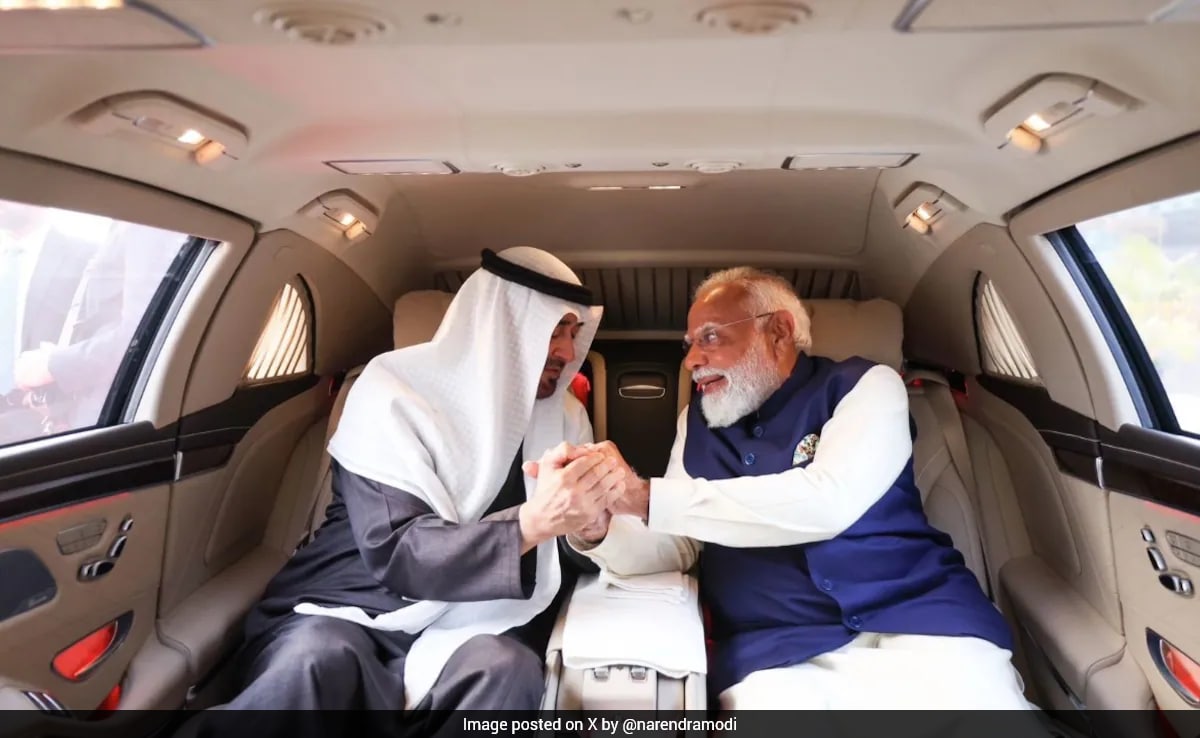
Prime Minister Narendra Modi’s recent stopover in the United Arab Emirates was brief. On paper, it lasted less than a day. However, the outcomes of this lightning visit signal a fundamental shift in how India secures its energy future and builds its domestic military apparatus. This was not a ceremonial handshake; it was a cold-eyed calculation of survival and growth. By securing a long-term Liquefied Petroleum Gas (LPG) contract and cementing a Defence Partnership Framework, New Delhi is attempting to insulate itself from the volatility of the Middle East while simultaneously turning a buyer-seller relationship into a strategic alliance.
For decades, the Indo-UAE relationship was defined by labor and oil. India sent workers; the UAE sent crude. That era is dead. What we are seeing now is the construction of a permanent corridor of resources and high-tech weaponry designed to withstand the geopolitical shocks of the next century.
The LPG Strategy is a Shield Against Global Shocks
Energy security in India is often discussed in the abstract, but for the millions of households dependent on clean cooking fuel, it is a matter of immediate economic stability. The new agreement between Indian Oil Corporation Limited (IOCL) and the Abu Dhabi National Oil Company (ADNOC) for the supply of one million metric tonnes of LPG annually is a massive logistical win. It provides a predictable price floor and a guaranteed supply line in an era where global energy markets are increasingly fragmented.
Energy isn't just about fuel. It's about political capital. By locking in long-term UAE supplies, India reduces its reliance on spot markets where prices can swing 30% in a single week due to a pipeline leak in Europe or a skirmish in the Levant. This isn't just about keeping stoves lit; it's about preventing the kind of inflationary pressure that topples governments. The UAE, in turn, secures a massive, growing market that won't be switching to fully electric alternatives for decades.
Why Long Term Contracts Matter Now
The global transition to green energy has created a paradox. While the world looks toward Renewables, the competition for traditional hydrocarbons has become more cutthroat. Middle Eastern producers are picky about their partners. They want buyers who offer more than just cash; they want "sticky" relationships. This LPG deal serves as the glue.
- Supply Consistency: Unlike short-term deals, this framework ensures that Indian refineries can plan their output with surgical precision.
- Infrastructure Integration: This isn't just a trade deal. It involves the UAE’s sovereign wealth funds looking at India’s strategic petroleum reserves.
- Currency Diversification: There is a quiet, ongoing effort to settle more of these massive trades in local currencies, bypassing the US dollar. This reduces "exchange rate friction," a hidden tax that has plagued Indian imports for generations.
The Defence Framework is About Sovereignty Not Just Sales
The headlines focused on the LPG, but the Defence Partnership Framework is the real story for those watching the long game. Historically, India bought its weapons from Russia or the West. The UAE was never a player in the arms market. That has changed. The Emirates have spent the last decade building a sophisticated domestic defense industry under the EDGE Group, focusing on drones, precision munitions, and electronic warfare.
The new framework moves beyond simple procurement. It focuses on the co-development and co-production of military hardware. India wants to stop being the world’s largest importer of arms and start being a global hub for manufacturing. The UAE needs a partner with a massive industrial base and a deep pool of engineering talent.
Breaking the Dependency Cycle
India’s military-industrial complex has long been hampered by a lack of private-sector agility. The UAE’s defense entities operate with a venture-capital mindset. They move fast. They iterate. By partnering with them, Indian defense firms—both state-owned and private—can bypass the decades of bureaucratic sludge that usually defines "Make in India" projects.
This isn't about buying a finished jet or a tank. It’s about sharing the "source code" for modern warfare. We are talking about joint ventures in autonomous systems and surveillance technology. If India can manufacture Emirati-designed drone components in Maharashtra or Tamil Nadu, it changes the balance of power in the Indian Ocean.
The Corridor of Realism
The "India-Middle East-Europe Economic Corridor" (IMEC) is the invisible backdrop to every handshake between Modi and President Sheikh Mohamed bin Zayed Al Nahyan. While critics point out that the project faces immense logistical and political hurdles, the bilateral moves made during this visit are the building blocks. You cannot have a global trade corridor if your primary energy partner and your primary security partner aren't in total alignment.
The UAE is no longer just a gas station on the way to Europe. It is becoming a financial and technological node that India must plug into if it wants to reach its $5 trillion economy goal. The sheer volume of UAE investment into India—spanning from ports to food parks—shows that the Emiratis are betting on Indian stability.
The Risk Factor
No deal is without its thorns. The heavy reliance on a single region for both energy and strategic investment carries inherent risks. The Middle East remains a tinderbox. However, the Indian strategy appears to be one of "distributed dependency." By strengthening ties with the UAE specifically, New Delhi creates a buffer. The UAE has proven to be a more stable, pragmatically led partner than many of its neighbors.
Digital Infrastructure and the New Financial Architecture
Beyond the heavy industry of gas and guns, this visit underscored a digital revolution. The integration of India’s UPI with the UAE’s AANI instant payment platform is a masterclass in soft power. There are over 3.5 million Indians living in the UAE. They send billions of dollars home every year.
By removing the middlemen—the global banking conglomerates that take a percentage of every remittance—India and the UAE are creating a closed-loop financial system. This increases the "velocity of money." When a construction worker in Dubai can send money to his village in Bihar instantly and for free, that capital enters the Indian economy faster. It’s a micro-economic win with macro-economic consequences.
The logic is simple.
A Shift in the Global Order
This partnership is a symptom of a larger trend: the rise of the "Middle Powers." Both India and the UAE are tired of being told what to do by Washington, Beijing, or Moscow. They are crafting a third way, rooted in transactional realism and mutual benefit.
When PM Modi boards his flight back to Delhi, he isn't just carrying a signed contract for LPG. He is carrying a blueprint for a relationship that treats the UAE as a core component of India’s domestic security. The defense framework isn't a "bonus" to the energy deal; it is the insurance policy that protects it.
India is learning that in the modern world, you don't find allies; you build them through shared balance sheets and integrated supply chains. The days of non-alignment are over, replaced by a policy of "multi-alignment" where energy, defense, and digital payments are the new currency of diplomacy.
The speed of this visit was the message. In a world where the old powers are bogged down in slow-moving conflicts and ideological battles, the new powers are moving at the speed of business. The "Big Returns" aren't just coming from the gas pumps; they are coming from the fact that India has finally found a partner that speaks the language of the future as fluently as it speaks the language of oil.
Security is no longer bought. It is built, piece by piece, through contracts that make it impossible for either side to walk away.