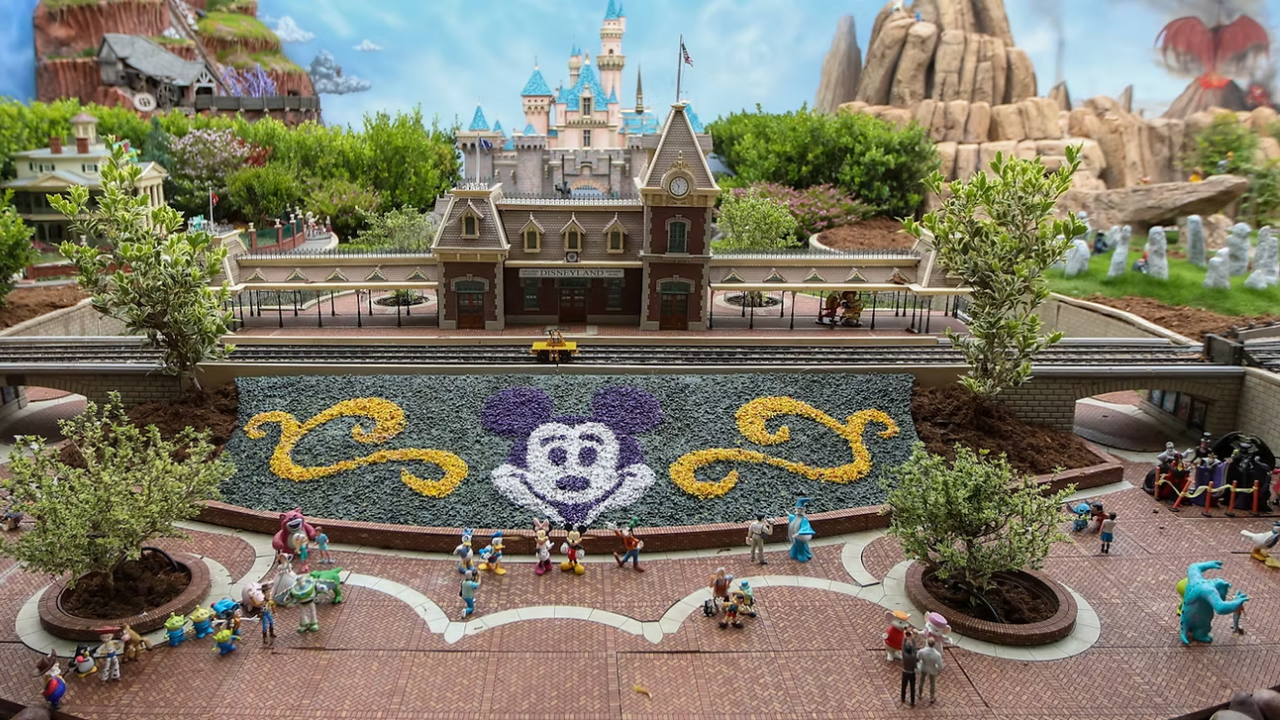
When a residential architect in Anaheim engineered a permanent backyard scale-model installation of Disneyland in 1999, the endeavor moved past hobbyist landscaping into the domain of long-horizon capital preservation and systems integration. Two decades and seven years later, the project's evolution—highlighted by the integration of a 350-LED synchronization sequence—provides a clinical case study in private infrastructure longevity, maintenance overhead, and iterative technology retrofitting. Most commentary surrounding such private theme parks focuses on novelty or sentimental scale, ignoring the underlying operational realities: mechanical fatigue, electrical load management, iterative protocol migration, and the economics of structural upkeep.
The Operational Lifecycle of Private Infrastructure
Building a permanent installation exposed to ambient environmental conditions requires analyzing material degradation across three distinct operational phases. The primary phase is initial fabrication, where structural integrity must account for thermal expansion, UV degradation, and moisture ingress. Wood substrates, high-density plastics, and miniature metal armatures experience rapid micro-fracturing when subjected to outdoor temperature deltas over multi-year cycles. You might also find this related story useful: Structural Conservation Under Threat The Relocation Mechanics of the Pope-Leighey House.
The second phase involves control system obsolescence. A system constructed in 1999 relies on legacy analog triggers, relay switches, and hardwired logic. Maintaining functionality two decades later mandates architectural modularity. When upgrading the lighting infrastructure to incorporate a 350-LED show, the primary engineering challenge is not the addition of luminaire units, but the translation of legacy mechanical actuation protocols into modern addressable digital communication buses without replacing the foundational framework.
The third phase is maintenance triage. As private attractions scale in complexity, the mean time between failures drops exponentially relative to the number of active components. A track switch, an audio playback mechanism, or an independent power supply unit operates under continuous mechanical stress. The economic reality of residential mega-projects shifts from capital expenditure to an ongoing operational expenditure model characterized by constant diagnostic troubleshooting. As highlighted in latest coverage by Refinery29, the results are widespread.
Control System Evolution and Protocol Migration
The integration of a 350-node LED array into a physical environment designed in the late twentieth century illustrates the friction of retrofitting high-density digital systems onto legacy analog architectures. Early installations typically utilize discrete wiring topologies, where every lighting element or mechanical motor requires a dedicated physical circuit back to a central relay box.
Modern lighting arrays demand serial data transmission protocols, such as DMX512 or addressable SPI variants, which reduce copper wiring overhead by routing multiplexed digital packets through a single data bus. Executing this upgrade in a custom backyard environment introduces severe signal integrity issues, including voltage drop over extended cable runs and electromagnetic interference from surrounding municipal or residential electrical grids.
Furthermore, synchronization across disparate media—audio tracks, miniature vehicle movement, and luminaire states—requires a centralized timeline controller. In a professional themed environment, timecode protocols like SMPTE maintain sub-frame accuracy across audio and visual assets. In an ad-hoc residential setting, bridging the gap between legacy electro-mechanical triggers and programmable logic controllers requires custom interface boards and firmware translation. This introduces a software maintenance vector: code written for obsolete microcontrollers must be refactored or completely rewritten as hardware components reach end-of-life status.
Spatial Economics and Structural Compounding
Evaluating a project of this magnitude requires examining spatial efficiency and the opportunity cost of dedicated land use. A multi-decade residential installation locks a specific geographic footprint into a single, highly specialized use case. Unlike commercial entertainment venues that amortize capital costs across millions of visitors, a private backyard installation absorbs total depreciation directly against personal capital.
The spatial geometry of miniaturization creates distinct engineering bottlenecks. Replicating large-scale architectural assets at a 1:8 or 1:16 scale forces a compromise between material durability and visual fidelity. Thicker materials ensure structural longevity against weather and wildlife interference but destroy scale realism. Conversely, authentic scale thickness compromises physical resilience, requiring constant structural reinforcement.
The structural compounding effect dictates that every added layer of complexity—such as water features, motorized transit systems, or programmable lighting—multiples the probability of collateral failure. A localized failure in a water recirculation pump, for instance, introduces moisture into adjacent electrical conduits, triggering secondary faults in control logic boards.
Systemic Vulnerabilities and Failure Modes
Every complex physical asset exhibits predictable failure vectors that dictate its long-term viability. In outdoor kinetic installations, these vulnerabilities cluster around environmental exposure and mechanical wear.
- Thermal Cycling Fatigue: Daily expansion and contraction cycles warp plastics and shear miniature soldered joints, necessitating continuous thermal stress modeling during initial layout design.
- Power Distribution Decay: Outdoor copper distribution lines suffer from oxidation and insulation degradation, leading to progressive resistance increases and intermittent voltage sags under peak load.
- Firmware Stagnation: Proprietary control software developed for custom installations often lacks migration pathways, trapping the hardware ecosystem in a static state where single component failures cascade into total system obsolescence.
- Scalability Ceilings: Physical routing paths for power and data conduits become saturated over time, making subsequent expansion structurally impossible without destructive excavation of mature landscaping.
Resource Allocation and Long-Term Viability
Sustaining a private, complex scale installation across twenty-seven years demands a disciplined approach to resource allocation. The total cost of ownership extends far beyond initial material costs, encompassing continuous diagnostic labor, specialized replacement parts sourcing, and periodic architectural overhaul.
When private enthusiasts engage in multi-decade engineering projects, the ultimate constraint is neither creative vision nor financial capital, but the human bandwidth required to manage escalating maintenance entropy. The survival of such an installation depends on decoupling modular subsystems so that individual mechanical or digital failures can be isolated, serviced, or replaced without destabilizing the broader infrastructural ecosystem.