A digital watch blinks in the dark. It is June 3rd. In Beijing, a young man sits in a small apartment, the blue light of his smartphone reflecting in his eyes. He types a date into a search engine: June 4, 1989. The screen pauses. A spinning wheel turns. Then, a blank page appears. The internet here behaves as if a whole day in history simply slipped through a crack in time.
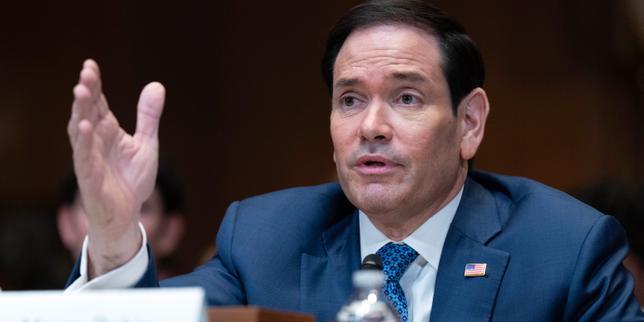
Thousands of miles away, in the marble corridors of Washington, a senator prepares a statement. Marco Rubio knows that memory is a battleground. On the eve of the anniversary of the Tiananmen Square crackdown, his message to the Chinese Communist Party is brief, sharp, and undeniable: no amount of censorship can erase the past.
This is not just a diplomatic dispute between world powers. It is a war between an eraser and ink.
The Quiet Art of Forgetting
Imagine growing up with a hole in your mind.
For millions of young people born in China after 1990, the events of Tiananmen Square do not exist. They have never seen the iconic photograph of the lone man standing before a column of tanks. They do not know that hundreds, possibly thousands, of students demanding democracy died in the streets surrounding the Great Hall of the People.
The state did not just clear the square; they cleared the archive.
The censorship machine operates with terrifying precision. Every year, as June 4th approaches, the digital dragnet tightens. Algorithms scan for combinations of numbers like 64, 89, or even vague references to candle images. On Chinese social media platforms, the ability to change profile pictures or transfer specific amounts of money via digital wallets is quietly suspended.
Silence. Total silence.
But memory is stubborn. It survives in the gaps. It survives in the code.
The Resistance of the Fragment
When you ban a word, people invent a new one. When you ban a date, people use mathematics to find it.
For years, Chinese internet users bypassed the censors by typing "May 35th" to discuss the June 4th massacre. It was a brilliant, tragic piece of linguistic camouflage. It allowed a grieving nation to speak in code, to mourn in whispers under the very noses of the monitors.
Consider the psychological weight of this existence. To remember a historical truth in a society that demands collective amnesia is to carry a dangerous burden. It isolates you. If you speak the truth to your neighbor, you risk ruin. If you keep it to yourself, the truth rots inside you.
Marco Rubio’s intervention on the eve of the anniversary was not aimed at changing the minds of the bureaucrats in Beijing. It was a signal to the ghosts, and to the living who still remember them. It was an assertion that the global record remains intact, even if the domestic one has been scrubbed clean.
The Stakes of the Narrative
Why does a superpower with a massive economy and a dominant military fear a handful of old photographs?
Control over the future requires control over the past. The legitimacy of an authoritarian regime relies heavily on a single, curated story: that the current system is the only path to stability and greatness. To admit that the state once turned its weapons on its own children, on the brightest minds of a generation, shatters that illusion.
The cost of this censorship is not paid in bytes or code. It is paid in human disconnect.
When a society is forced to forget its traumas, it loses its ability to heal. The families of the victims, the Tiananmen Mothers, have spent decades under surveillance, forbidden from publicly mourning their dead sons and daughters. Their grief is treated as a threat to national security.
Think about that. A mother’s tears for her slain child are viewed as an act of subversion.
Beyond the Digital Wall
The battle for memory is expanding. For a long time, the world outside China acted as a safe deposit box for these forbidden truths. Every year, Hong Kong’s Victoria Park would light up with tens of thousands of candles, a sea of fireflies defying the darkness of the mainland.
That light has been put out.
With the tightening of political control over Hong Kong, the annual vigils were banned. The museums dedicated to June 4th were shuttered. The books were pulled from library shelves. The eraser is moving across the border, attempting to smooth over the rough edges of history wherever it can reach.
This is why international statements matter, despite their lack of immediate legislative teeth. When foreign leaders speak the names of the dead, they prevent the circle of silence from closing completely. They keep the external archive alive.
The Indelible Mark
The young man in Beijing eventually turns off his phone. The screen goes black. He may not have found the answers on his state-approved browser, but the very fact that the page was blocked tells him something exists behind the wall. The void itself has a shape.
Censorship creates a strange paradox. By trying to wipe away every trace of June 4th, the authorities have made the date monumental. The extreme measures required to enforce the silence serve as a daily confession of guilt.
You can repaint the stones of the square. You can delete the posts, ban the numbers, and monitor the candle sales. You can build an apparatus of surveillance that stretches from the borders of Xinjiang to the server farms of Shanghai.
But ink seeps deep into the fibers of the paper. Truth possesses a weight that propaganda cannot match. The past is not a digital file that can be dragged into a trash bin and emptied forever; it is a permanent foundation, and no matter how high you build the wall, the ground beneath your feet remains unchanged.