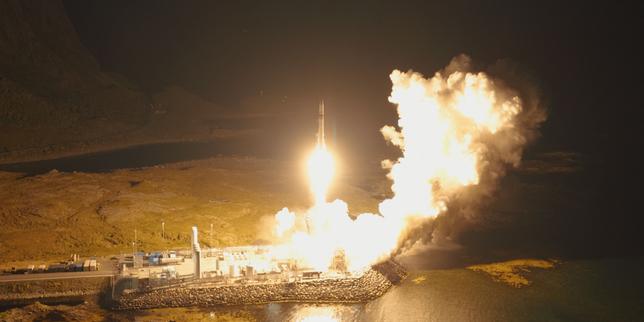
Everyone in European aerospace is popping warm champagne over Isar Aerospace and their maiden flight ambitions for Spectrum. The lazy consensus across every industry rag is that a first orbital hop for a private European startup changes the geopolitical weather. It proves old Europe can still build rockets. It signals a new dawn for commercial launch sovereignty.
Nonsense. In similar developments, read about: Inside the Berlin Cyber Crisis Exposed by the Rhysida Ransomware Leak.
While the establishment marvels at another carbon-composite cylinder sitting on a pad in Andøya, the actual physics of economic survival in commercial launch have entirely shifted. Spectrum is fighting yesterday's war with yesterday's margin profile. If you think a sub-two-ton payload micro-launcher entering service in the mid-twenties represents a competitive threat to SpaceX or even a viable standalone business model, you are ignoring basic math. I have watched venture syndicates pour hundreds of millions into vertical integration vanity projects while unit economics quietly bled out in the cleanroom.
Let us look at the structural reality the press releases omit. MIT Technology Review has analyzed this important subject in extensive detail.
The Micro-Launcher Trap
The central myth of the current European new space wave is that small sats need dedicated small launchers. This was a clever pitch in 2016. Today, it is an economic dead end. SpaceX routinely flies massive batches of rideshare payloads on Falcon 9 for a fraction of the per-kilogram cost any dedicated small launcher can ever match.
When you build a two-stage rocket designed to put one thousand kilograms into low Earth orbit, your fixed manufacturing overhead per flight is roughly comparable to a vehicle carrying ten times that mass. Physics does not care about your VC funding round. Propellant mass fractions, turbopump metallurgy, and avionics redundancy cost a fixed floor of capital. When you divide that floor by a tiny payload mass, your cost per kilogram skyrockets.
Isar Aerospace built a gorgeous engine in the Aquila. Their private test stands in Kiruna are state-of-the-art. But engineering elegance does not balance a balance sheet. Customers do not care about European sovereignty when they can buy a slot on a Transporter mission for a tenth of the price. If Spectrum cannot achieve a flight rate of twenty missions a year out of the gate—an operational cadence no European spaceport has ever sustained—the unit economics collapse under their own weight.
The Regulatory Straitjacket
Europe loves to talk about innovation while chaining its startups to the bureaucratic radiator. Ask anyone trying to secure a launch license through German and Norwegian authorities what real agility looks like. It looks like a twelve-month paperwork loop for a sixty-second static fire.
The lazy narrative blames American dominance entirely on NASA contracts and venture depth. That is a convenient excuse. The real anchor dragging down European launch providers is a risk-averse institutional culture that treats every anomaly as a criminal investigation rather than a data point. When Rocket Lab loses a booster, Peter Beck is back on the pad in weeks with hardware iteration number four. When a European vehicle encounters a valve anomaly, three committees form to study the environmental impact of the exhaust plume over the North Sea.
Speed is a metric of survival in this industry. If your iteration cycle is bound to continental consensus-building, you are already dead; you just have not stopped breathing yet.
Why Rocket Factory Augsburg is Eating Everyone's Lunch
While Isar plays the traditional prime contractor game with heavy reliance on proprietary components, Rocket Factory Augsburg took a brutal, pragmatic engineering shortcut that the purists hate. They use off-the-shelf industrial hardware, staged combustion cycles built with welded stainless steel instead of exotic milled forgings, and a relentless focus on lowering the cost of failure.
RFA understands that a rocket is not a cathedral. It is a consumable logistics delivery truck. If you treat a first stage like a heirloom piece of art, your margins will vanish the moment a competitor undercuts your launch price with a flight-proven block. Spectrum remains tethered to a high-cost architectural philosophy that makes every single unit expensive to produce.
Imagine a scenario where launch capacity outstrips constellation deployment demand by a factor of three. That is not a hypothetical future; it is the current trajectory of the market. When prime constellations like Starlink and Kuiper dominate internal capacity, and rideshare brokers aggregate every university cubesat onto a single Falcon 9 fairing, the addressable market for expensive dedicated small-sat launchers shrinks to a rounding error.
The Sovereignty Fallacy
Politicians in Brussels love the phrase sovereign access to space. It sounds great in parliamentary debates. It translates directly to market protectionism, inflated procurement costs, and institutional lethargy.
When European defense ministries are forced to buy local launches at a three-hundred-percent premium to subsidize domestic industrial policy, they hamstring their own intelligence and surveillance capabilities. You cannot out-compete a vertically integrated launch monopoly by hiding behind trade barriers and subsidies. You win by building a machine that prints cheap delta-v.
Spectrum's first flight is an engineering milestone for the resume, not a commercial disruption. Until European launch startups stop trying to build bespoke boutique rockets for a market that demands cheap commodity trucking, they will remain expensive pets of the European Space Agency.
Stop celebrating the launch pad. Start auditing the cost ledger.