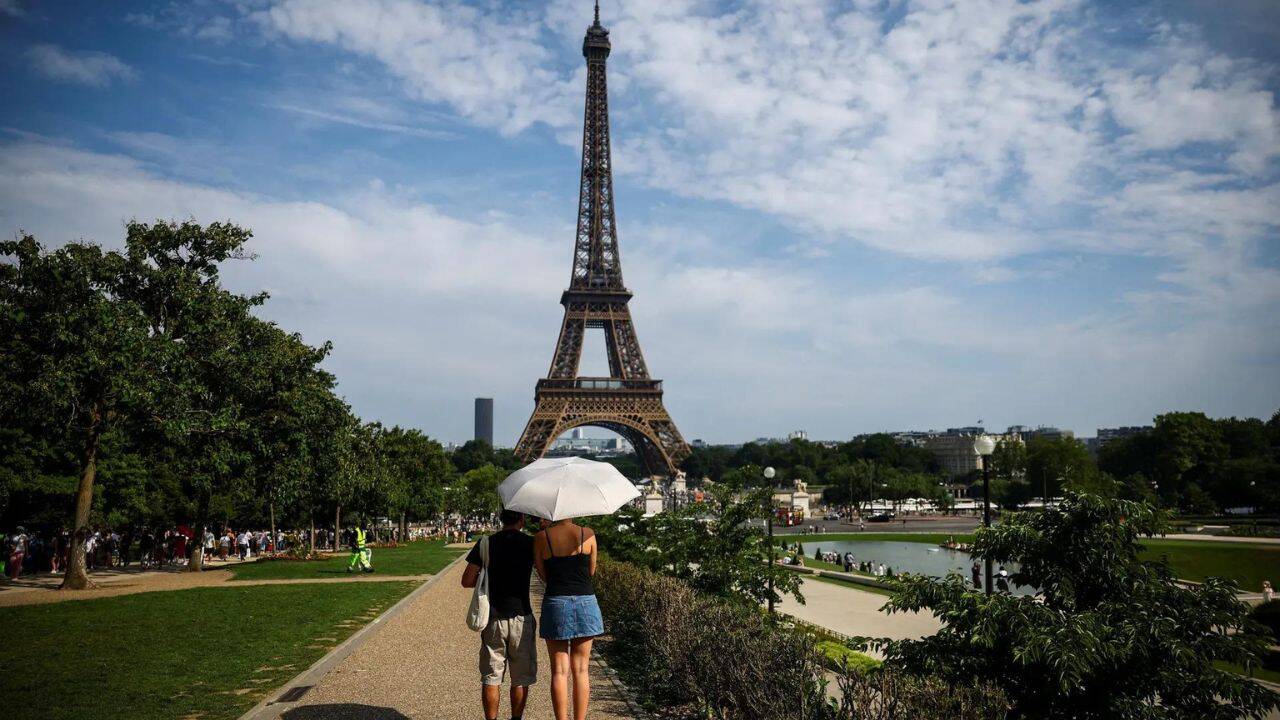
The floor is melting, the rivers are cooking, and the infrastructure we built to withstand the elements is buckling under a massive, unyielding saucepan lid of high pressure.
If you think this is just another sweaty summer story, you're missing the bigger picture. Right now, Europe is trapped under a historic heat dome stretching all the way from North Africa. It isn't just uncomfortable. It's a systemic failure. When iconic monuments shut down, nuclear reactors go dark, and dozens of people die just trying to cool off, we aren't dealing with a weather event anymore. We're looking at a structural crisis.
The immediate fallout is staggering, but the underlying reason why it's happening tells us everything about what our near future looks like.
The Mirage of the Cooling River
Let's address the most alarming headline first. France had to pull a nuclear reactor at the Golfech power station offline. When people hear "nuclear plant shutdown," their minds immediately race to meltdown scenarios. Relax, it's not that. But the actual reality is almost more disturbing for our long-term power grids.
The Golfech facility, situated near Toulouse, relies heavily on the Garonne River for its cooling systems. Nuclear energy requires immense amounts of water to keep running smoothly. However, environmental regulations place a hard statutory limit on river water temperatures. Once the Garonne hit 28°C (82.4°F), operators had no choice but to take the reactor offline.
Why? Because pushing boiling water back into a stressed ecosystem would completely cook the local fish and flora.
This isn't a design flaw specific to Golfech. It's a fundamental vulnerability shared by thermal power plants globally. When a heat dome strikes, electricity demand sky-rockets as millions of people crank up whatever cooling units they can find. Yet, precisely when the grid needs maximum output, the generation capacity gets choked because the planet itself is too warm to absorb the waste heat. France’s state-owned utility, EDF, has already flagged that multiple other facilities along the Rhone and Garonne rivers face identical production curbs. It's a vicious loop.
Turning Away Tourists at the Eiffel Tower
Meanwhile, in Paris, the realities of a continent built for a completely different climate are hitting home. The Eiffel Tower closed its gates early in the afternoon. The Louvre museum slashed its hours, shutting down by 4:00 PM.
These aren't symbolic gestures. They're raw worker and visitor safety decisions.
Unlike the United States, central air conditioning is a rarity across western Europe. The historic stone buildings of Paris are brilliant at retaining heat during cold winters, but during a prolonged heat dome, they turn into massive brick ovens. The Louvre openly admitted that its historic architecture is failing to adapt to climate change, noting that heat buildup spikes dangerously toward the end of the day when thousands of tourists pack the uncooled galleries.
When a city's tourism engine grinds to a halt because the physical environment becomes hostile to human life, the economic calculations change entirely. We aren't just talking about lost ticket sales; we're talking about a fundamental shift in how cities must function.
The Tragic Toll of Seeking Relief
The human cost of this early summer spike is devastating. French Prime Minister Sébastien Lecornu recently confirmed a grim statistic: at least 40 people drowned across the country in less than a week.
It's a tragic pattern that repeats with every major heatwave. When temperatures soar past 40°C (104°F) in regions without widespread air conditioning, desperation drives people to the nearest water source. Most of these drownings occurred among teenagers and young adults swimming in unsupervised lakes, canals, and rivers. People underestimate current speeds, they don't assess their own swimming stamina, or their bodies experience cold shock when jumping directly into deep water from scorching air temperatures.
The crisis isn't confined to France.
- The United Kingdom: The Met Office issued an unprecedented extreme heat warning for southern England, pushing schools to shut down or dismiss early as forecasts threatened to shatter the nation's absolute June records with 39°C highs.
- Spain: Red alerts have paralyzed parts of Andalusia and the Basque Country, with local temperatures pushing an unbelievable 44°C.
- Italy: Fifteen major cities, including Rome and Milan, are under maximum health alerts.
We're seeing a repeat of the structural vulnerability that caused the catastrophic 2003 European heatwave, which claimed over 14,000 lives in France alone. While emergency response plans have improved since then, the sheer velocity of these back-to-back early heat domes is outrunning municipal defenses.
How to Protect Yourself When Your Environment Flips
If you find yourself caught in a region experiencing these infrastructure-straining heat events, relying on luck or the local grid isn't a strategy. You have to adapt your daily operations immediately.
First, forget the open-window myth during the peak of the day. If the air outside is 40°C, opening your windows is simply inviting a furnace inside. Keep your shutters and windows completely sealed from dawn until twilight. Only open them late at night or early in the morning when the ambient air drops below your indoor temperature.
Second, re-evaluate how you cool your body. If you don't have air conditioning, focus on conductive cooling rather than ambient air. Submerging your feet in cold water, applying ice packs to your pulse points (wrists, neck, and temples), and taking cool showers will drop your core temperature faster than sitting in front of a fan blowing hot air around the room.
Finally, if you are looking for natural water to cool down, do not compromise on safety. Avoid unsupervised rivers or canals entirely during heat spikes. If an area isn't designated for swimming, there's usually a structural or current-based reason why.
The heat dome will eventually break, but the systemic vulnerabilities it exposed aren't going anywhere. Our infrastructure, our power grids, and our cities were built for a planet that is rapidly disappearing. Staying safe means acknowledging that reality and changing how we live, travel, and power our lives accordingly.