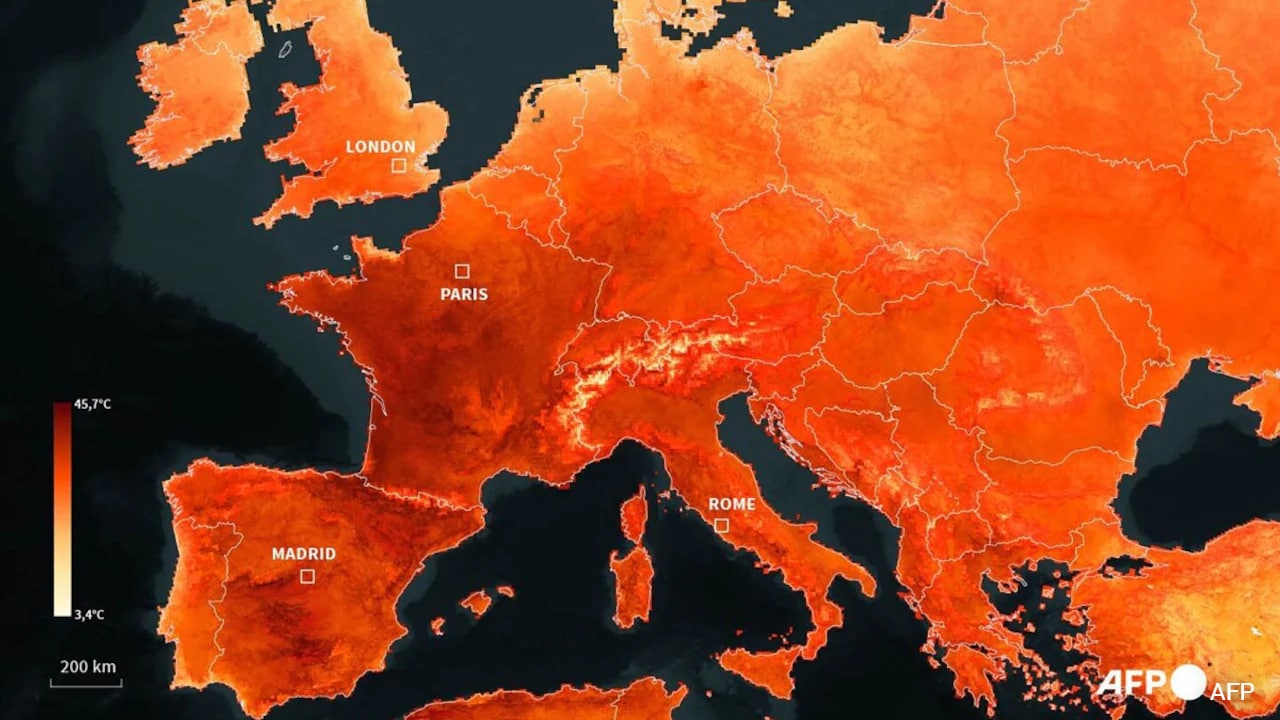
When temperatures surge past comfortable thresholds, people tend to talk about air conditioning bills or ruined beach days. They rarely talk about quiet, invisible mass casualties.
Research from Imperial College London and the London School of Hygiene & Tropical Medicine revealed a staggering toll. Human-driven climate change fueled extreme summer temperatures across Europe, resulting in roughly 16,500 excess deaths across 854 urban centers. That is not a distant statistical projection. It happened.
Yet, public discourse treats these heat spikes as temporary inconveniences rather than public health emergencies. You cannot negotiate with a wet-bulb temperature. If you think Europe's infrastructure is built to handle this new climate reality, you're dead wrong.
The Illusion of Preparedness in Northern Europe
For decades, southern countries like Italy, Greece, and Spain lived with intense heat. They have cultural habits, architectural adaptations, and baseline awareness for soaring thermometers. But when a scorching heatwave hits places like Belgium, Germany, or northern France, things fall apart instantly.
Take Belgium's southern region of Wallonia. During sudden temperature spikes, death rates spiked dramatically because the region simply wasn't built for it. Historic homes trap heat like ovens. Most residential buildings lack air conditioning entirely because, historically, they didn't need it.
Older adults bore the brunt of this crisis. People aged 65 and over accounted for roughly 85% of climate-driven heat fatalities. Low-income seniors living alone in top-floor apartments became trapped in baking microclimates. Emergency rooms filled up with patients suffering from acute cardiovascular and respiratory failure. When heat triggers a fatal stroke or heart attack, the death certificate rarely lists heat as the primary culprit. It gets buried under underlying conditions, masking the true scale of the crisis.
Why Attribution Science Matters
Scientists use attribution models to separate natural weather patterns from human-induced warming. By comparing actual mortality figures against a simulated, cooler Earth, researchers calculated that climate change was responsible for about 68% of the total 24,400 heat-related deaths during that brutal summer.
In northern Europe, the fraction is even more alarming. Before modern warming, summer temperatures there rarely reached health-threatening levels. Today, nearly every heat-related fatality in northern cities traces directly back to anthropogenic climate shifts.
Cities amplify this danger through the urban heat island effect. Concrete, asphalt, and dense housing trap solar radiation during the day and radiate it slowly through the night. Urban centers like Rome, Athens, and Bucharest recorded staggering per capita death tolls because the concrete never cools down.
The Myth That We Can Adapt Our Way Out
Politicians love talking about adaptation plans, green roofs, and early-warning heat alerts. Those tools help, but they have hard limits. You cannot adapt a population of frail, aging citizens to 45°C days without fundamental structural changes.
Europe's demographic trajectory makes this even more precarious. The proportion of citizens over 80 years old is projected to climb steeply over the coming decades. Health systems already running at maximum capacity will buckle under recurring waves of heat-induced illness.
Waiting for hospitals to overflow before taking action is a failing strategy. Real protection requires aggressive urban re-engineering—removing asphalt, mandating cool-roof architecture, retrofitting elder-care facilities with high-performance cooling, and treating extreme heat with the same emergency protocols reserved for hurricanes or floods. Stop treating the weather as a background detail. The cost of inaction is measured in thousands of preventable graves.