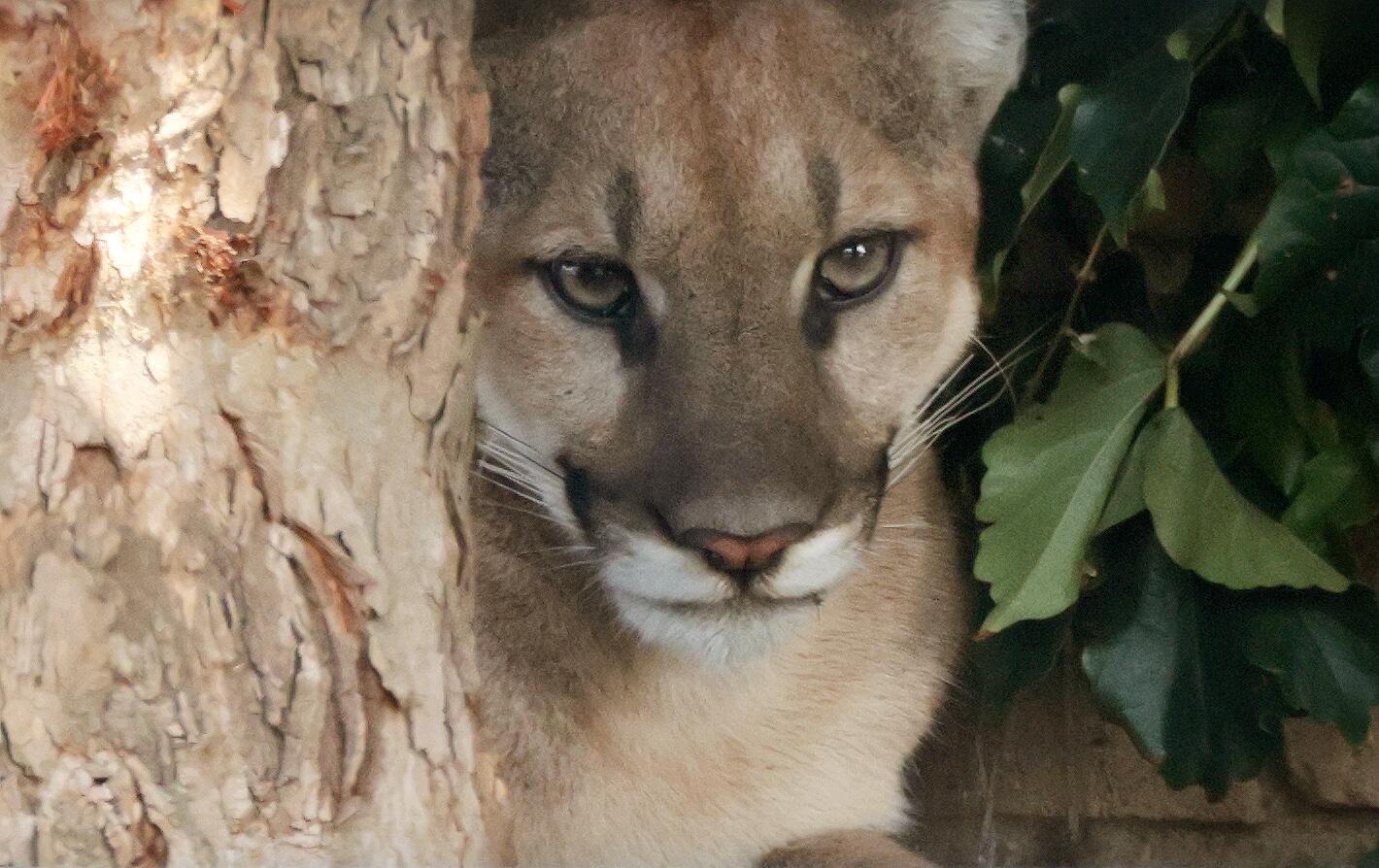
The headlines wept. Another majestic mountain lion wandering through a suburban San Dimas backyard, cornered by authorities, tranquilized, and ultimately euthanized. Social media erupted with predictable outrage. Armchair conservationists from zip codes thousands of miles away demanded heads roll, screaming about habitat loss, human encroachment, and the cold-hearted cruelty of wildlife agencies.
They got the story completely backwards.
Let us dispense with the emotional tourism. I have spent decades tracking human-wildlife conflict mitigation across the western United States. I have watched municipal agencies scramble to appease panicked homeowners while trying to maintain the fragile reality of apex predator conservation in a state packed with nearly forty million people. The knee-jerk reaction to every suburban cat sighting is pure sentimentality masking ecological illiteracy.
The lazy consensus says that killing an injured or displaced urban predator is a failure of wildlife management. The brutal truth is that euthanasia in these exact scenarios is often the only ethical, ecologically sound option left on the table.
The Myth of the Harmless Relocation
Every time a cougar turns up behind a strip mall or under a backyard deck, the public cries for relocation. Just capture it, they say. Put it in a helicopter, fly it deep into the pristine wilderness, and let it live out its days in peace.
It sounds compassionate. It is also a death sentence disguised as mercy.
Mountain lions are fiercely territorial, hyper-fixated apex carnivores. When you drop a displaced, injured, or sub-adult cat into an unfamiliar, fully occupied home range belonging to another established lion, you do not grant it a second chance. You trigger a slow, brutal nightmare. The resident dominant males will either kill the interloper outright, or push it to the margins where it will starve or get hit by a semi-truck on the interstate.
Translocating a large carnivore that has already lost its fear of human infrastructure does not solve the underlying displacement. It merely exports the problem to a different ecosystem, shifting the burden of conflict onto wild populations that are already struggling with genetic fragmentation.
When wildlife officials chose euthanasia for that San Dimas cat, they were not acting out of malice. They were engaging in cold, calculated damage control for a species that cannot afford the public relations fallout of a mauling.
The Cost of Anthropomorphism
We project our own psychological frameworks onto wild animals. We look at a cougar caught in a chain-link fence or limping through a residential cul-de-sac and we see a displaced victim of our modern concrete jungle.
The animal does not see it that way.
To a mountain lion, suburbia is an easy-buffet zone. It is packed with unmanaged domestic dogs, plump feral cats, and backyard livestock that require zero tactical tracking skills to capture compared to a wary mule deer in the chaparral. Once a cougar learns that the human footprint equals easy calories, the behavioral paradigm shifts permanently.
Habituation is a one-way street. You cannot un-teach an apex predator that human neighborhoods are grocery stores.
I have seen state biologists spend millions trying aversive conditioning—beanbag rounds, rubber buckshot, loud air horns—on habituated bears and lions. It works for about a week. The moment the local pressure drops, the animal creeps right back to the patio.
Pretending we can co-exist with high densities of large carnivores in densely populated suburban zones without friction is a dangerous fantasy. Every time we coddle a public narrative that villainizes wildlife agencies for doing their jobs, we increase the risk of a catastrophic human-wildlife encounter.
What Actually Needs to Fix
If the outrage mob actually cared about cougars, they would redirect their fury away from the frontline biologists and toward the structural drivers of fragmentation.
California passed wildlife corridor legislation like the Wallis Annenberg Liberty Canyon Wildlife Overpass across the 101 freeway. That is a step in the right direction. But building bridges does not stop urban sprawl. It does not stop developers from pushing luxury housing deeper into the wildland-urban interface.
The real villain in the San Dimas story is not the Department of Fish and Wildlife. It is our relentless, sprawling appetite for real estate that carves up critical migratory corridors into postage-stamp lots with manicured lawns.
We want the rugged aesthetic of the mountains, but we throw a tantrum when the mountain's actual residents show up on our Ring cameras.
Wildlife agencies are left holding the bag. They are forced to manage the bloody intersection of biology and real estate speculation with limited budgets and a hyper-vocal public that prefers comforting lies over hard ecological realities.
Stop mourning the symptom while ignoring the disease. The next time a cougar makes the local news for trespassing in a backyard, do not demand the heads of the professionals who have to clean up our mess. Demand smarter zoning. Demand restricted development in high-risk wildlife corridors.
Until we stop paving over the ecosystem, the euthanasias will continue. And blaming the people holding the syringe is the ultimate coward's way out.