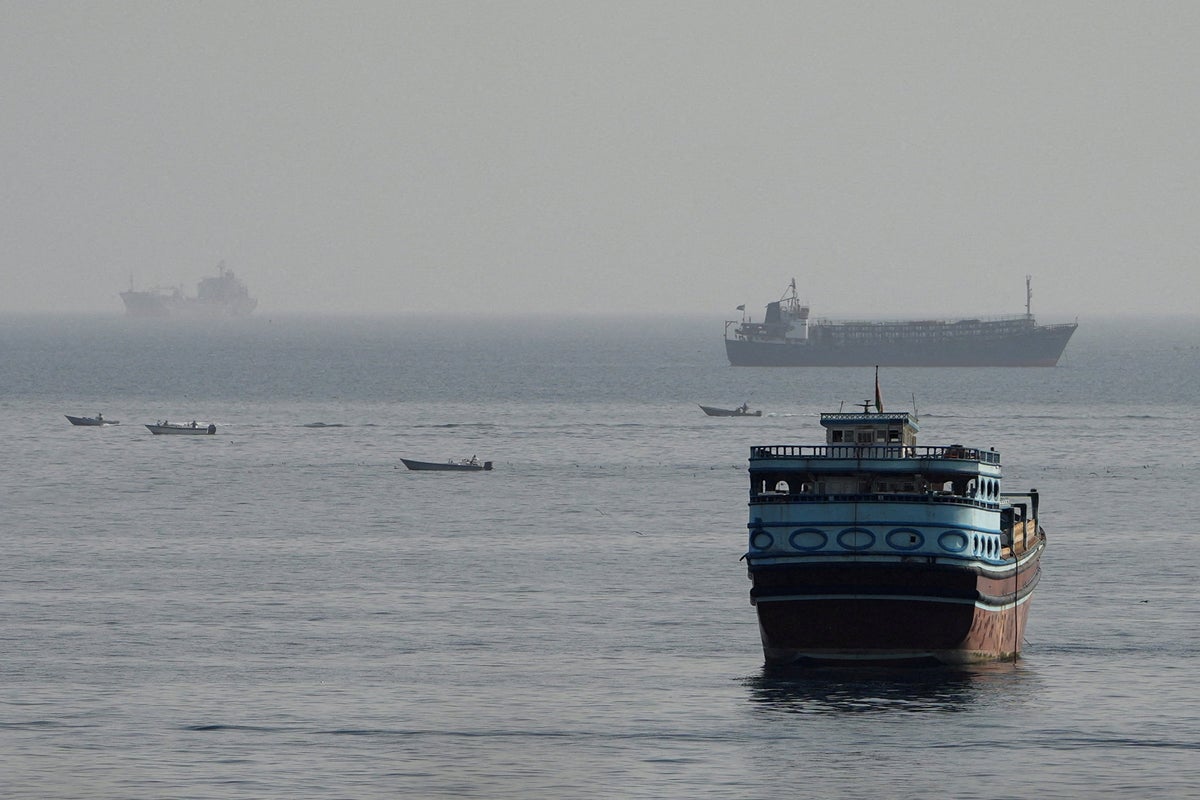
The mainstream media narrative treats the emerging Iran-Oman arrangement in the Strait of Hormuz as a standard diplomatic breakthrough. Analysts breathlessly report that a bilateral accord on coordinates, inbound northern lanes, and outbound southern lanes spells the return of maritime normalcy. They assume this is about smooth logistics, oil flow, and a clever sidestep around Washington's naval footprint.
They are missing the entire game.
This is not a logistics pact. This is a quiet rewriting of sovereignty over the world's most critical energy chokepoint, masqueraded as a technical shipping fix.
The Lazy Consensus Exposed
Look at how the commentary frames the situation. The standard line argues that Oman is acting as a neutral mediator to rescue global commerce, while Tehran is grudgingly carving out a corridor to appease international pressure. Under this fairy tale, ships enter close to Iran, exit via Oman, and everyone goes home happy with stable oil prices.
This view ignores basic maritime law, historical statecraft, and the reality of physical coercion.
A littoral state does not negotiate joint management of a strategic strait out of administrative goodwill. When you establish coordinates that partition inbound and outbound traffic strictly along domestic and aligned spheres of influence, you are institutionalizing a toll-free de facto checkpoint. Tehran is not looking for a compromise. Tehran is leveraging geography to codify administrative oversight over international waters that Washington spent decades trying to keep open and unencumbered.
The Physics of Chokepoint Leverage
To understand why the mainstream consensus collapses under scrutiny, look at the physical geography of the waterway. The channel narrows to roughly twenty-one nautical miles at its tightest point. Much of that space falls inside overlapping territorial waters.
For decades, the Traffic Separation Scheme provided a legal fiction of neutral passage governed by international conventions. The moment that system breaks down under military reality, geography wins.
- Inbound Transit: Shunted toward the northern lanes, close to Iranian radar and coastal batteries.
- Outbound Transit: Forced toward the southern lanes, grazing Omani waters under close observation.
This architecture hands Iran an asymmetric strategic win without firing a single anti-ship missile. When you control the coordinates of transit, you control the psychological risk premium of every barrel of oil moving out of the Persian Gulf. Shippers do not care about legal treaties; they care about insurance rates. And insurance rates are dictated by who holds the administrative pen on the coordinates.
Dismantling the Washington Panic
Washington officials are scrambling to block or modify the framework because they realize too late what it implies. A temporary corridor managed jointly with Oman normalizes Tehran's structural veto over Gulf commerce.
Imagine a scenario where the 60-day trial expires, and Tehran refuses to revert to the old international framework unless sanctions are lifted piece by piece. The diplomatic trap snaps shut. Western powers cannot risk a renewed blockade without triggering a spike in crude prices that wrecks domestic economies. By locking in a bilateral mechanism with Muscat, Iran bypasses the United States entirely, reducing Washington from a global security guarantor to an outside observer shouting from the sidelines.
Unconventional Reality
If you manage logistics, maritime insurance, or energy portfolios, stop waiting for a grand U.S.-Iran treaty to stabilize your supply chains. That framework is dead.
Instead, price your risk around decentralized regional bilateralism. Muscat and Tehran have realized that security in the Gulf is a local product, not an imported American guarantee. The smart capital is already baking Iranian administrative oversight into long-term freight models, because the physical reality of the Strait of Hormuz belongs to the states standing on its shores.
The map has already changed. The only people who haven't noticed are the ones reading yesterday's press releases.