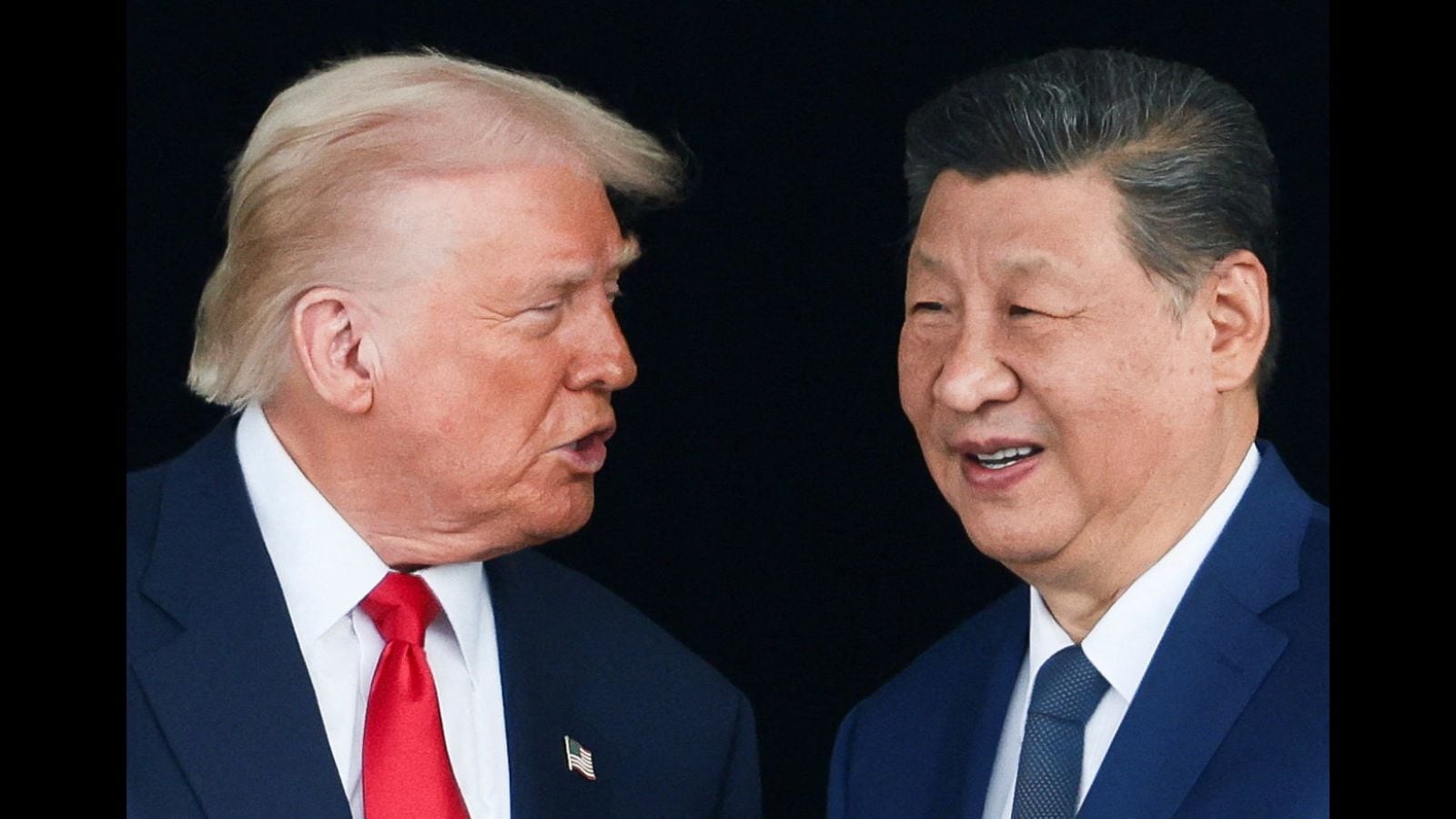
The collective panic attack happening across South Asian foreign policy circles is nothing short of embarrassing. Whenever Donald Trump and Xi Jinping sit down across a negotiating table, the lazy consensus in New Delhi immediately triggers a familiar reflex: India is about to be left out in the cold.
Commentators love to spin a neat, lazy narrative. They argue that a transactional U.S. president cutting deals with Beijing somehow strips India of its primary utility as a strategic counterweight. They whisper about a resurrected G-2, wring their hands over tariff truces, and assume that great-power handshakes automatically mean a shrinking diplomatic footprint for everyone else. If you enjoyed this post, you should read: this related article.
It is a completely flawed framework built on a fundamental misunderstanding of modern friction. A U.S.-China summit does not reduce India's leverage; it exposes the fragile delusion that India's geopolitical relevance ever depended on Washington and Beijing remaining at permanent war.
Let us dismantle the core myths dominating the commentary. For another look on this development, refer to the latest update from BBC News.
The Myth of the Disposable Pivot
The underlying anxiety in New Delhi is that if Washington and Beijing lower the temperature, America's need for the Indo-Pacific Quad evaporates. This assumes that the strategic containment of China is a diplomatic hobby that American presidents pick up and drop based on their personal moods.
It is not. Structural competition between a declining incumbent hegemon and a rising challenger is an iron law of international relations, codified by centuries of historical precedent. Thucydides did not write a footnote about temporary trade truces.
When Trump engages in deal-making with Xi, he is practicing commercial bargaining, not rewriting the map of Asian security. Beijing's naval expansion in the Indian Ocean, its land grabs along the Line of Actual Control, and its technological ambitions do not vanish because of a temporary tariff rollback or an agricultural purchase agreement.
To believe that a superficial handshake between Washington and Beijing turns India into a geopolitical afterthought is to profoundly misunderstand the structural realities of geography. India sits astride the primary maritime chokepoints of global trade. No amount of bilateral horse-trading in a convention center alters the location of the Strait of Malacca.
The Economic Mirage
Look at the trade panic. Analysts hyperventilate over whether a U.S.-China tariff adjustment gives Chinese exporters an unfair advantage, squeezing Indian manufacturing out of global supply chains.
This argument ignores why multinational corporations are actually diversifying away from China. Companies are not leaving the mainland merely because of Washington's tariff rates; they are fleeing due to systemic structural risks: demographic collapse, regulatory unpredictability, intellectual property theft, and the terrifying realization of supply chain vulnerability exposed during global crises.
India's manufacturing challenge has never been about what percentage point of a tariff Washington slashes for Beijing. It has been about domestic execution failures: sluggish land acquisition reforms, rigid labor compliance, infrastructure bottlenecks, and regulatory friction. Blaming a Trump-Xi summit for India's export shortcomings is a convenient excuse for domestic policymakers who refuse to fix structural domestic inefficiencies.
The Real Threat Is Internal Complacency
The danger to India is not that Washington and China will carve up Asia behind New Delhi’s back. The real threat is that Indian strategists will use the specter of a U.S.-China accommodation as an excuse for strategic drift.
When you believe your relevance is entirely derivative of someone else's hostility, you stop building your own hard power. You wait for external friction to hand you tactical victories instead of forcing structural reforms at home.
Imagine a scenario where Washington and Beijing achieve a lasting economic détente. In that world, India cannot rely on rented power or default status as America's favorite counterweight. It is forced to stand entirely on its own economic gravity, maritime capability, and technological self-reliance. That is not a nightmare scenario for New Delhi; it is the ultimate stress test of a rising civilization.
Stop worrying about whether Washington and Beijing are talking. They are superpowers; talking is their job. India's mandate is simpler, harsher, and entirely divorced from whatever temporary deal is struck across the Pacific: build domestic manufacturing muscle, secure your own neighborhood, and stop treating foreign policy as a spectator sport dependent on the whims of a summit.
The next time Washington and Beijing announce a grand compromise, pour yourself a coffee and ignore the panic. Real power isn't granted by a ceasefire between rivals. It is forged in the silence when everyone else stops paying attention.
Trump-Xi Meet: How The US-China Summit Could Impact India
This video provides a direct, multi-angle breakdown of how high-stakes diplomatic summits between Washington and Beijing ripple across Asian security and trade markets.