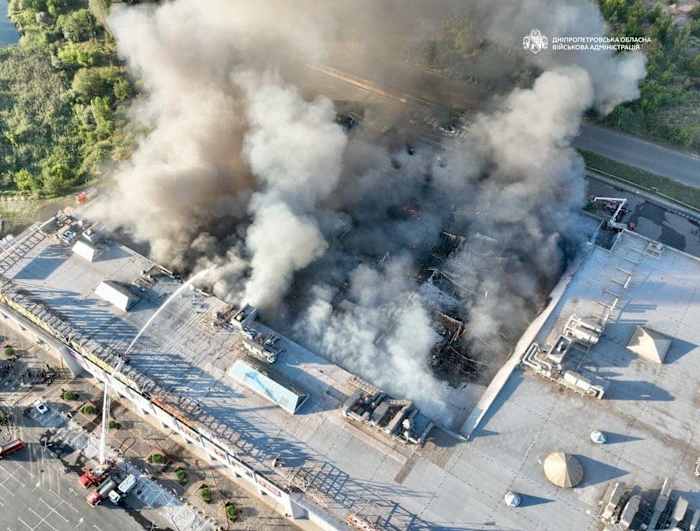
Another day, another casualty count churned out by wire services. Nine dead here, a shopping mall strike there, routine updates on residential blocks turned to dust. The media treats this war like a daily sports scoreboard, tracking the body count with grim fascination while entirely missing the mechanics driving the catastrophe.
Stop reading the breathless casualty bulletins. They are designed to provoke grief, not understanding.
Every standard report on the conflict relies on a lazy consensus: that this is a localized war of attrition driven purely by territorial bloodlust, and that the daily human toll tells us something meaningful about where the front lines are heading. That narrative is wrong. It masks the structural reality of how modern industrial combat actually functions in the digital age.
The Arithmetic of Attrition is Broken
We are told that specific drone strikes or localized missile barrages represent strategic turning points. They do not. They are tactical noise in a much larger, colder equation.
Look at how analysts evaluate war zones. They count shells, track square kilometers of mud, and tally civilian casualties to gauge momentum. This approach belongs in 1914, not the current decade. Modern conflict is an engineering problem executed at scale. The rate of daily casualties reported by news outlets is a lagging indicator of manufacturing output, software deployment cycles, and supply chain logistics.
When a shopping mall takes a direct hit, the emotional response is immediate and correct: horror. But the strategic response from commentators is universally confused. They ask how to stop the specific weapon or condemn the specific tactic, treating each atrocity as an isolated moral failure rather than a systemic feature of mechanized warfare.
This misses the fundamental truth of the theater. The war is no longer fought by armies maneuvering for advantageous terrain. It is a massive, distributed processing network where human bodies are the most fragile and easily replaced components.
The Myth of the Decisive Strike
The conventional news cycle thrives on the illusion of the decisive event. A high-profile strike happens, anchors sound grave, politicians issue statements, and everyone acts as though the chessboard has fundamentally shifted.
It hasn't.
I have watched defense commentators and policy wonks obsess over single tactical episodes while ignoring the macro-economic baseline that sustains them. Single strikes do not win wars of this magnitude. Industrial capacity, electronic warfare adaptation rates, and demographic endurance win them.
Focusing on the daily death toll creates a distorted feedback loop. It encourages political leaders to react to headlines rather than realities. When the public measures progress by the horror of the daily news cycle, policy becomes erratic. Decisions are driven by outrage management rather than strategic coherence.
If you want to understand why the fighting continues at this relentless pace, stop looking at the craters in the streets. Look at the balance sheets of state-directed manufacturing sectors, the availability of specialized microchips, and the foreign exchange reserves keeping national grids online.
The Uncomfortable Reality of Protracted War
The most dangerous delusion in public discourse is the belief that this conflict will resolve through a sudden diplomatic breakthrough or a miraculous tactical collapse.
Wars of this scale end when one side hits a hard structural wall: economic exhaustion, demographic depletion, or total logistical failure. They do not end because someone signed a piece of paper while the underlying incentives to fight remain entirely intact.
The media wants you to believe that moral outrage can shorten a war. History shows the exact opposite. Moral outrage prolongs conflicts by hardening domestic resolve on all sides, turning complex geopolitical friction into an existential crusade where compromise is treated as treason.
The daily body count reported across international news channels is tragic, but treating it as news is a category error. It is background radiation in a grinding, automated conflict machine. Until we stop treating industrial-scale warfare like a series of discrete moral outrages and start analyzing it as a cold logistics crisis, our understanding of the headlines will remain entirely worthless.